Parasitic Immunity: Types, Factors Affecting Immunity and Examples
Parasitic immunity is an important concept in veterinary parasitology that explains how animals resist parasitic infections. Host immunity may prevent infection, reduce parasite multiplication, or protect against reinfection. Several factors such as age, genetics, and nutrition influence the immune response against parasites.
Immunity is a natural process that develops against parasites entering the host. It prevents infection, reinfection, and superinfection by destroying the parasites or limiting their multiplication.
Factors Affecting Parasitic Immunity
The development of immunity against parasitic diseases is determined by the following factors:
1. Age
Older chicks are more resistant to Ascaridia galli infection due to the presence of a greater number of mucus-secreting goblet cells on the intestinal mucosal surface.
In bovine babesiosis caused by Babesia bigemina, young animals are more resistant than adults. This phenomenon is called inverse age resistance.
2. Genetic Constitution
Rhode Island Red (RIR) and Plymouth Rock chickens are more resistant to Ascaridia galli infection.
Cattle breeds such as N’Dama, Muturu, and Brahman are resistant to trypanosomosis and are therefore referred to as trypanotolerant breeds.
Similarly, indigenous cattle breeds such as Kangayam and Bargur are more resistant to tick-borne hemoprotozoan diseases, whereas crossbred cattle such as Jersey and Holstein Friesian are highly susceptible to tick-borne diseases like theileriosis and babesiosis.
Garole sheep are also known to be resistant to Haemonchus contortus infection.
3. Nutritional Status
Poorly nourished animals are more susceptible to parasitic diseases. Deficiencies of trace minerals such as cobalt, zinc, copper, and molybdenum in the diet may predispose animals to parasitic infections.
Host resistance against parasitic diseases can be improved by supplementation of these minerals, especially in pregnant animals, to prevent the periparturient rise (increased egg output around the time of parturition due to relaxation of immunity).
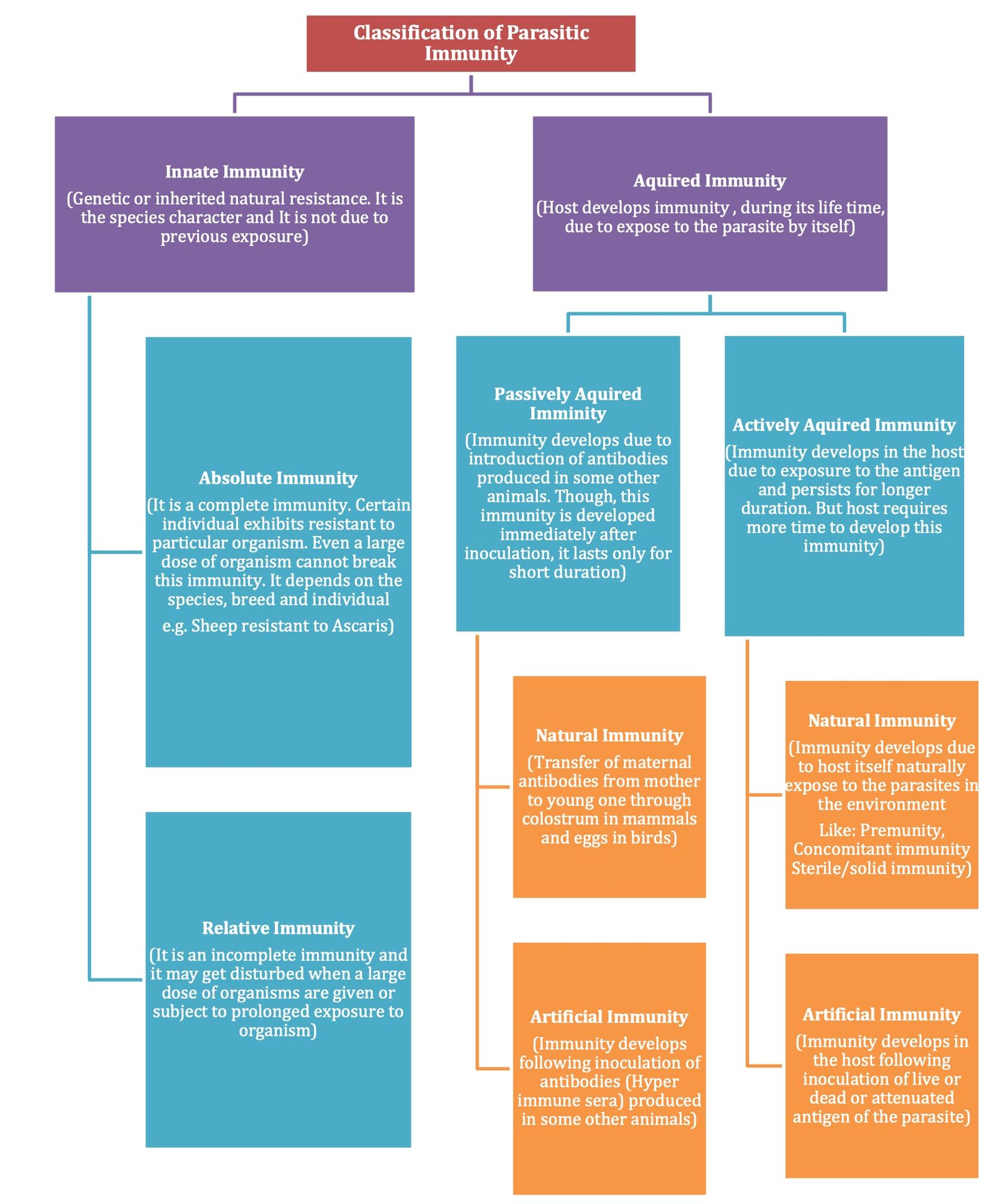
Premunity
Immunity to superinfection due to the presence of residual parasites in the host is known as infection immunity. A low-grade infection that persists in the host after recovery may continue to stimulate the immune response in certain protozoan diseases, such as coccidiosis, babesiosis, anaplasmosis, and theileriosis.
Concomitant Immunity
Concomitant immunity is a type of premunity. It acts only against invading larval stages, but not against an existing adult infection.
For example, in hydatidosis, the immunity developed due to the existing cyst does not affect its development; therefore, the cyst may survive for many years in the host. However, this immunity prevents new infections.
Similarly, in schistosome infection, the immune response developed against the current infection fails to control the existing infection but prevents new infections.
Sterile Immunity
Sterile immunity is immunity maintained by the host even after the elimination of the parasite. This process initially begins as premunity and later becomes associated with clinical recovery and complete elimination of the parasite.
This type of immunity provides lifelong specific resistance against subsequent infection. Examples include Plasmodium cynomolgi infection in monkeys and cutaneous leishmaniasis in humans.
Self Cure Phenomenon
The self cure phenomenon is the process of expulsion of existing adult parasites due to sensitization of the host immune system by newly ingested larvae. An example is Haemonchus contortus infection in sheep.