Dictyocaulus viviparus (Lungworm of Cattle): Complete Veterinary Guide
Dictyocaulus viviparus, commonly known as the lungworm of cattle or bovine lungworm, is a parasitic nematode that causes dictyocaulosis, also known as husk, hoose, or parasitic bronchitis, in cattle. The parasite primarily affects young grazing calves and is transmitted through the ingestion of infective third-stage (L3) larvae present on contaminated pasture. It is a herd problem commonly seen in young calves following exposure to infected pasture. Heavy infections can result in significant respiratory disease and economic losses due to reduced growth, poor productivity, and, in severe cases, death.
This article provides a concise overview of Dictyocaulus viviparus, including its taxonomy, parasite overview, predilection site, infective stage, and pathogenesis.
Parasite Overview
- Definitive Hosts: Cattle (primary host); occasionally buffalo and other bovines
- Intermediate Host: None
- Life Cycle: Direct (non-migratory outside the host; infective L3 develops in feces)
- Predilection Site: Trachea, bronchi, and bronchioles of the lungs
- Infective Stage: Third-stage larva (L3)
- Disease Caused: Dictyocaulosis (parasitic bronchitis; also known as husk or hoose)
Taxonomical Classification
- Kingdom: Animalia
- Phylum: Nematoda
- Class: Chromadorea
- Order: Rhabditida
- Suborder: Strongylina
- Superfamily: Trichostrongyloidea
- Family: Dictyocaulidae
- Genus: Dictyocaulus
- Species: Dictyocaulus viviparus
- Common Name: Bovine lungworm
Pathogenesis
During the prepatent phase, blockage of many small bronchioles by exudate and collapse of the alveoli are associated with tachypnea, coughing, and emphysema.
The patent phase lasts for 25–55 days and is associated with adult parasites in the trachea and bronchi. Severe damage to the epithelium, exudate accumulation in the bronchi, and blockage of the air passages occur.
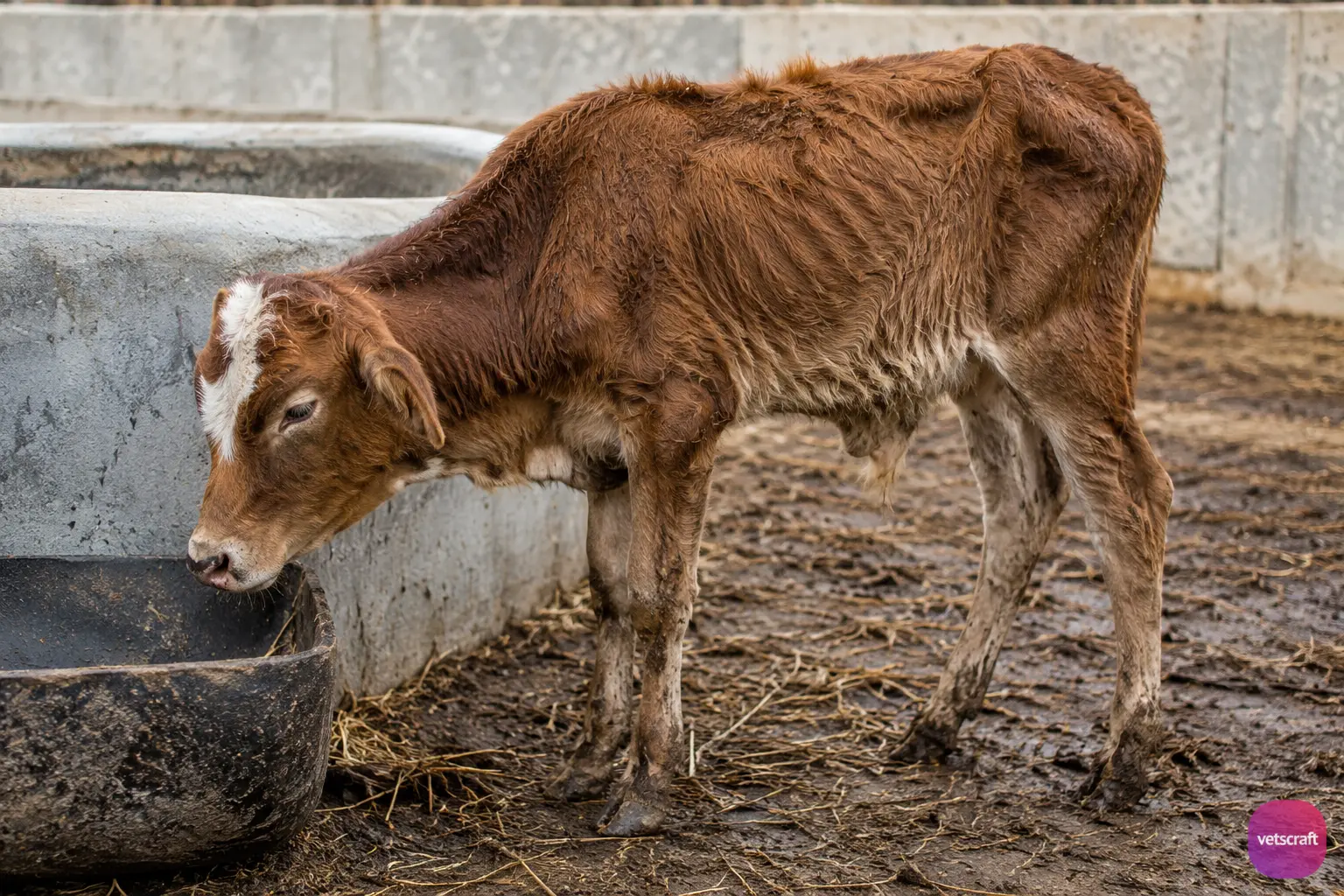
Aspiration of eggs and larvae into the bronchioles and alveoli leads to consolidation of the lobules. Animals show dyspnea, coughing, and loss of body condition. Harsh respiratory sounds with rhonchi and emphysematous crackles may be heard.
The postpatent phase commences around 50 days, and the animal gradually returns to a normal condition.