Protostrongylus rufescens (Red Lungworm of Sheep and Goats): Complete Veterinary Guide
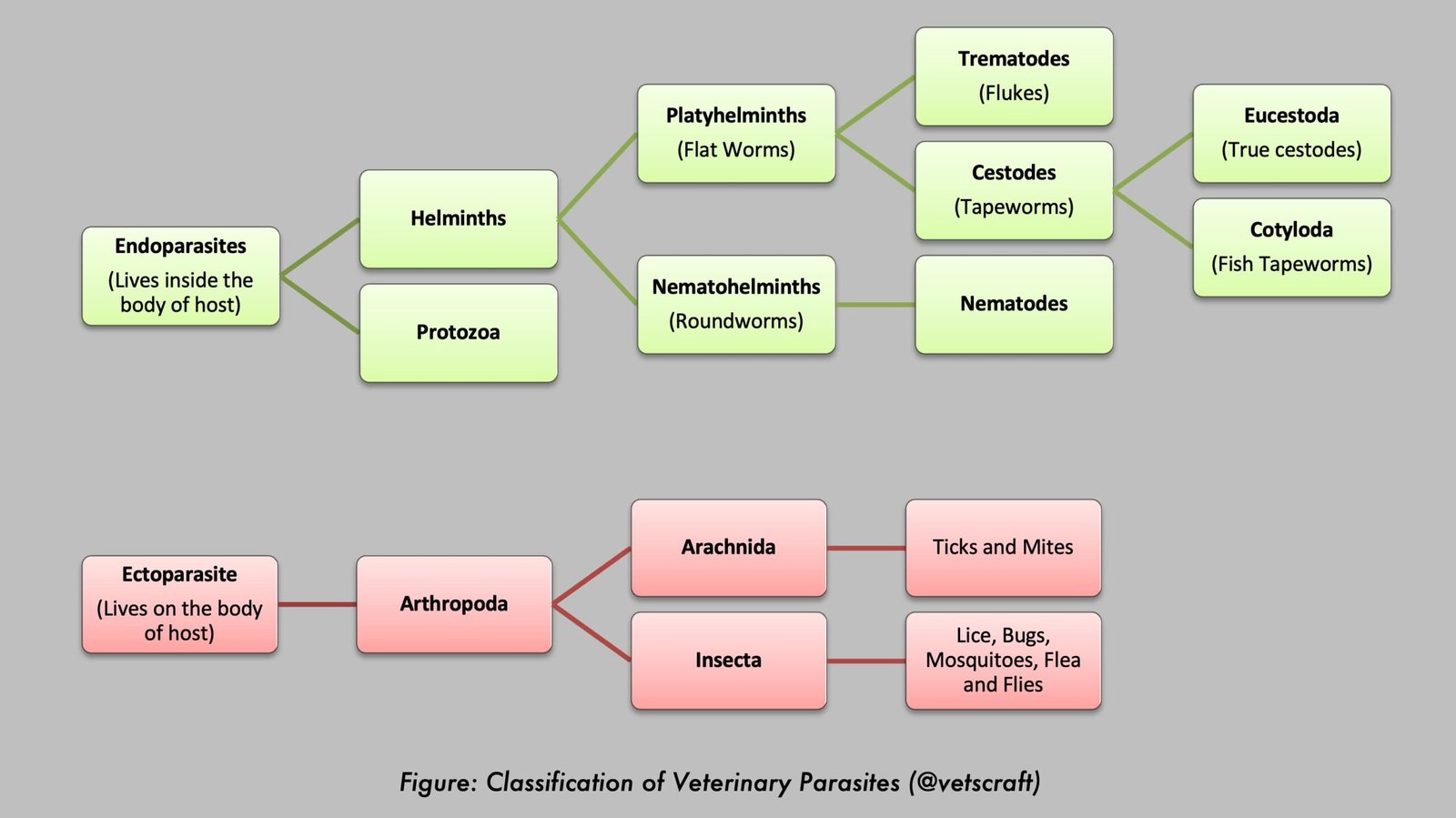
Protostrongylus rufescens, commonly known as the red lungworm of sheep and goats, is a parasitic nematode that inhabits the bronchi and bronchioles of domestic and wild small ruminants. It has an indirect life cycle involving terrestrial snails and slugs as intermediate hosts and is responsible for causing protostrongylosis.
Although many infections are subclinical, heavy infestations can lead to verminous bronchitis, bronchiolitis, pneumonia, and reduced productivity. This guide covers the parasite’s taxonomy, life cycle, pathogenesis, clinical signs, diagnosis, treatment, and prevention.
Parasite Overview
- Common Name: Red lungworm of sheep and goats
- Predilection Site: Bronchi and bronchioles of the lungs
- Definitive Hosts: Sheep, goats, and other wild ruminants (e.g., mouflons and chamois)
- Intermediate Hosts: Various terrestrial snails (Helix, Helicella, Theba, Abida, Zebrina, etc.) and slugs (Limax, Agriolimax, etc.)
- Life Cycle: Indirect
- Infective Stage: Third-stage larvae (L3) developing within the intermediate host (snails or slugs)
- Disease Caused: Protostrongylosis (verminous bronchitis and bronchiolitis)
Taxonomical Classification
- Kingdom: Animalia
- Phylum: Nematoda
- Class: Chromadorea
- Order: Strongylida
- Superfamily: Metastrongyloidea
- Family: Protostrongylidae
- Genus: Protostrongylus
- Species: Protostrongylus rufescens
- Common Name: Small lungworm of sheep and goats
Life Cycle
The eggs are coughed up, swallowed, and passed in the feces. They hatch either in the environment or after being ingested by a suitable intermediate host (I/H).
Even though the eggs hatch outside the host, further development occurs only after ingestion by the I/H. The larvae can survive for up to three months in moist environments.
Further larval development occurs only after ingestion by a suitable I/H, such as a snail. The L1 larvae penetrate the foot of the snail. They reach the infective stage in about 14 days. Infection of the D/H occurs through ingestion of an infected snail.
Following ingestion of the infective larvae, the L3 larvae penetrate the intestinal wall and migrate through the mesenteric lymph glands, where they molt into L4 larvae within 4 days. The L4 larvae then migrate to the lungs through the lymphatic and blood vessels.
In the lungs, the larvae become lodged in the alveolar capillaries, then break through into the air passages and mature into adults in the bronchi within four to five weeks.
Pathogenesis
The worms lie in the small bronchioles, causing localized inflammation. The exudate fills the alveoli, and the inflammatory process extends to the surrounding peribronchial tissues. This results in conical, yellowish-gray lobular pneumonia.
Clinical Signs
Animals may show no clinical signs, although the infection can affect their general health. In severe cases, it may cause death. The lungs become susceptible to secondary bacterial infections. Protostrongylus spp. may introduce Pasteurella organisms.
Diagnosis
By fecal examination for L1 larvae.
Treatment
- Emetine hydrochloride: 22 mg/kg/day for 3 days
- Cyanacethydrazide: 15 mg/kg SC or 17.5 mg/kg orally
- Levamisole: 20 mg/kg body weight, SC
- Fenbendazole: 20–80 mg/kg
- Albendazole: 5 mg/kg
- Ditrazine: 100 mg/kg body weight, SC
Prevention and Control
- Effective drainage or other measures that keep pastures dry will reduce the snail population.
- Chemical control of snails with molluscicides (i.e., snail killers), such as copper sulfate, sodium pentachlorophenate, and niclosamide, may be useful for specific purposes, such as treating areas where livestock congregate (water sources, feeding areas, salt licks, shade trees, etc.) to keep them free of snails.
- Most macrocyclic lactones (e.g., abamectin, doramectin, eprinomectin, ivermectin, and moxidectin) are effective against adult worms at the usual therapeutic doses but may not control the larvae.