Trichostrongylidae Parasite Control: Refugia, FAMACHA & IPM
Trichostrongylidae parasites are among the most economically important gastrointestinal nematodes affecting sheep, goats, cattle, and other ruminants worldwide. Effective control of these parasites requires an integrated approach rather than relying solely on routine deworming. Combining strategic anthelmintic treatment with grazing management, refugia, FAMACHA scoring, and other Integrated Parasite Management (IPM) practices helps reduce parasite burdens, improve animal health, and slow the development of anthelmintic resistance.
The control measures described below apply to the major gastrointestinal nematodes belonging to the Trichostrongylidae family, including Haemonchus contortus, Ostertagia ostertagi, Teladorsagia circumcincta, Trichostrongylus spp., Cooperia spp., Nematodirus spp., and Mecistocirrus digitatus. Since these parasites share similar epidemiology and transmission patterns, many of the same integrated control strategies are effective against them.
- Grazing management
- Periodic deworming
- Integrated Parasite Management (IPM)
- Refugia
- FAMACHA (FAffa Malan Chart)
1. Grazing Management
Approximately 80% of worm larvae are found within the first two inches of grass. Therefore, sheep grazing on taller forage are less likely to experience parasite problems. Sheep should not be allowed to graze forage shorter than 2 inches.
Sheep that browse also tend to have fewer parasite problems. Another grazing strategy is to wait until the dew has evaporated from the grass or until the grass has dried after rainfall.
Dry conditions force parasites to remain at the base of the plants, where they are less likely to be consumed by livestock.
2. Periodic Deworming
Periodic deworming is an important component of controlling Trichostrongylidae parasites, particularly in regions where gastrointestinal nematode infections are common. Deworming should be based on parasite risk, seasonal transmission, age of the animals, and fecal egg count (FEC) results rather than routine calendar-based treatments. Strategic and targeted selective treatment (TST), using tools such as FAMACHA scoring and fecal egg counts, helps reduce parasite burdens while slowing the development of anthelmintic resistance.
Commonly used anthelmintics include benzimidazoles (e.g., albendazole and fenbendazole), imidazothiazoles (e.g., levamisole), and macrocyclic lactones (e.g., ivermectin, doramectin, and moxidectin).
3. Integrated Parasite Management (IPM)
Good Management
Sheep should not be fed directly on the ground. Feeders that cannot be easily contaminated with feces should be used for grain, hay, and mineral supplements.
Water should be clean and free of fecal contamination. Pastures and pens should not be overstocked. Newly acquired sheep should be isolated from the rest of the flock for 30 days and aggressively dewormed to prevent the introduction of drug-resistant worms.
Use of Clean or Safe Pastures
Clean or safe pastures are those that are not contaminated with worm larvae that infect sheep. Examples include pastures that have not been grazed by sheep or goats for the previous 6–12 months; pastures grazed only by horses or cattle; pasture fields where a hay or silage crop has been harvested; pasture fields rotated with field crops; and newly established or renovated pastures. Burning a pasture can also eliminate worm larvae.
Pasture Rest and Rotation
It is a common misconception that rotational grazing alone helps control internal parasites in sheep. Intensive rotational grazing may actually increase parasitic problems because rotating large groups of ewes and lambs through small paddocks concentrates both livestock and infective parasite larvae within the same area. An infected pasture generally requires approximately three months of rest to return to a low level of infectivity.
Rotational grazing is an effective parasite management tool only if pasture rest periods are sufficiently long (i.e., 60 days or more).
On the other hand, the improved nutrition provided by rotational grazing may help offset the effects of higher parasite burdens.
Multi-species Grazing
Sheep (and goats) are generally not affected by the same internal parasites as cattle and horses. Consequently, pastures grazed by cattle or horses are considered relatively safe for sheep (and goats), and vice versa.
Sheep can be co-grazed with cattle and/or horses. Multi-species grazing also provides numerous additional benefits, as each species has distinct grazing behaviors that complement one another.
For example, sheep prefer weeds, short tender grasses, and clover, whereas cattle prefer taller grasses. Cattle may also provide some protection against predators.
Alternative Forages
Some pasture plants possess anthelmintic properties, particularly those containing condensed tannins.
Research has shown that sheep grazing tannin-rich forages have lower fecal egg counts than those grazing conventional grass pastures. Examples include Sericea lespedeza, birdsfoot trefoil, and chicory.
Generally, trees and shrubs contain higher concentrations of tannins than pasture grasses, and tropical legumes contain more condensed tannins than temperate legumes.
Healthy Soil
Earthworms have been shown to ingest worm eggs and larvae, either destroying them or transporting them below the soil surface. Certain species of nematophagous fungi can trap and kill parasitic larvae.
Dung beetles consume and disperse manure, thereby preventing eggs and larvae from developing. Any practice that promotes soil health and supports these beneficial organisms contributes to parasite control.
Nutritional Management
Sheep and lambs maintained on a higher plane of nutrition develop a stronger immune response against internal parasites. Animals fed low-protein diets are more susceptible to infection because they produce lower levels of IgA (immunoglobulin A).
Zero Grazing
Keeping sheep and/or lambs in confinement (i.e., zero grazing) helps reduce parasitism and prevents reinfection. Under a zero-grazing system, sheep and lambs do not have access to pasture vegetation.
They are housed in bedded barns, dirt lots, or facilities with slatted floors. Slatted floors provide the greatest protection against internal parasites.
Genetics
Some sheep breeds are naturally more resistant and resilient to internal parasites. Examples include Florida (Gulf Coast) Native sheep and hair sheep breeds such as St. Croix, Barbados Blackbelly (and its derivatives), and Katahdin.
Grazing parasite-resistant breeds together with susceptible breeds may help “sweep” pastures and reduce parasite contamination for susceptible animals.
4. Refugia
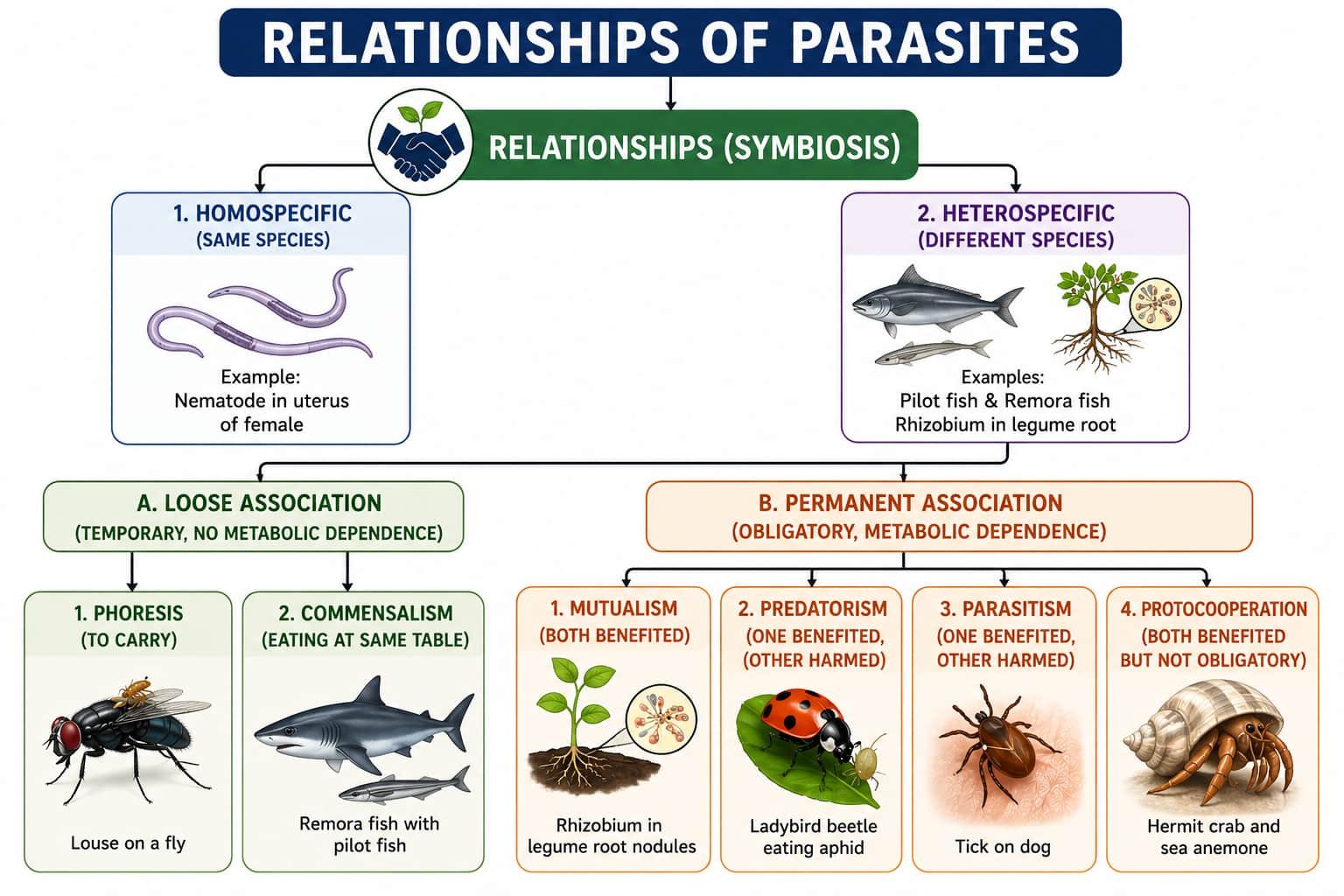
Worms in “refugia” are those that have not been exposed to anthelmintic treatment. They include free-living stages on pasture and worms present in untreated animals.
Refugia is an important strategy for slowing the development of anthelmintic resistance. To increase refugia, it is recommended that a portion of the flock remain untreated. Fecal egg counts and FAMACHA scores can be used to identify animals that do not require deworming.
Another strategy for maintaining refugia is to return treated animals to contaminated (“wormy”) pastures. If treated animals are moved to a clean pasture, the only worms that establish on that pasture are likely to be those resistant to anthelmintic treatment.
5. FAMACHA (FAffa Malan Chart)
The FAMACHA system was developed in South Africa in response to the emergence of drug-resistant worms. The system uses an ocular anemia scoring chart to evaluate the color of the lower eyelid in sheep (or goats) to determine the severity of parasite infection (as indicated by anemia) and the need for deworming.
| Clinical Category | Eye Color | PCV (%) | Treatment Recommended |
|---|---|---|---|
| 1 | Red | ≥ 28 | No |
| 2 | Pinkish-red | 23–27 | No |
| 3 | Pink | 18–22 | Maybe |
| 4 | Pinkish-white | 13–17 | Yes |
| 5 | White | ≤ 12 | Yes |
A bright red eyelid indicates that the animal has few or no worms, or that it has a high tolerance for its parasite burden. An almost white eyelid indicates severe anemia. In such animals, the worms present in the gastrointestinal tract are numerous enough to cause significant blood loss. If left untreated, the animal may die.
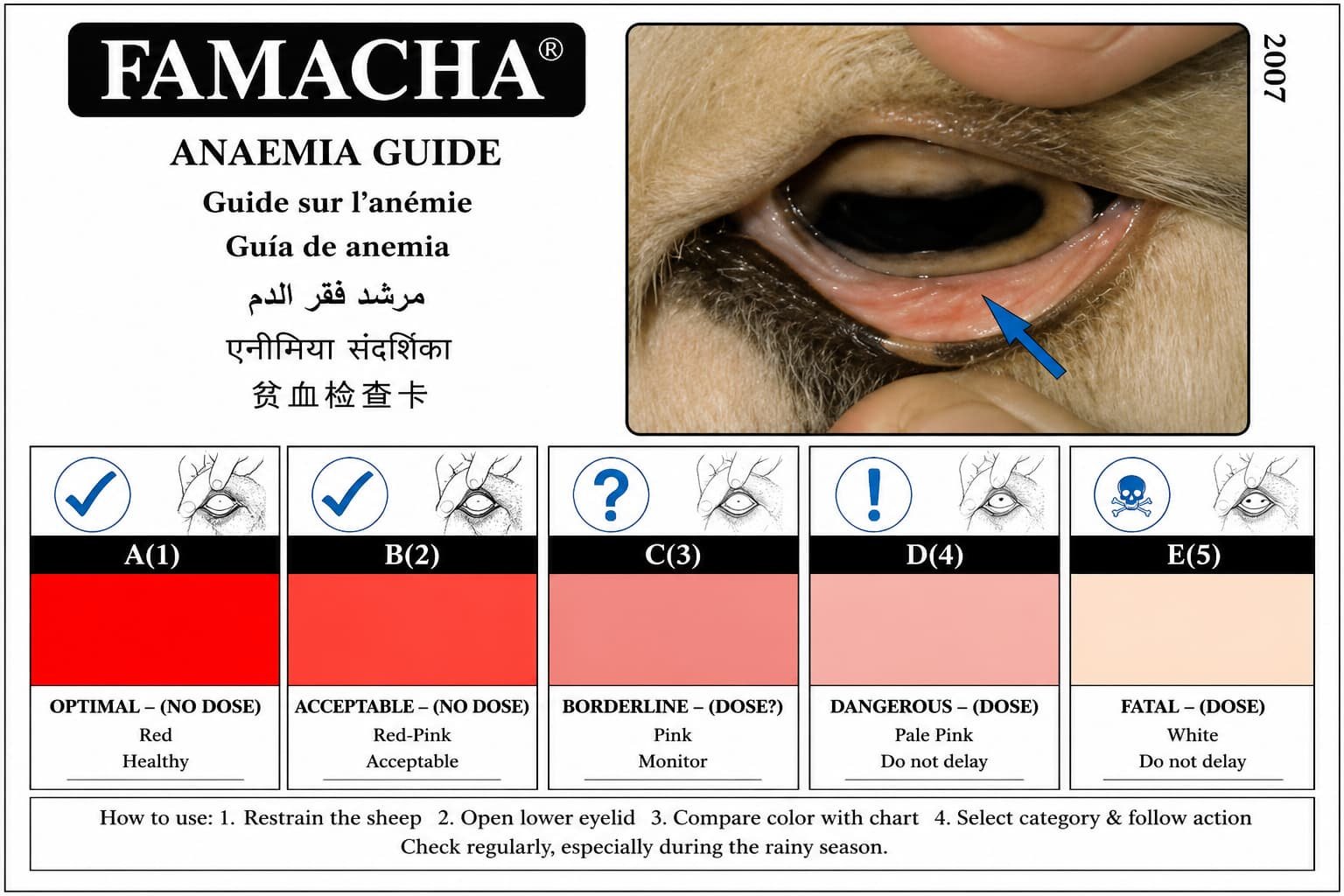
Mature sheep in Category 3 (pink) generally do not require treatment, whereas lambs and other susceptible animals should be treated if they fall into Category 3. The frequency of examination depends on the season and weather conditions, with more frequent evaluations typically required during the peak worm season (July through September).
The FAMACHA system reduces the number of animals requiring treatment, thereby slowing the development of anthelmintic resistance. It helps identify animals with significant parasite burdens that require treatment. Animals that consistently exhibit high parasite burdens should be considered for culling. The examination is quick and can easily be incorporated into routine flock management practices.
The FAMACHA system is effective only for the barber pole worm (Haemonchus contortus). It should not be used as a standalone method but rather as part of an integrated parasite control program that includes pasture rest, proper nutrition, multi-species grazing, alternative forages, zero grazing, and strategic deworming.