Introduction to Veterinary Parasitology
Veterinary Parasitology is a branch of Parasitology which deals with parasites that parasitize domestic and wild animals. Animal parasites cause huge economic losses in terms of mortality, reduced weight gain, reduced milk yield, poor hide quality, decreased egg production, and the cost of control.
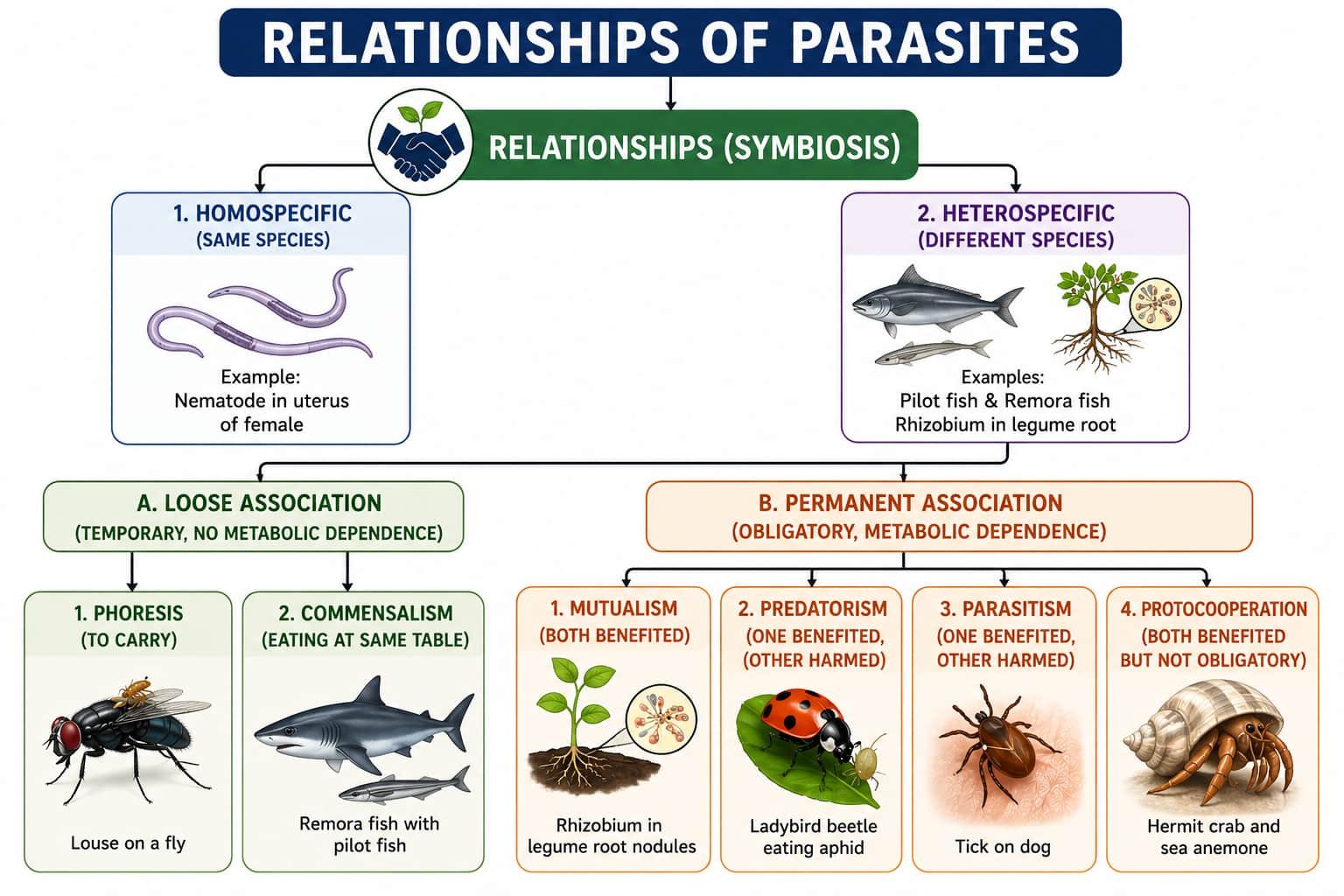
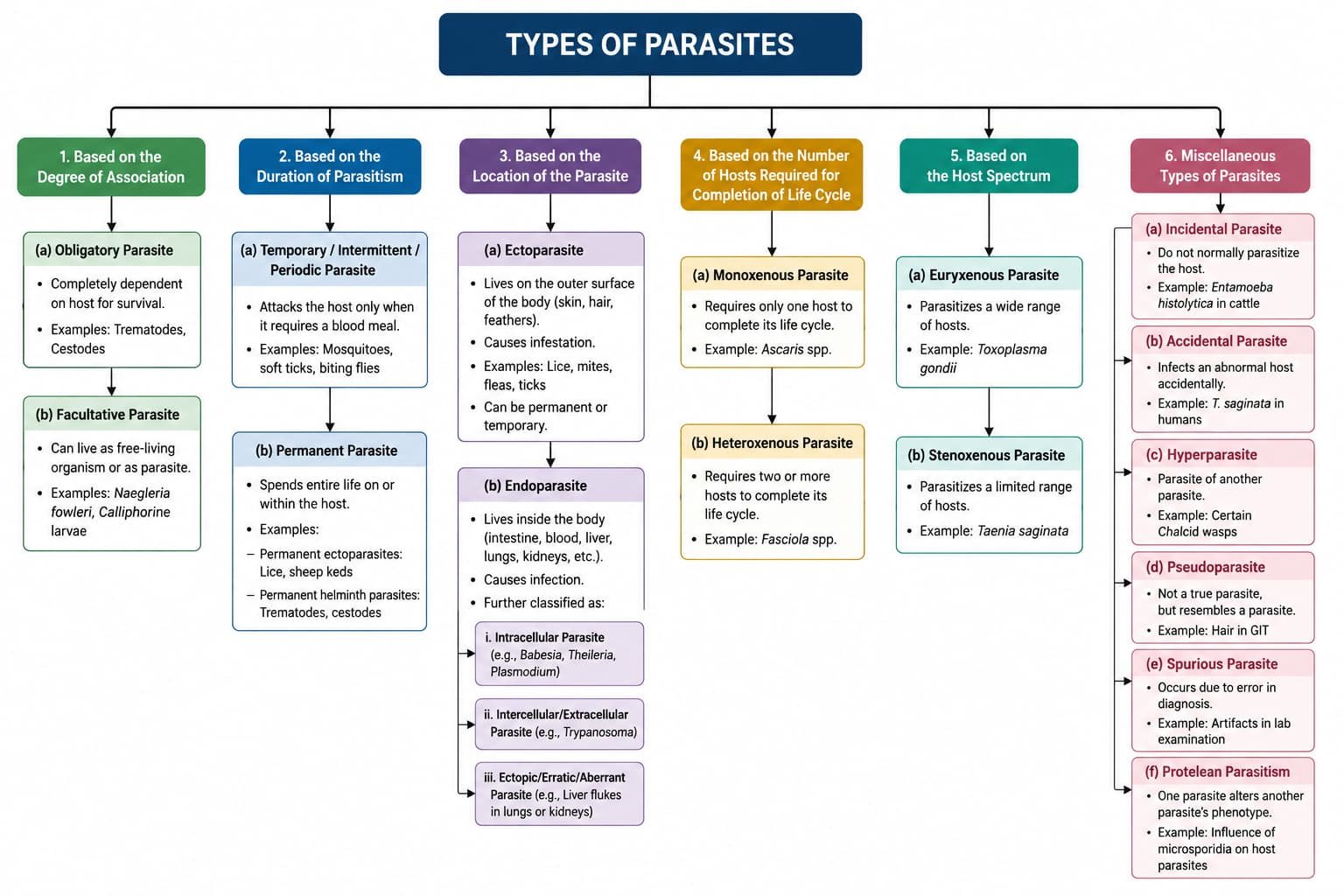
Parasitology is a branch of biology which deals with organisms that parasitize animals and humans. Parasites affecting animals and humans are broadly classified as protozoan and metazoan parasites.
Classification of Parasites
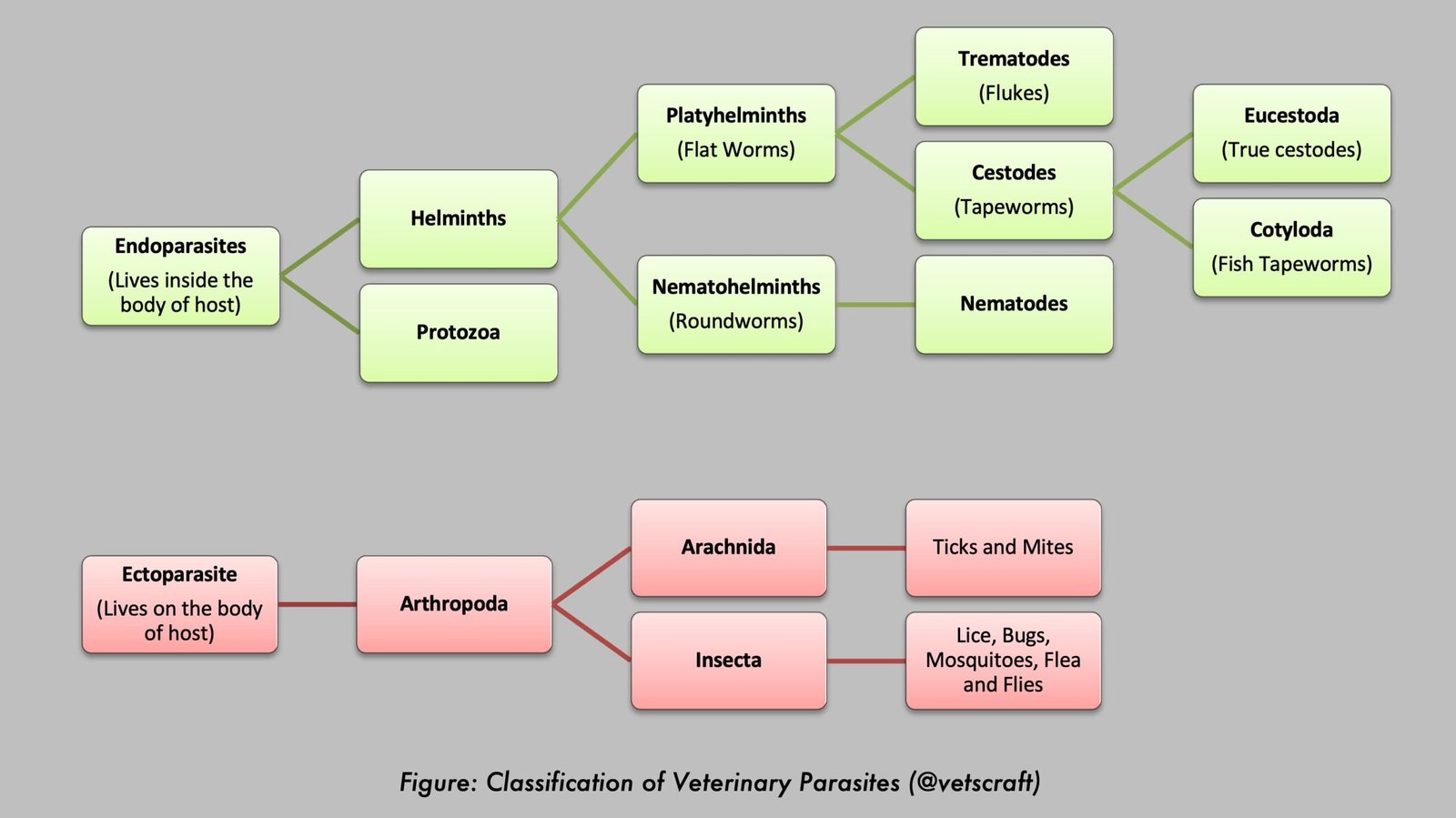
Parasites are mainly classified into two major groups:
- Endoparasites
- Ectoparasites
1. Endoparasites
Endoparasites live inside the body of the host. Major types of endoparasites are helminths and protozoa.
A. Helminths
Helminths are worm-like parasites and are further divided into:
a. Platyhelminthes (Flatworms)
- Trematodes – also called flukes or leaf-like worms
- Cestodes – commonly known as tapeworms
Cestodes are further classified into:
- Eucestoda – true cestodes
- Cotyloda – fish tapeworms
b. Nemathelminthes (Roundworms)
These are commonly called nematodes or roundworms.
B. Protozoa
Protozoa are microscopic single-celled parasites that infect different body systems of animals.
2. Ectoparasites
Ectoparasites live on the body surface of the host. Most ectoparasites belong to the group Arthropods.
A. Arachnida
- Ticks
- Mites
B. Insecta
- Lice
- Flies
- Mosquitoes
- Bugs
- Fleas
Importance of Veterinary Parasitology
The study of veterinary parasitology is important because parasites:
- Reduce animal productivity
- Cause severe diseases and death
- Transmit infectious diseases
- Affect meat, milk, wool, egg, and hide quality
- Lead to major economic losses in livestock industries
Understanding parasite classification helps veterinary students diagnose, prevent, and control parasitic diseases effectively.
For a complete study of Veterinary Parasitology, including detailed notes on protozoa, helminths, arthropods, parasitic diseases, life cycles, diagnosis, treatment, and control methods, visit our main Veterinary Parasitology page where all topics are arranged chapter-wise with easy navigation.