
Linguatula serrata (Tongue Worm)
Veterinary ParasitologyLinguatula serrata (tongue worm) in dogs and other hosts: learn its morphology, life cycle, pathogenesis, clinical signs, diagnosis, treatment, and zoonotic importance.
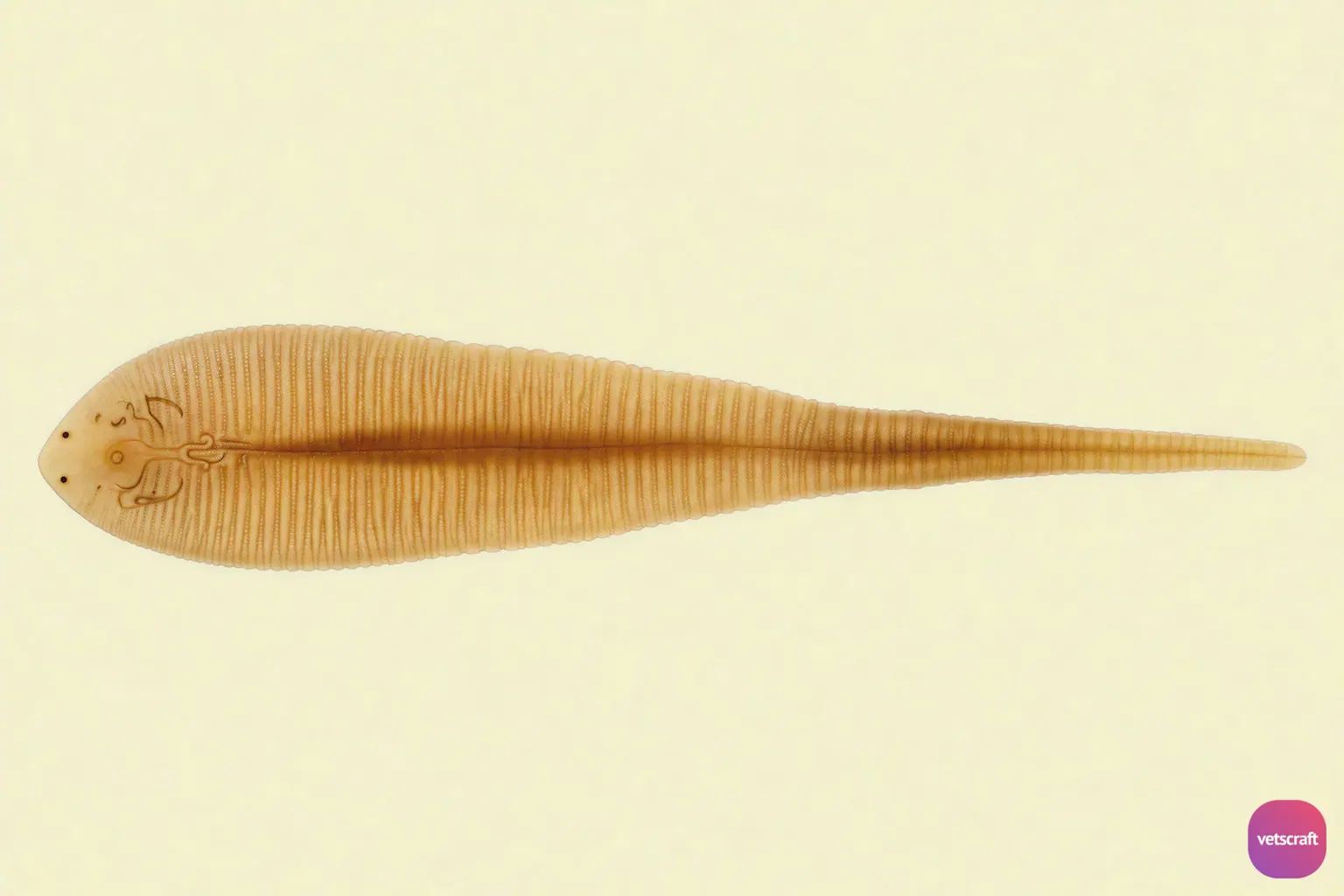
Linguatula serrata (tongue worm) in dogs and other hosts: learn its morphology, life cycle, pathogenesis, clinical signs, diagnosis, treatment, and zoonotic importance.
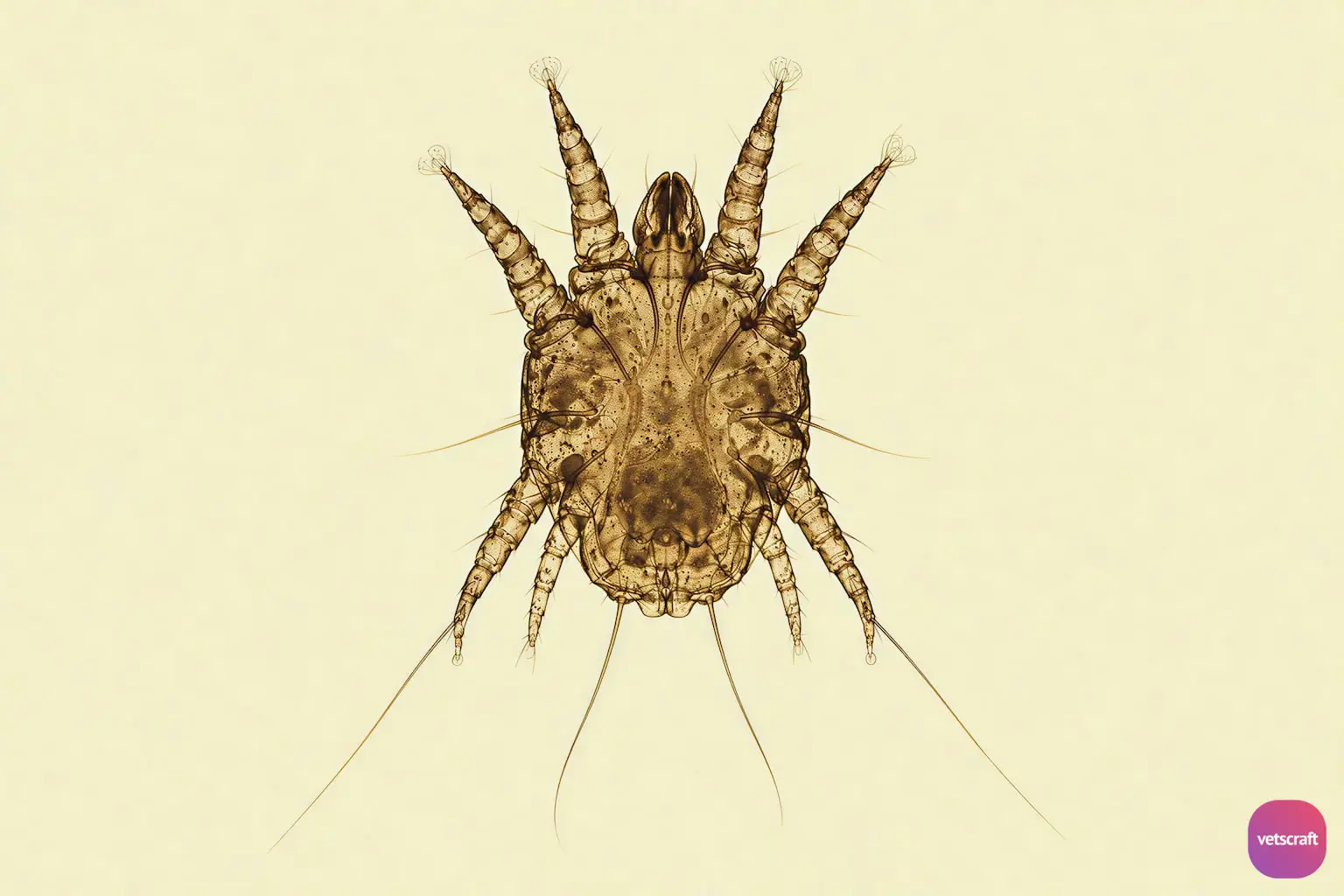
Learn about Otodectes cynotis (ear mites) in dogs and cats, including morphology, life cycle, transmission, clinical signs, diagnosis, pathogenesis, and treatment.
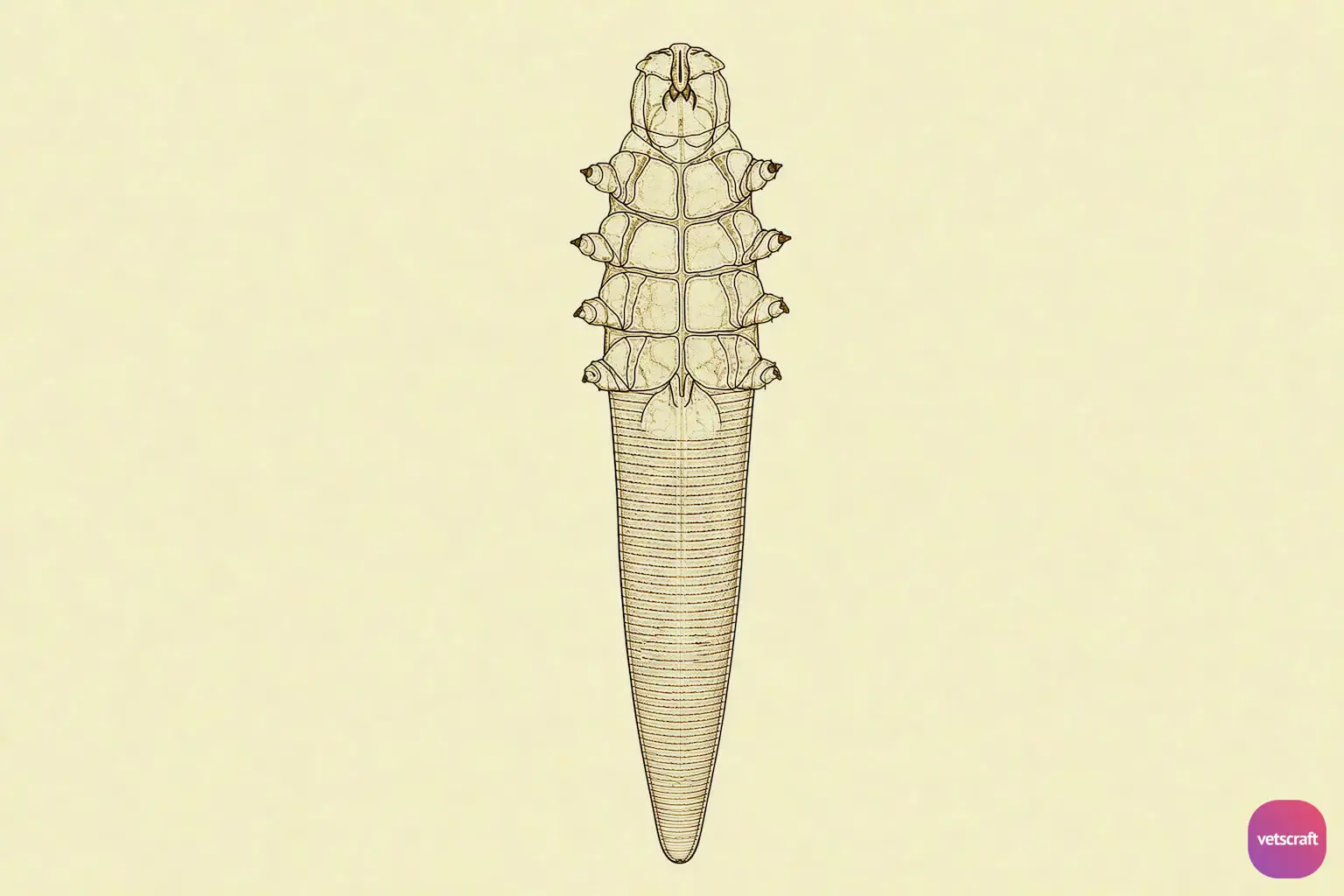
Learn about Demodex canis in dogs, including its morphology, life cycle, transmission, clinical forms, diagnosis, predisposing factors, and treatment.
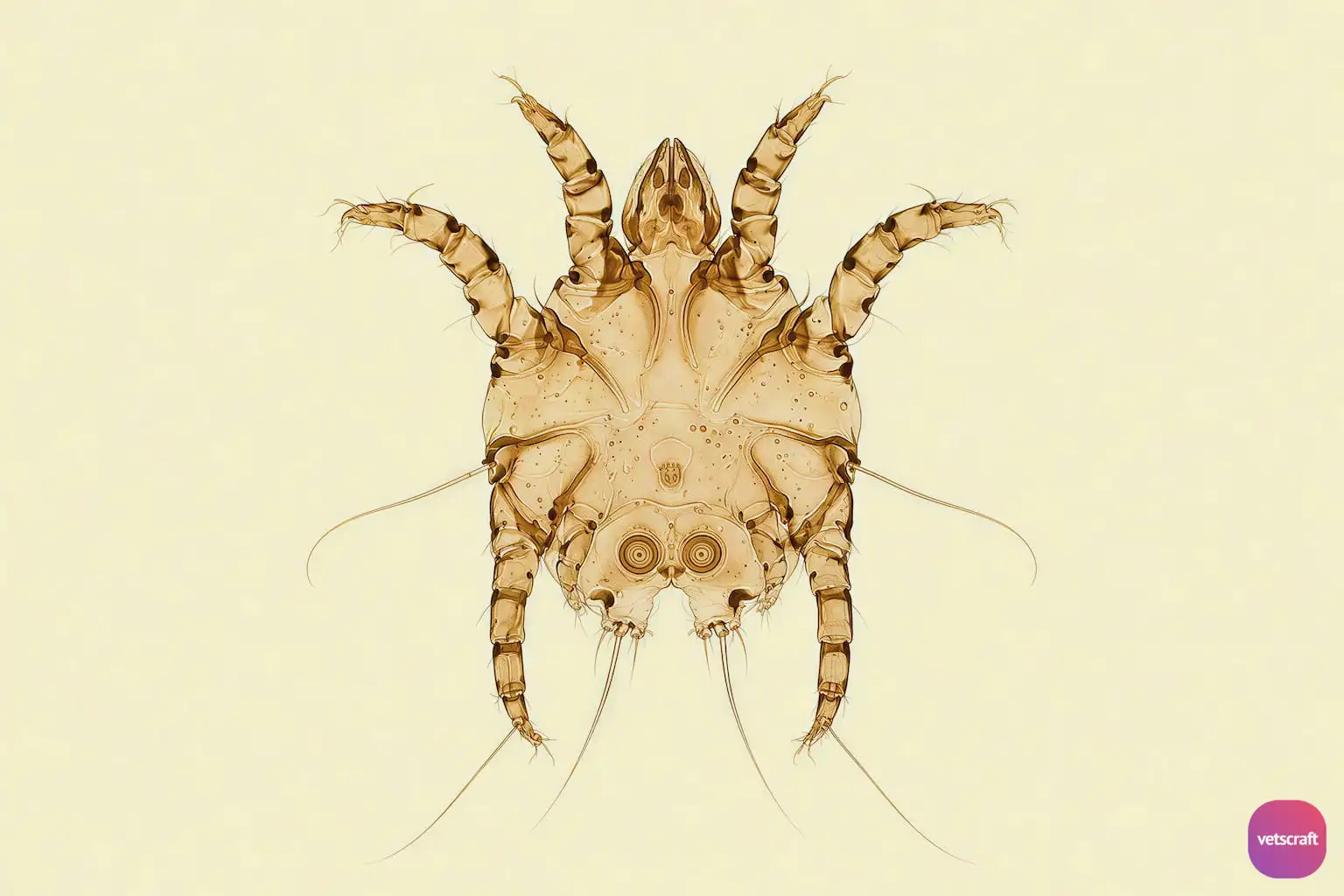
Learn about Chorioptes mites in cattle, sheep, goats, and horses, including morphology, life cycle, pathology, clinical signs, and treatment of chorioptic mange.
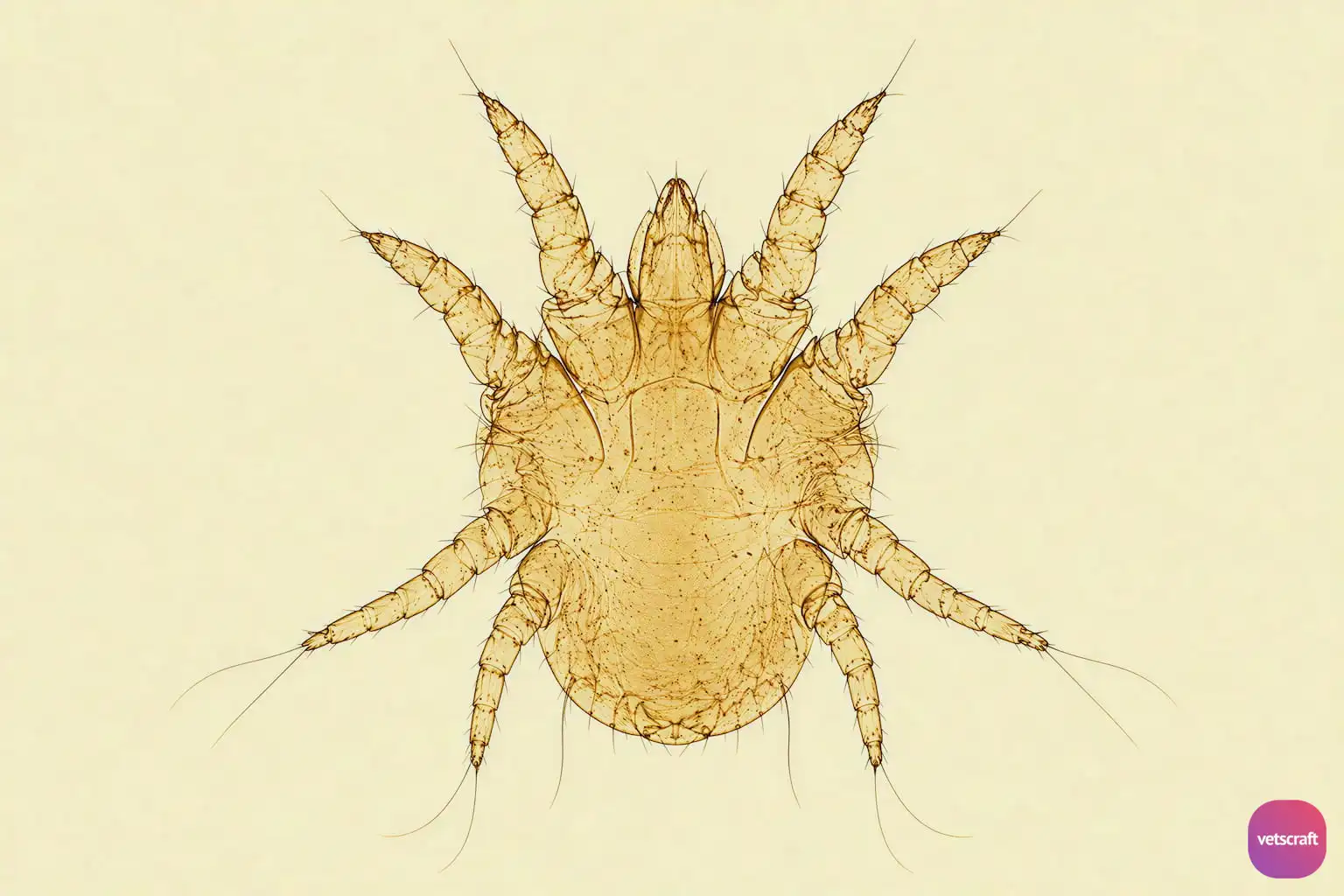
Learn about Psoroptes ovis in sheep, including P. ovis morphology, life cycle, pathogenesis, clinical signs, diagnosis, and treatment of sheep scab.
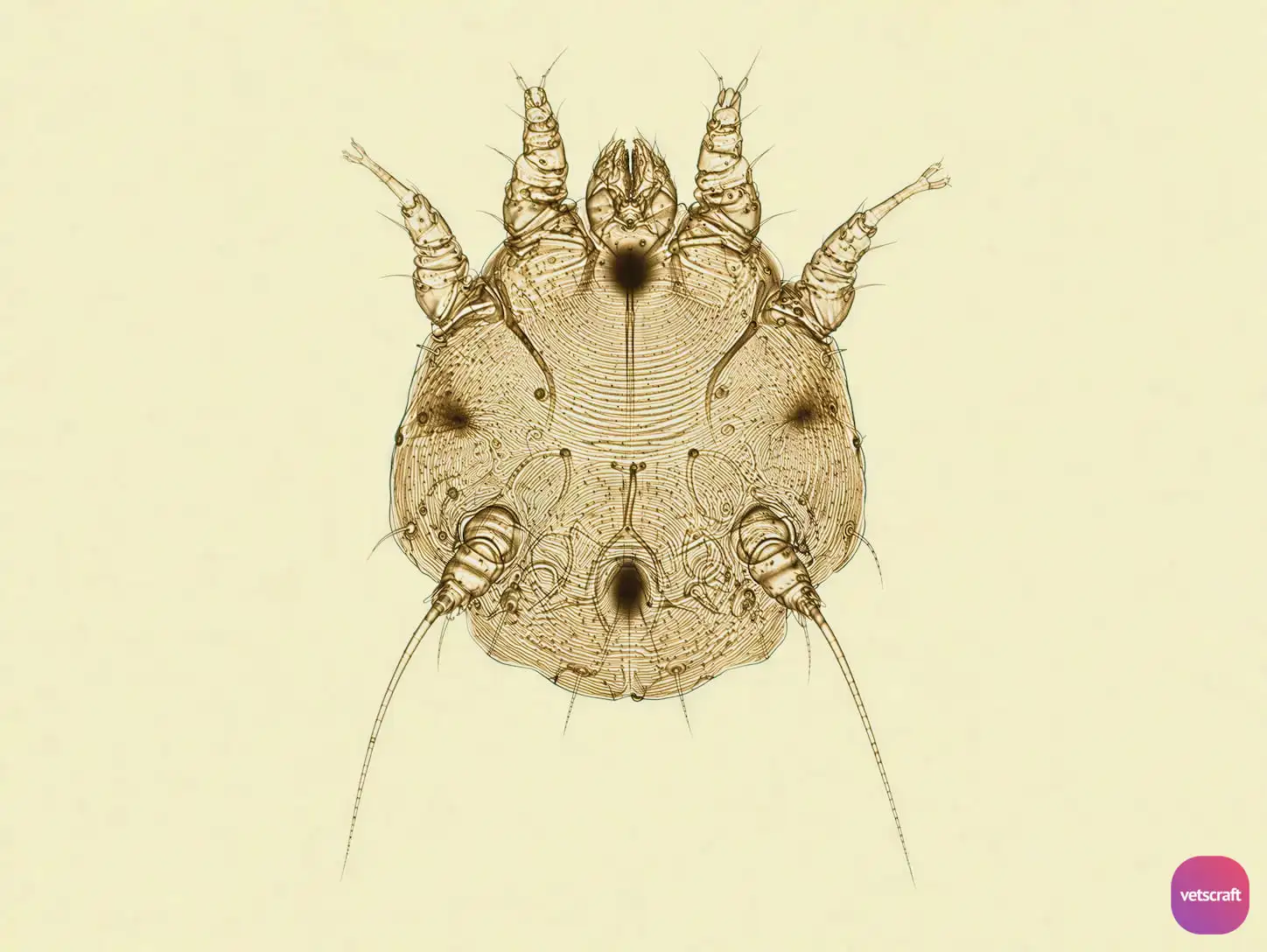
Learn about Notoedres cati, including its morphology, life cycle, pathology, transmission, clinical signs, and treatment and control in cats.
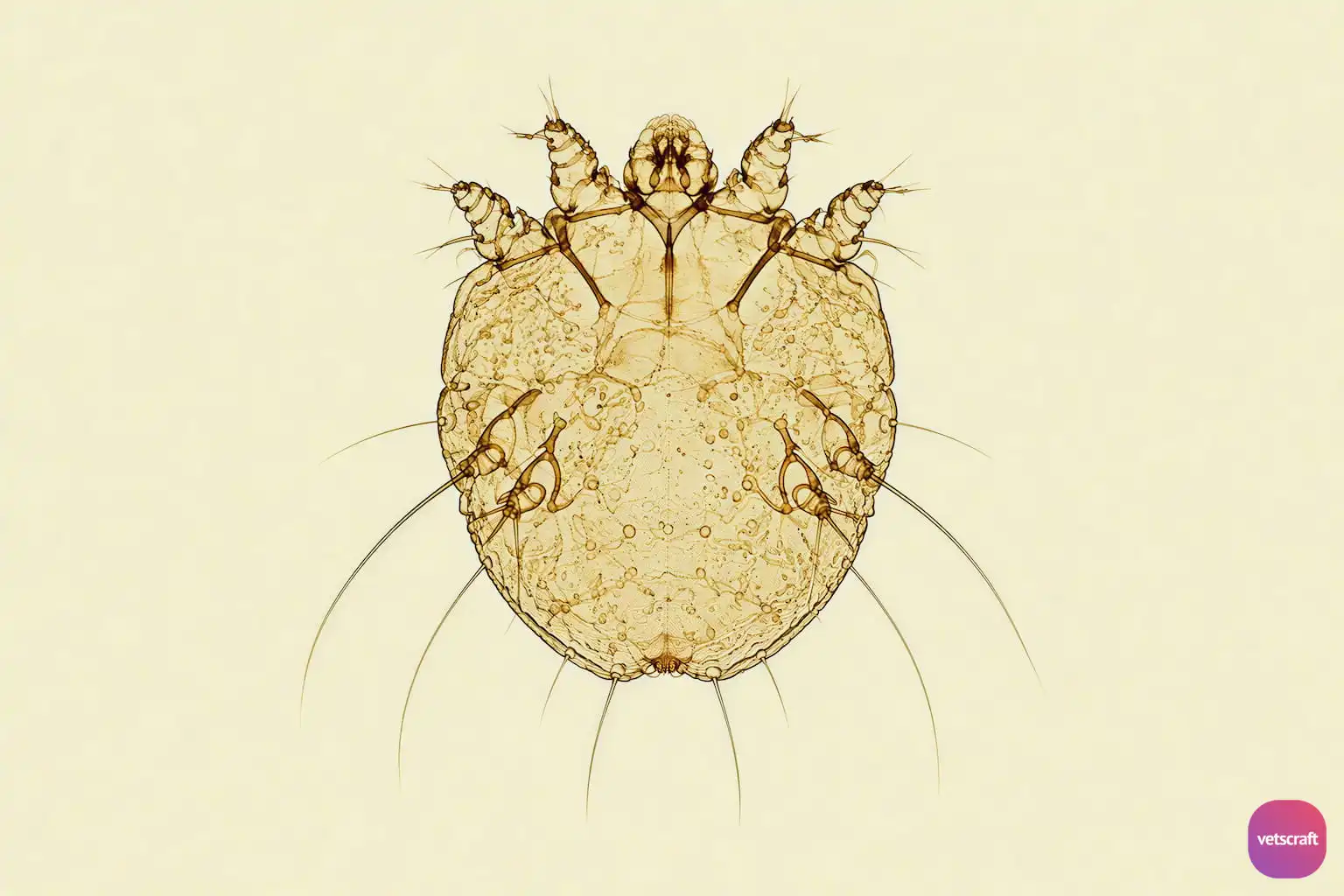
Learn about Sarcoptes scabiei, including its morphology, life cycle, pathogenesis, clinical signs, diagnosis, and treatment in animals.
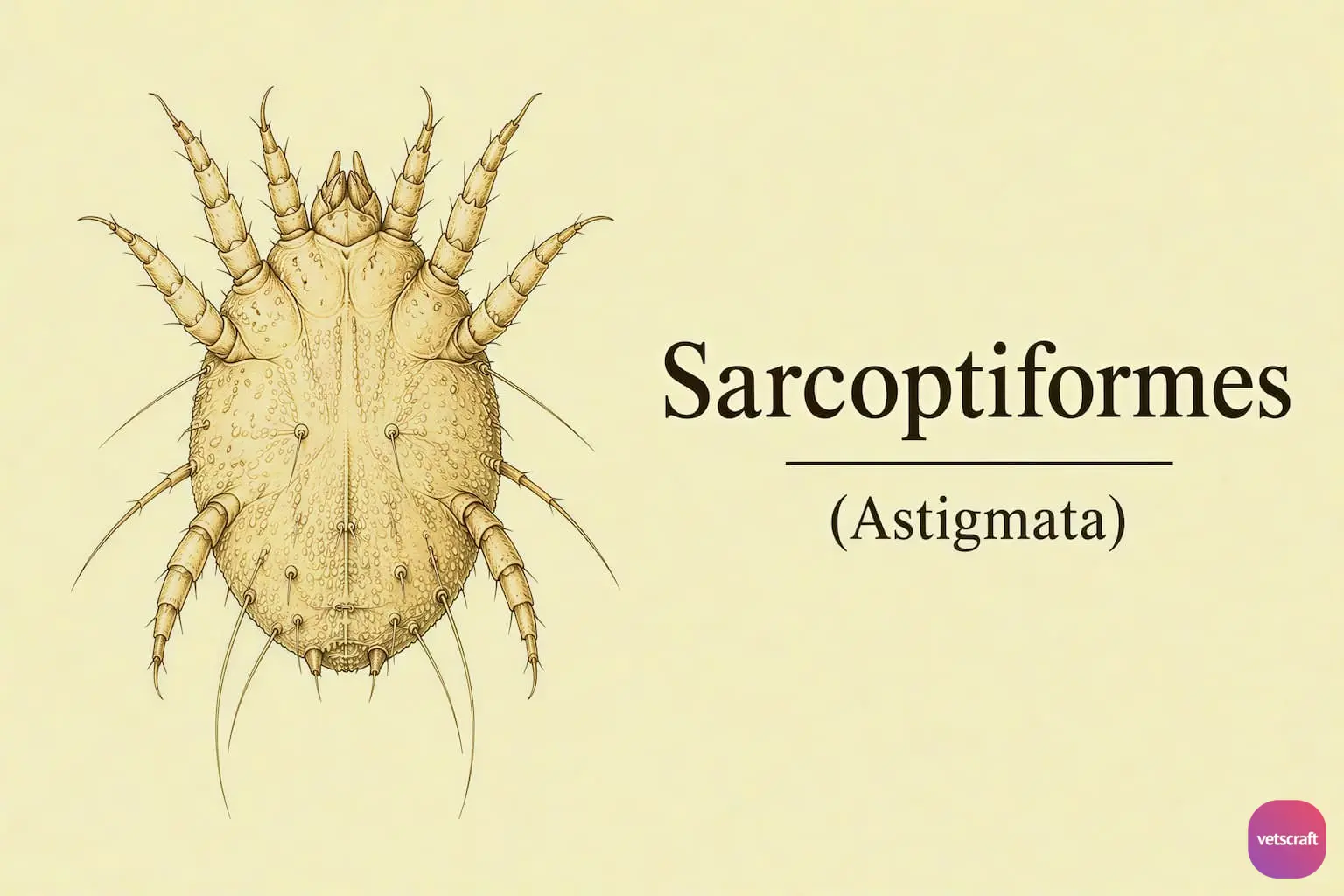
General characters of Sarcoptiformes (Astigmata), including morphology, respiration, legs, mouthparts, and hypopial nymphs in veterinary parasitology.
General Characters of Suborder Sarcoptiformes (Astigmata) Read More »
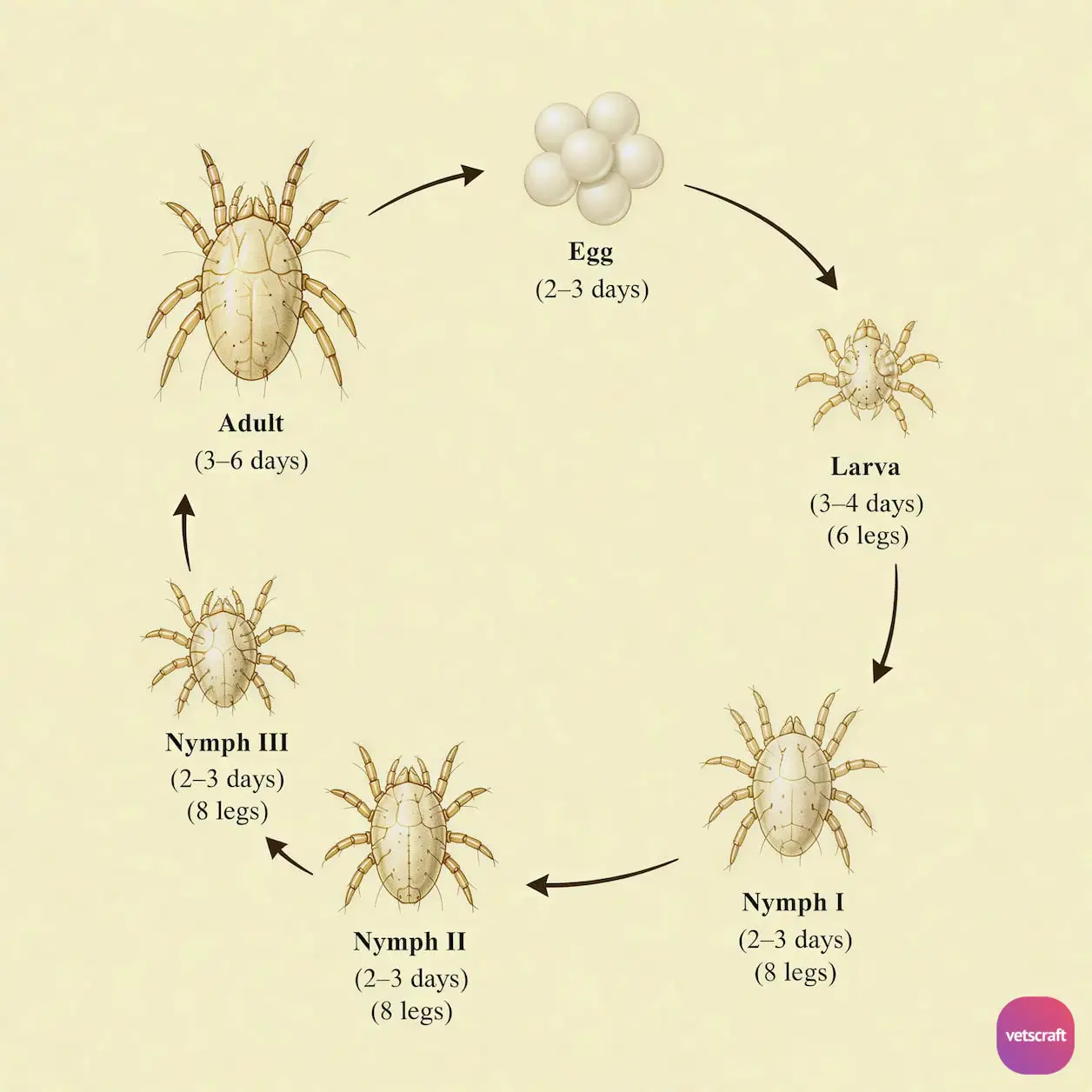
Learn the general characters of mites, including their morphology, body structures, mouthparts, legs, nymphal stages, life cycle, and transmission.
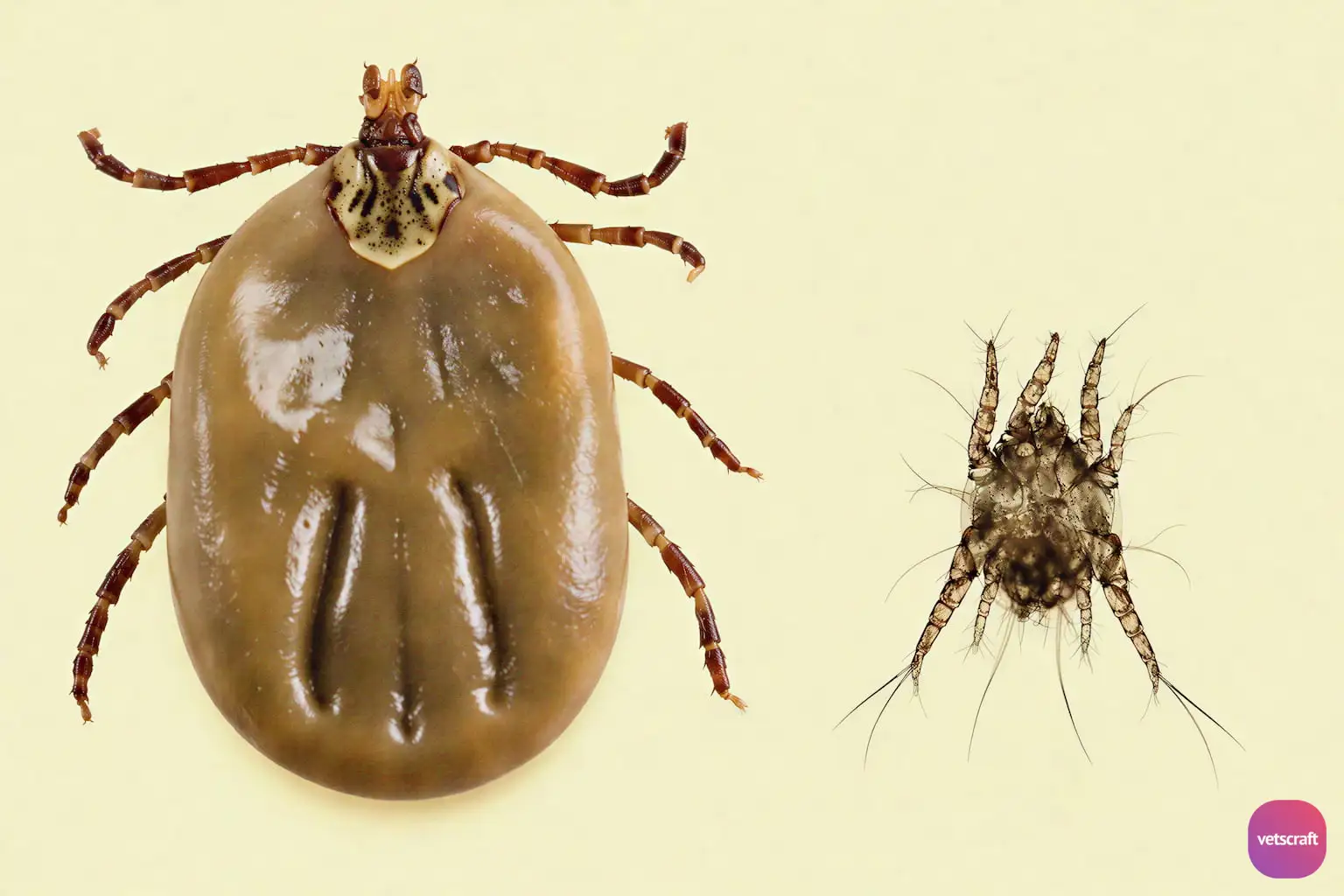
Learn the key differences between ticks and mites, including their morphology, body structure, mouthparts, legs, eyes, idiosoma, and other distinguishing features in veterinary parasitology.