Haematopinus Lice: Species, Morphology, and Pathogenesis in Livestock
Haematopinus is a genus of sucking lice in the family Haematopinidae that infests domestic livestock, including cattle, pigs, and horses. Important species include Haematopinus tuberculatus, H. quadripertusus, H. eurysternus, H. suis, and H. asini. These lice are blood-feeding ectoparasites that can cause skin irritation, scratching, skin damage, restlessness, loss of condition, and anemia, particularly in heavy infestations. This article covers the important species, morphology, host distribution, and pathogenesis of Haematopinus lice.
The important species in the genus Haematopinus include:
- Haematopinus tuberculatus (Buffalo louse)
- Haematopinus quadripertusus (Tail-switch louse of cattle)
- Haematopinus eurysternus (Short-nosed cattle louse)
- Haematopinus suis (Hog or pig louse—single bristle on each abdominal segment)
- Haematopinus asini (Horse louse)
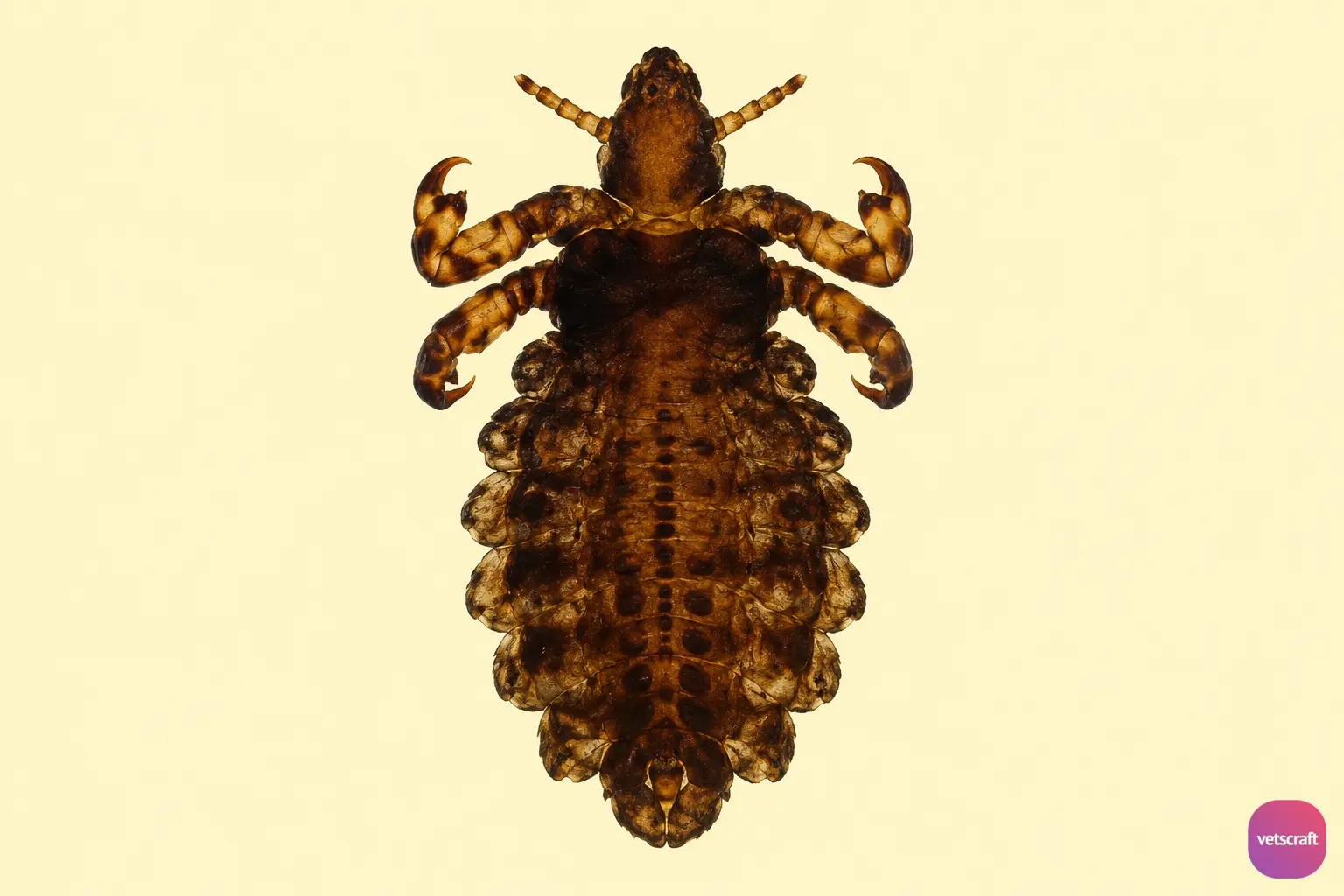
Morphology
- Eyes are absent.
- The head has forward prolongations behind the antennae, giving it a slender, elongated, and nosed appearance.
- The abdomen is membranous, with one row of spines on each segment, and has prominent paratergal plates.
- Legs and claws are equal in size.
- The tibial pad is well developed.
- The thorax is broad, and the spiracles are large.
Pathogenesis
Haematopinus suis is the only species found on pigs. It is the largest louse and occurs in the folds of the neck and jowl and around the ears. Light infestations cause only mild irritation. Pediculosis in pigs leads to scratching and skin damage.
In horses, Haematopinus asini is found on the head, neck, back, and inner surface of the upper legs. Light infestations may be asymptomatic.
In heavy infestations, animals may be restless, lose condition, and develop anemia.