Linognathus Lice in Animals: Species, Morphology & Life Cycle
Linognathus lice are blood-feeding sucking lice of domestic animals belonging to the family Linognathidae. Important species infest cattle, sheep, goats, and dogs, with characteristic differences in their host and preferred body sites. This post covers the important Linognathus species, their morphology, and life cycle.
The Linognathus genus includes these important species:
- Linognathus vituli: Long-nosed louse or blue louse of cattle, found on the shoulders, neck, and rump
- Linognathus pedalis: Foot louse of sheep, found on the feet, legs, and scrotum
- Linognathus ovillus: Face louse of sheep, found on the ears and face of sheep
- Linognathus setosus: Dog louse
- Linognathus stenopsis: Goat louse
Morphology
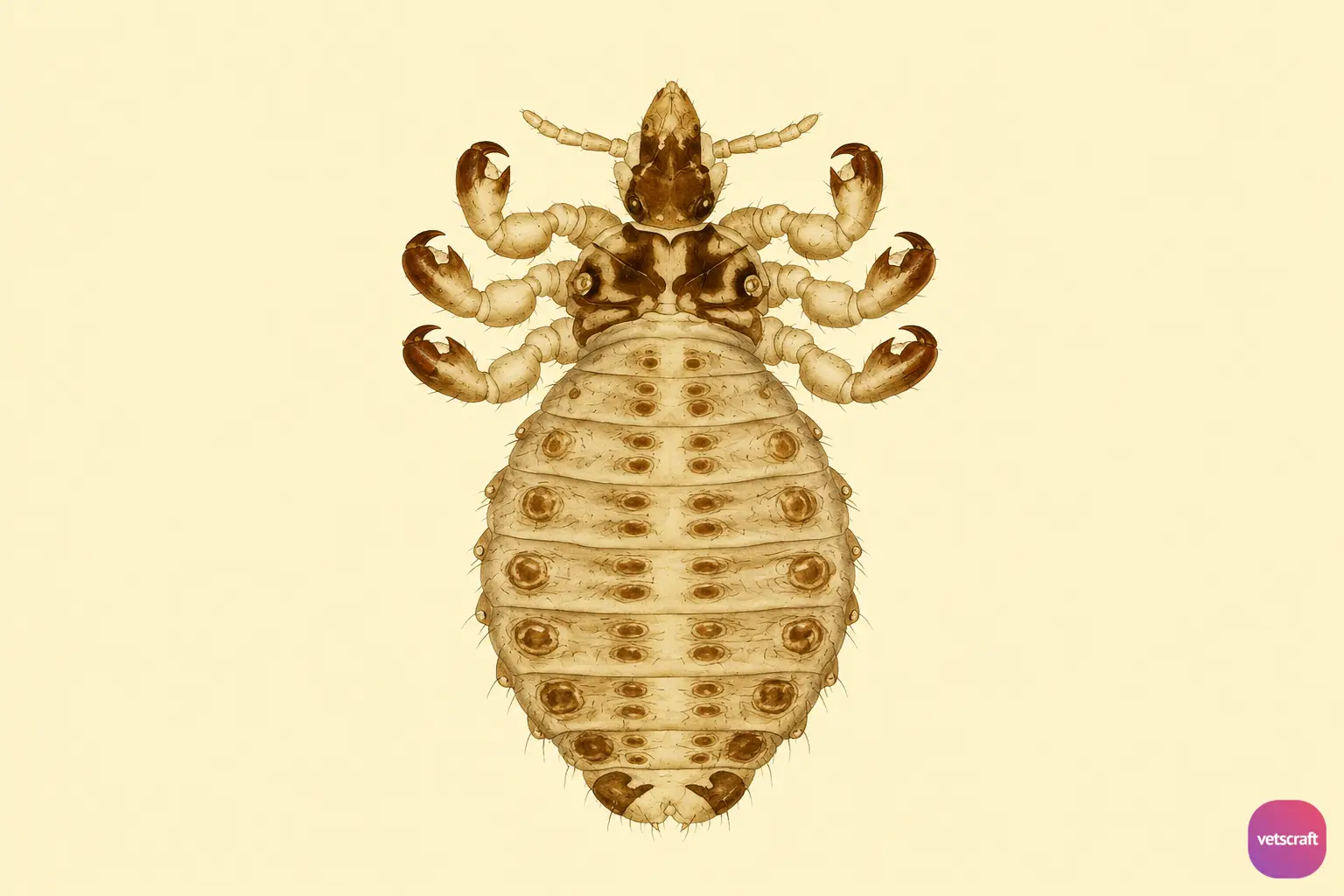
- The head is long, narrow, and conical, giving it a long-nosed appearance.
- The abdomen is membranous and narrow, with two rows of spines on each segment, and has less prominent paratergal plates.
- The first pair of legs is the smallest, and the third pair is the longest.
- The tibial pad is absent.
- The three thoracic segments are fused together, and the spiracles are small.
Life Cycle
Incomplete metamorphosis occurs in Linognathus lice. Adult females attach the nits to the hair of the host. The eggs hatch in about 10 days. The newly hatched nymphs are similar to the adults but smaller in size.
There are three nymphal stages, each lasting about 7 days, and the nymphs molt between successive stages before becoming adults. Mature adults are produced in about 4 weeks. Adults live for 1–2 months.