Damalinia (Bovicola) Lice: Morphology, Pathogenesis and Veterinary Significance
Damalinia (Bovicola) are chewing lice of veterinary importance that primarily infest domestic livestock and horses. These lice belong to the family Trichodectidae and include several host-associated species, such as Damalinia bovis in cattle, Damalinia ovis in sheep, Damalinia caprae in goats, and Damalinia equi in horses.
Infestations are generally associated with irritation and pruritus, while heavy infestations can cause excoriation, alopecia, restlessness, and loss of condition. Understanding their morphology, pathogenesis, and host-specific distribution is important for veterinary diagnosis and management.
Morphology
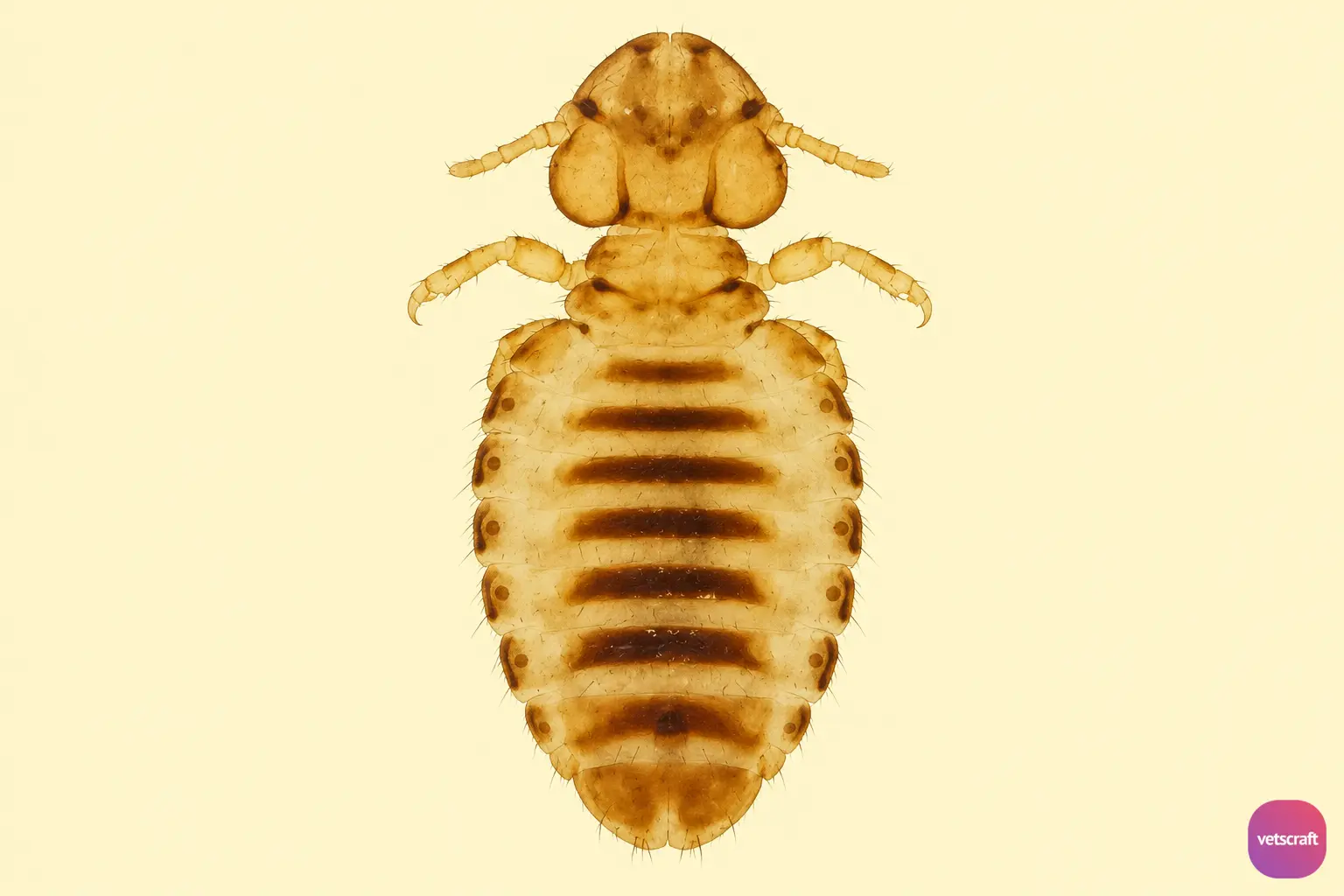
- Small, pale-colored lice with reddish-brown transverse bands on the abdomen
- Head rounded
- Antennae 3-segmented
- Mandibles bite vertically
- A single row of abdominal spines
- Tarsi end in single claws
- Reproduce parthenogenetically.
Pathogenesis
In general, light infestations of Damalinia result in little damage or chronic dermatitis. However, heavy infestations may result in intense irritation, pruritus, excoriation, and alopecia.
Veterinary Significance
In cattle, Damalinia bovis favors the top of the head, neck, shoulders, back, and rump. As infestations increase, the lice may spread down the sides and may cover the rest of the body. The lice aggregate in patches, and their feeding activity may cause lesions at these sites.
Infestation of sheep by Damalinia ovis can be problematic. This species is mobile and can spread over the entire body, causing considerable irritation, restlessness, interrupted feeding, and loss of condition. Exuded serum from bite wounds causes wool matting. Rubbing leads to wool loss. Wounds may attract blowflies.
Damalinia equi is most prevalent on the head, mane, base of the tail, and shoulders.