Lipeurus (Bird Louse): Species, Morphology, Significance, and Control
Lipeurus is a genus of chewing lice that primarily infests birds, particularly poultry and pheasants. These slender, wing- and tail-associated lice can cause irritation and restlessness in infested birds and may negatively affect productivity. This article covers the important species of Lipeurus, their morphology, veterinary significance, and control measures.
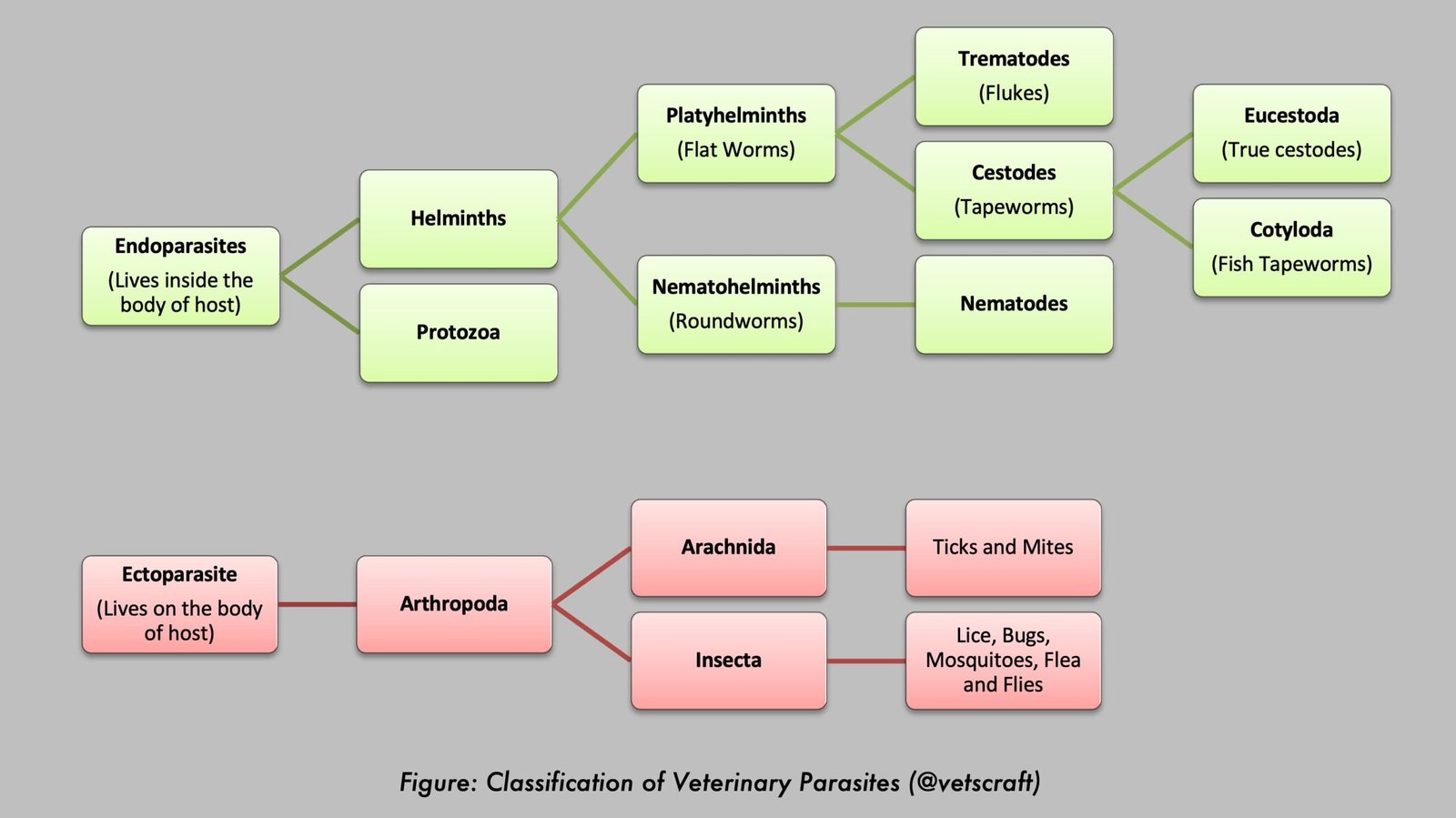
Lipeurus is an ischnoceran louse of birds belonging to the family Philopteridae. There are two important species in the genus Lipeurus:
- Lipeurus tropicalis (Wing louse of poultry)
- Lipeurus heterophagus (Head louse of poultry)
The main hosts of Lipeurus are domestic fowl and pheasants.
Morphology
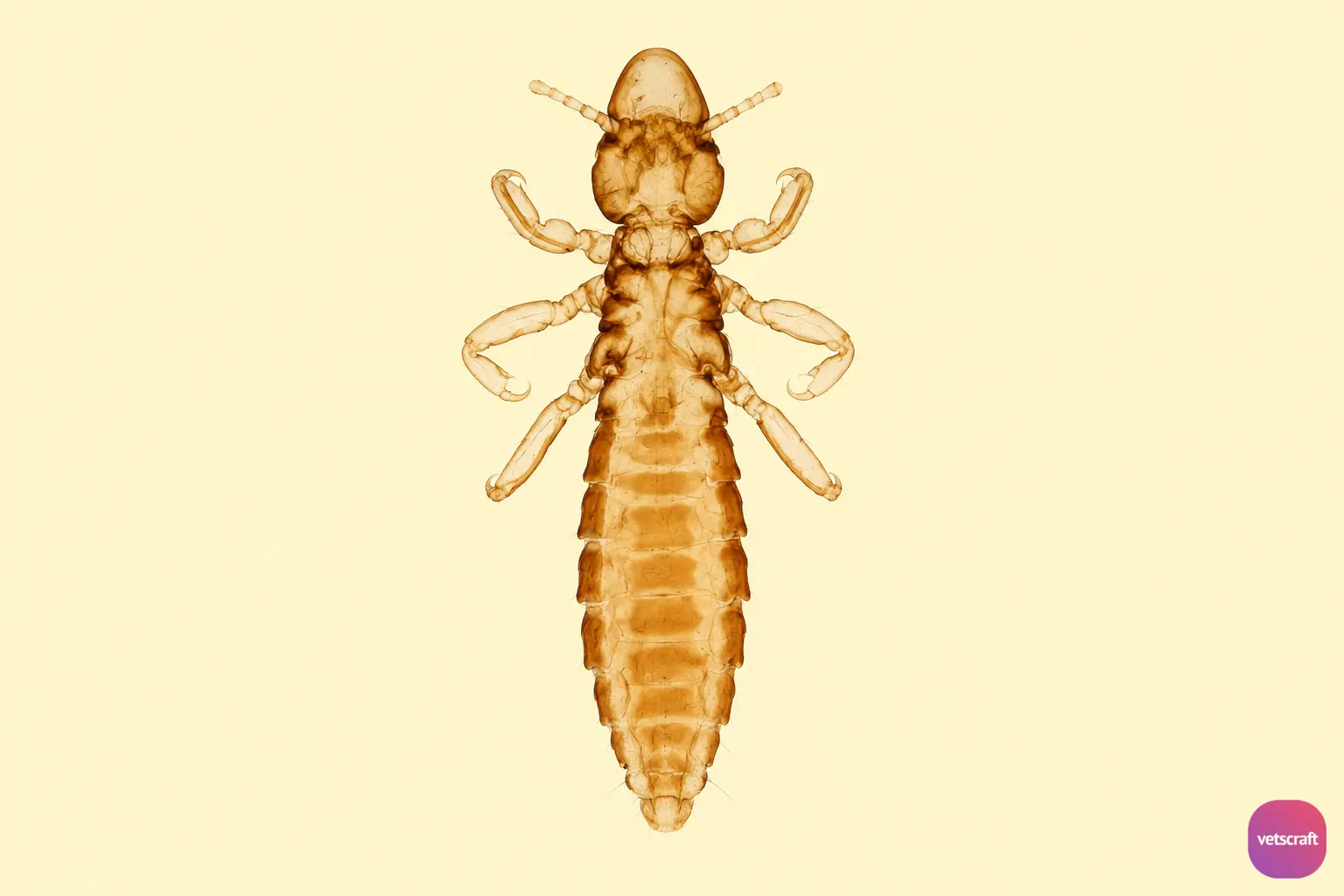
Lipeurus is a long, very slender louse with an elongated body and a rounded head. There are small angular projections in front of the antennae. The maxillary palps are absent. A pair of antennae is present. The mandibles bite vertically. Eyes are absent. The prothoracic segment is prominent, and the mesothoracic and metathoracic segments are fused.
The hind legs are well developed and twice the length of the first two pairs. At the junction of the mesothorax and metathorax, and on the lateral aspect of the abdomen, there are a few tufts of long bristles.
Veterinary Significance
Lipeurus occurs on the underside of the barbules of wing and tail feathers. Infested birds are restless due to constant irritation. Egg production may decrease, and broiler birds may lose weight, resulting in poor body condition and appearance.
Control
Dipping in a 0.25% insecticide solution helps control Lipeurus.