Trichodectes canis (Biting Dog Louse): Morphology, Pathogenesis & Veterinary Significance
Trichodectes canis, commonly known as the biting dog louse, is a chewing louse that infests dogs, particularly puppies. It feeds on skin debris and causes irritation, pruritus, excoriation, and hair loss. Heavy infestations may contribute to poor body condition and secondary bacterial infections.
Trichodectes canis is also of veterinary importance because it can serve as an intermediate host for Dipylidium caninum, the common flea tapeworm of dogs.
Morphology
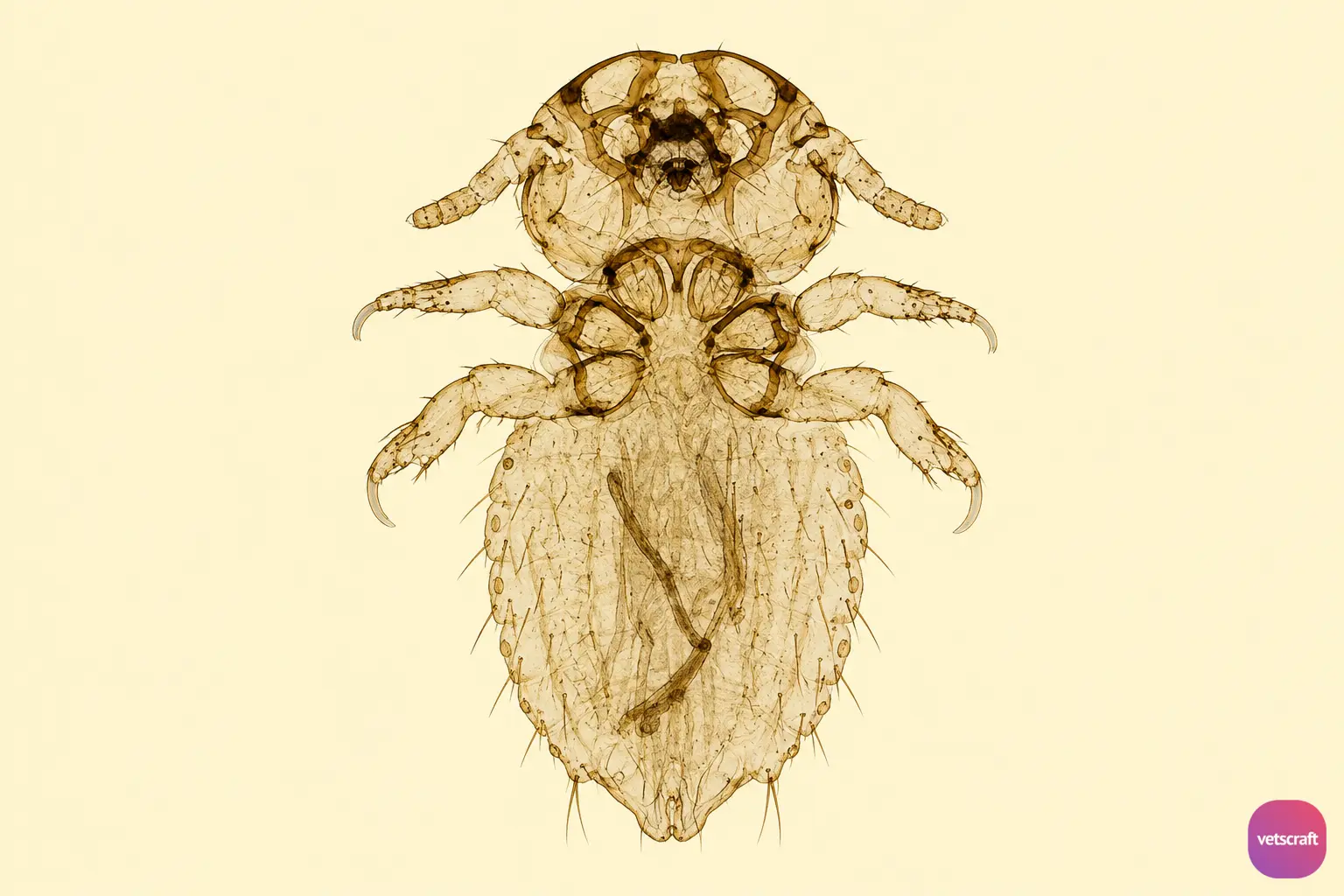
- Head is broader
- Antenna is 3-segmented
- Mandibles bite vertically
- Many setae are seen on each abdominal segment
- Three pairs of legs
- Tarsi end in single claws
- Lice move slowly on the body of the host
Pathogenesis
Trichodectes canis (biting dog louse) is a harmful parasite of puppies. It is found on the neck, tail, and at the base of the hairs. Infestation produces intense irritation, inflammation, excoriation, alopecia, and secondary bacterial infection.
Animals may be restless and pull out their hair, resulting in large numbers of hairless patches that give a sick appearance. The animal may deteriorate in condition and become emaciated. Trichodectes canis also acts as an intermediate host for Dipylidium caninum.
Veterinary Significance
Trichodectes canis is of particular veterinary importance because it serves as an intermediate host for Dipylidium caninum. Dogs may acquire the tapeworm by ingesting infected lice during grooming.