Tapeworms in Dogs (Cestodes)
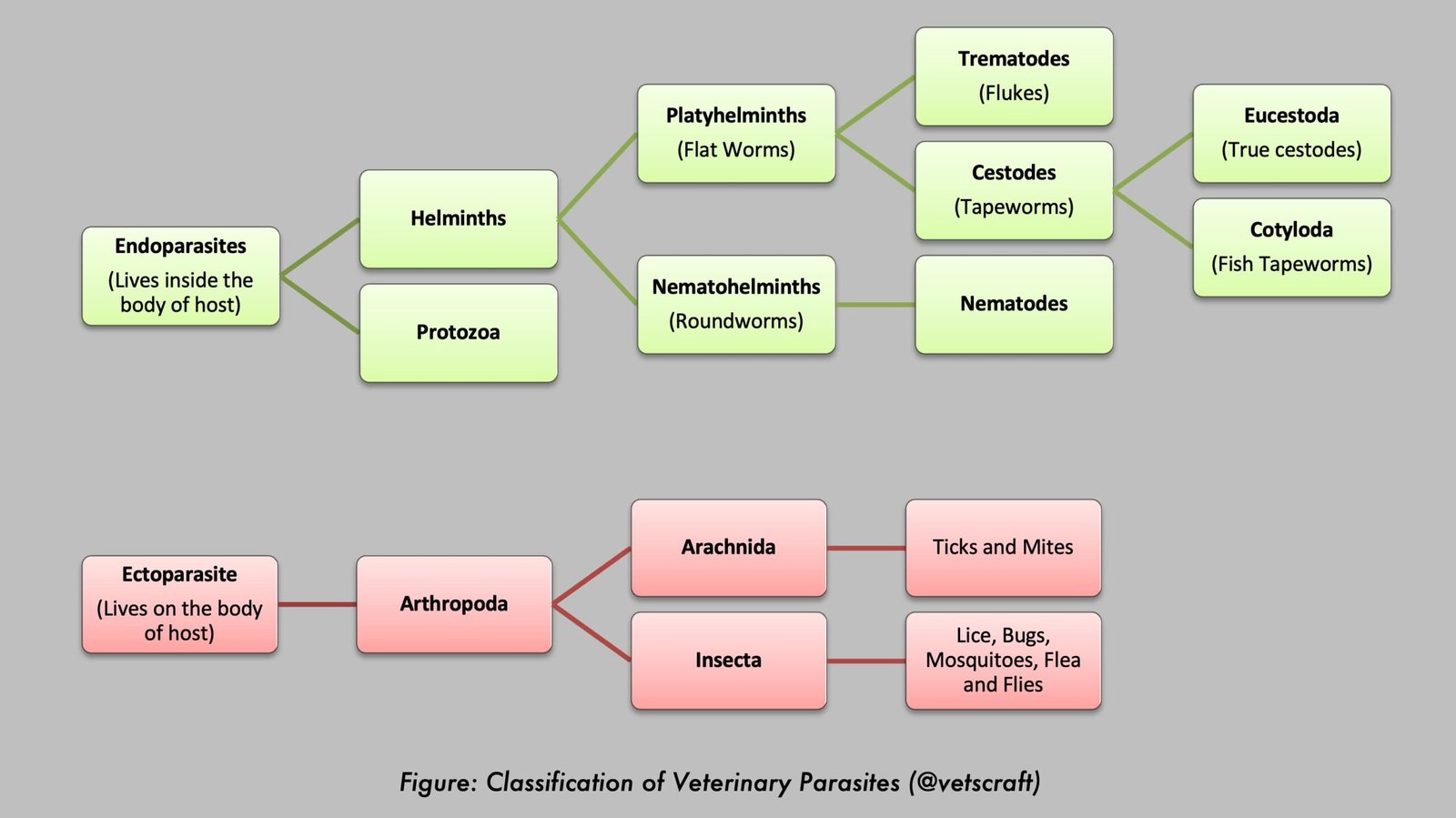
Tapeworms are intestinal cestode parasites that commonly infect dogs worldwide. Most infections occur when dogs ingest infected intermediate hosts such as fleas, rodents, rabbits, livestock tissues, or fish, depending on the tapeworm species.
While many infected dogs remain asymptomatic, heavy infestations can lead to digestive disturbances, weight loss, poor body condition, and perianal irritation. Some canine tapeworms are also zoonotic and pose a significant public health concern. The following are the major tapeworm species reported in dogs.
Common tapeworm species found in dogs include:
- Dipylidium caninum
- Taenia hydatigena
- Taenia multiceps
- Echinococcus granulosus
- Diphyllobothrium latum
- Spirometra mansonoides (Spirometra mansoni)
These tapeworm species differ in their life cycles, intermediate hosts, pathogenicity, and zoonotic significance. Accurate identification of the causative species is essential for appropriate diagnosis, treatment, prevention, and control of tapeworm infections in dogs.