Spirometra mansonoides (Spirometra mansoni): Morphology, Life Cycle, and Sparganosis
Spirometra mansonoides (Spirometra mansoni) is a pseudophyllidean tapeworm that infects dogs and cats as its definitive hosts. Its life cycle requires two intermediate hosts: the first is a freshwater crustacean (copepod), while the second includes reptiles, amphibians, birds, and some mammals. Humans may become accidental dead-end hosts after ingesting the plerocercoid larvae, resulting in sparganosis.
This article covers the taxonomy, morphology, larval stage, life cycle, and clinical significance of Spirometra mansonoides.
Hosts
- Definitive hosts: Dogs and cats
- First intermediate hosts: Freshwater copepods (Cyclops spp.)
- Second intermediate hosts: Frogs, snakes, reptiles, amphibians, birds, and small mammals
- Paratenic hosts: Various vertebrates
- Accidental host: Humans
Taxonomical Classification
- Kingdom: Animalia
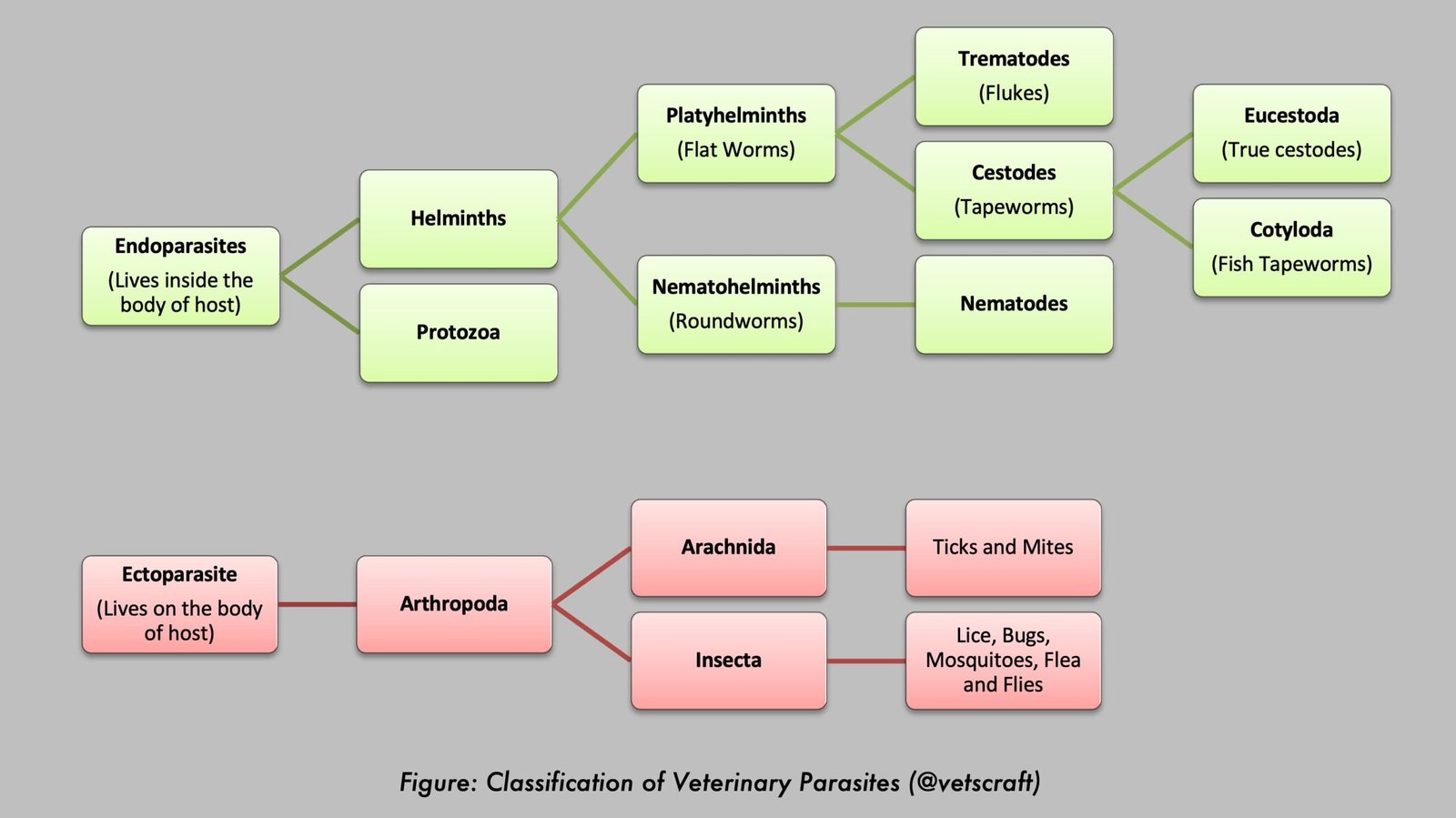
- Phylum: Platyhelminthes
- Class: Cestoda
- Subclass: Eucestoda
- Order: Diphyllobothriidea
- Family: Diphyllobothriidae
- Genus: Spirometra
- Species: Spirometra mansonoides (Spirometra mansoni)
- Common Name: Spirometra tapeworm
Taxonomic Note
Spirometra mansonoides and Spirometra mansoni are currently recognized as distinct species based on modern taxonomic and molecular studies. S. mansonoides is primarily distributed in North America, whereas S. mansoni is mainly found in Asia. Older veterinary and medical literature may treat these names synonymously; however, they are now considered separate species.
Morphology
- Spirometra species are pseudophyllidean tapeworms, as is Diphyllobothrium, which they closely resemble. The adult worm can grow up to 1.5 m in length.
- The mature proglottids have a genital pore and a uterine opening for egg secretion. The uterus is spiral, consistent with the parasite’s name.
- The eggs of Spirometra species are oval-shaped and have a distinct operculum at one pole, which is slightly cone-shaped.
Larval Stage
The plerocercoid larvae (spargana), found in the second intermediate host, including dogs, vary in length from a few millimeters to 10 cm. They are light-colored and resemble crumpled tapes.
Life Cycle
Spirometra species, like Diphyllobothrium latum, belong to the order Diphyllobothriidea (formerly classified under Pseudophyllidea) and require two intermediate hosts to complete their life cycle. Humans may become accidental dead-end hosts after ingesting plerocercoid larvae. The larvae migrate to the subcutaneous tissues and various organs, producing an inflammatory response. The resulting disease is called sparganosis.
Sparganosis
Infection with the migratory plerocercoid larvae of the cestodes Spirometra mansonoides and other Spirometra spp. is termed sparganosis. Dogs and cats are the definitive hosts, while the life cycle involves two intermediate hosts: the first is a small crustacean, and the second includes reptiles, amphibians, birds, and some mammals.
Humans become infected by eating raw or undercooked flesh from an intermediate host, such as a frog or snake, or by using the skin or flesh of these animals as a poultice for wounds or sore eyes, as practiced in parts of East Asia. Spirometra cannot complete its life cycle in humans; instead, the larvae remain trapped in various tissues, including the brain.
Clinically, a localized subcutaneous inflammatory swelling develops at the site where the larva enters the host tissue. The swelling may slowly migrate and typically contains a single worm-like sparganum. If the worm enters through a dressing placed over the eye, it may migrate into the brain via the optic nerve, resulting in severe neurological complications. Treatment consists of surgical excision.
Clinical signs vary depending on the location of the larvae. Only a few hundred cases of sparganosis have been reported. The definitive hosts vary and include dogs and birds. The first intermediate hosts are copepods, while the natural second intermediate hosts are usually birds, reptiles, or amphibians.
Humans usually contract the disease by consuming the raw flesh of one of the natural intermediate hosts or, more commonly, by drinking water containing infected copepods, which are small enough to go unnoticed in a glass of water.
Treatment
- Praziquantel is the drug of choice for the treatment of intestinal Spirometra infections in dogs and cats.
- Surgical removal is recommended for human sparganosis.
Prevention
- Prevent dogs and cats from hunting frogs, snakes, and other potential intermediate hosts.
- Do not feed raw amphibians or reptiles.
- Provide clean drinking water.
- Control access to infected intermediate hosts.