Mallophaga vs Anoplura: Differences and Examples
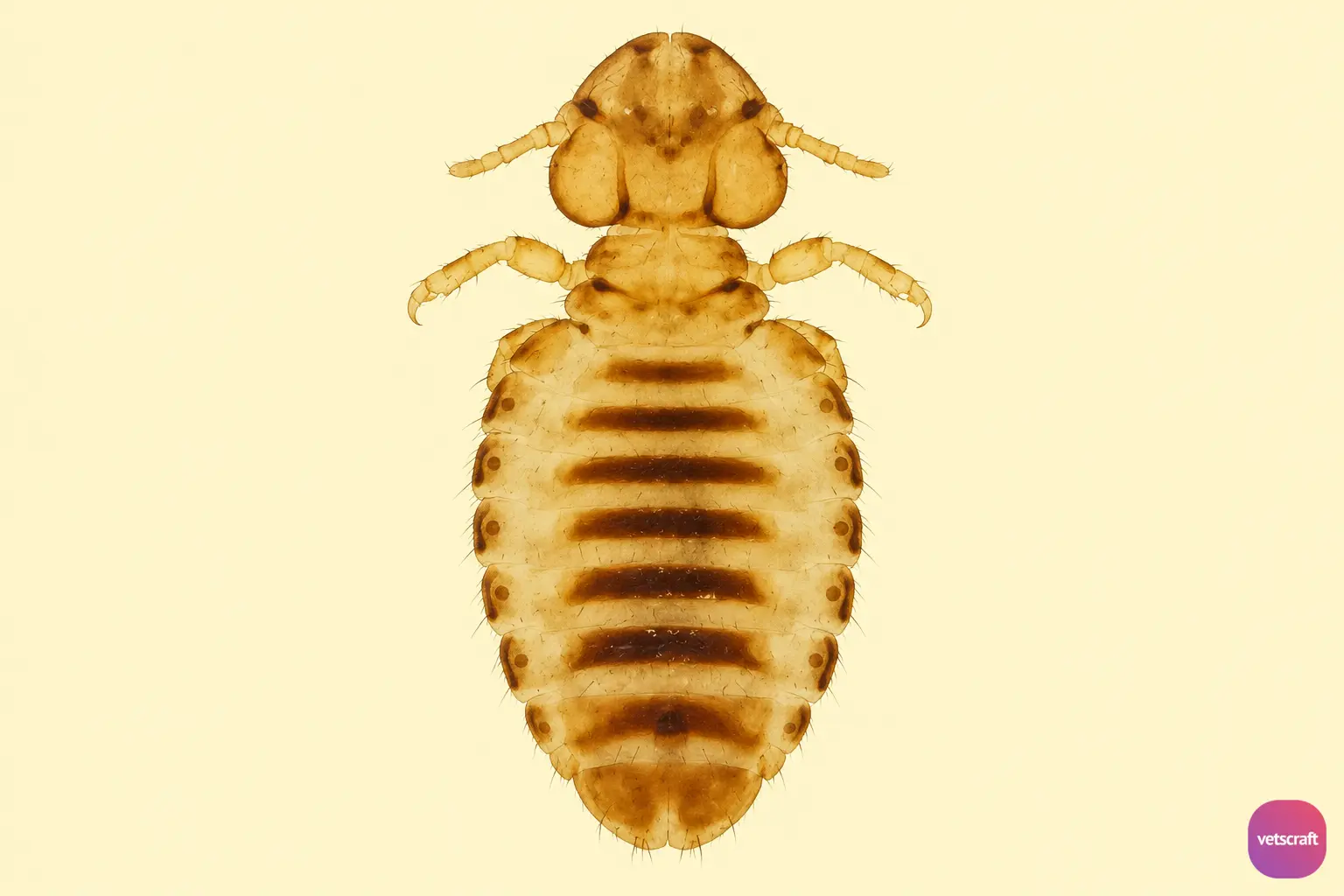
Mallophaga and Anoplura are two major groups of lice of veterinary importance. They differ in their morphology, feeding habits, host range, and other anatomical features. Mallophaga are commonly known as biting or chewing lice, whereas Anoplura are known as sucking lice.
The following table highlights the key differences between Mallophaga and Anoplura, along with representative examples.
| Mallophaga | Anoplura |
|---|---|
| Head is broader than the thorax, flat, and rounded. | Head is pointed anteriorly. |
| Eyes are vestigial. | Eyes are reduced or absent. |
| Sexual dimorphism is present. | Sexual dimorphism is absent. |
| Thorax: Prothorax is separate, while the mesothorax and metathorax are fused. | Thorax is small, and all segments are fused. |
| Abdomen is small and transparent. | Chitinized paratergal plates are present on the abdomen. |
| Tarsi consist of 2 segments, each bearing 1 or 2 claws. | Tarsi consist of 2 segments, each bearing 1 claw. |
| Spiracular openings are present on the ventral side of the mesothorax. | Spiracular openings are present on the dorsal aspect of the mesothorax. |
| Biting lice that affect birds and mammals. | Sucking lice that affect mammals only. |
| Examples: Menopon gallinae, Bovicola bovis | Examples: Haematopinus suis, Linognathus spp. |