Diphyllobothrium latum (Broad Fish Tapeworm): Morphology, Life Cycle, Pathogenesis & Treatment
Diphyllobothrium latum, commonly known as the broad fish tapeworm, is one of the largest cestodes infecting humans and other fish-eating mammals. It has an indirect life cycle involving copepods and freshwater fish as intermediate hosts. This zoonotic parasite is of significant importance in veterinary and medical parasitology due to its association with vitamin B12 deficiency and megaloblastic anemia in infected individuals.
Parasite Overview
- Common Name: Broad fish tapeworm
- Host: Humans, dogs, cats, pigs, and other fish-eating mammals.
- Location: Small intestine
- 1st Intermediate Host: Cyclops (Diaptomus gracilis – copepod crustacean)
- 2nd Intermediate Host: Freshwater fish (pike, trout, and perch)
Taxonomical Classification
- Kingdom: Animalia
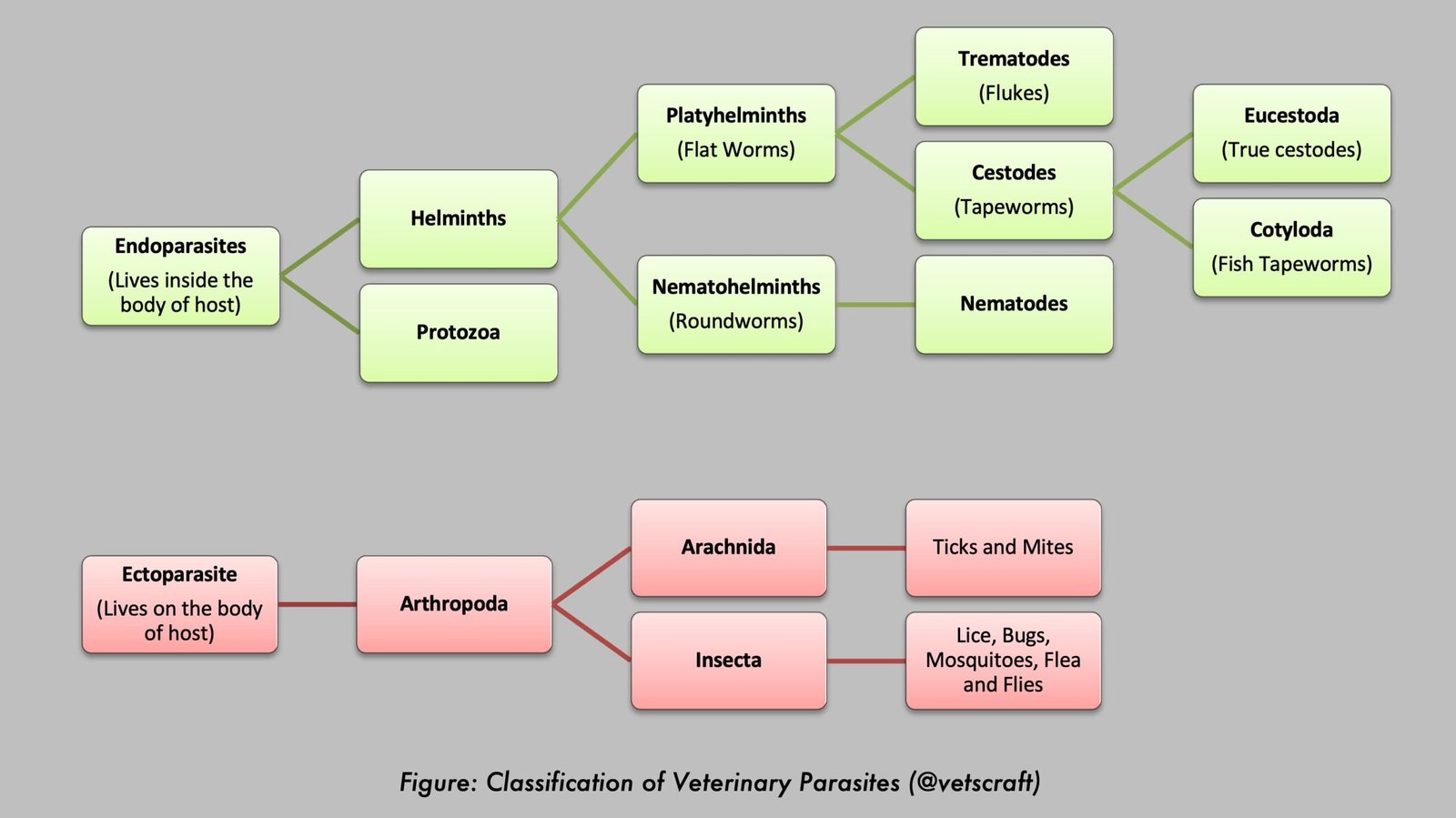
- Phylum: Platyhelminthes
- Class: Cestoda
- Subclass: Eucestoda
- Order: Diphyllobothriidea
- Family: Diphyllobothriidae
- Genus: Diphyllobothrium
- Species: Diphyllobothrium latum
- Common Name: Broad fish tapeworm, fish tapeworm
Diphyllobothrium latum is also referred to as Adenocephalus latus in modern taxonomy.
Morphology
- Worms are medium to large in size. The scolex has a narrow neck and deep muscular grooves known as bothria (holdfast organs) situated on both the dorsal and ventral sides.
- The scolex is unarmed and almond-shaped.
- Each segment contains a single set of reproductive organs.
- The genital pore and uterine pore open separately on the ventral aspect, whereas in Mesocestoides, there is no separate uterine pore.
- The ovary is bilobed. The vitelline glands and testes are distributed along the lateral margins of each segment.
- In gravid segments, the uterus is spiral in shape.
Life Cycle
- Eggs are passed in the feces of the host. They are light brown in color, operculated, and unembryonated when laid. Egg development occurs in the environment and takes several weeks for the coracidium to develop. The coracidium is a six-hooked oncosphere covered with a ciliated embryophore.
- The fully developed coracidium hatches and swims in water for a short period. It is then ingested by the 1st intermediate host (Cyclops), where it develops into a procercoid within about 3 weeks. These infected 1st intermediate hosts are then ingested by fish (2nd intermediate host).
- Within the 2nd intermediate host, it develops into a plerocercoid in the viscera and musculature.
- The definitive host acquires the infection by consuming infected raw or undercooked fish. The prepatent period is approximately 4 weeks.
Pathogenesis
In Humans: It causes non-specific abdominal symptoms and vitamin B12 deficiency, which may lead to megaloblastic anemia due to competition between the host and the parasite for vitamin B12.
Diagnosis
- Based on clinical signs.
- Microscopic fecal examination for the presence of characteristic operculated eggs.
Treatment
- Praziquantel: 25 mg/kg body weight.
- Niclosamide: 75–150 mg/kg body weight.
- Quinacrine: 7–10 mg/kg body weight.
Control
Avoid consuming raw or undercooked fish.