Mesocestoides lineatus: Morphology, Life Cycle, Pathogenesis, Diagnosis & Treatment
Mesocestoides lineatus is a cyclophyllidean tapeworm that infects dogs, cats, wild carnivores, and occasionally humans. Unlike most cestodes, its life cycle is believed to involve two intermediate hosts and includes a unique larval stage known as the tetrathyridium. Although adult worms are generally of low pathogenic significance, larval infections can cause serious disease, particularly when tetrathyridia develop within the peritoneal cavity of the intermediate host.
Parasite Overview
- Host: Dogs, cats, wild carnivores, and occasionally humans.
- Location: Small intestine.
- 1st Intermediate Host: Oribatid mites or coprophagous beetles.
- 2nd Intermediate Host: Amphibians, reptiles, birds, dogs, and cats.
- Metacestode Stage: Tetrathyridium.
Taxonomical Classification
- Kingdom: Animalia
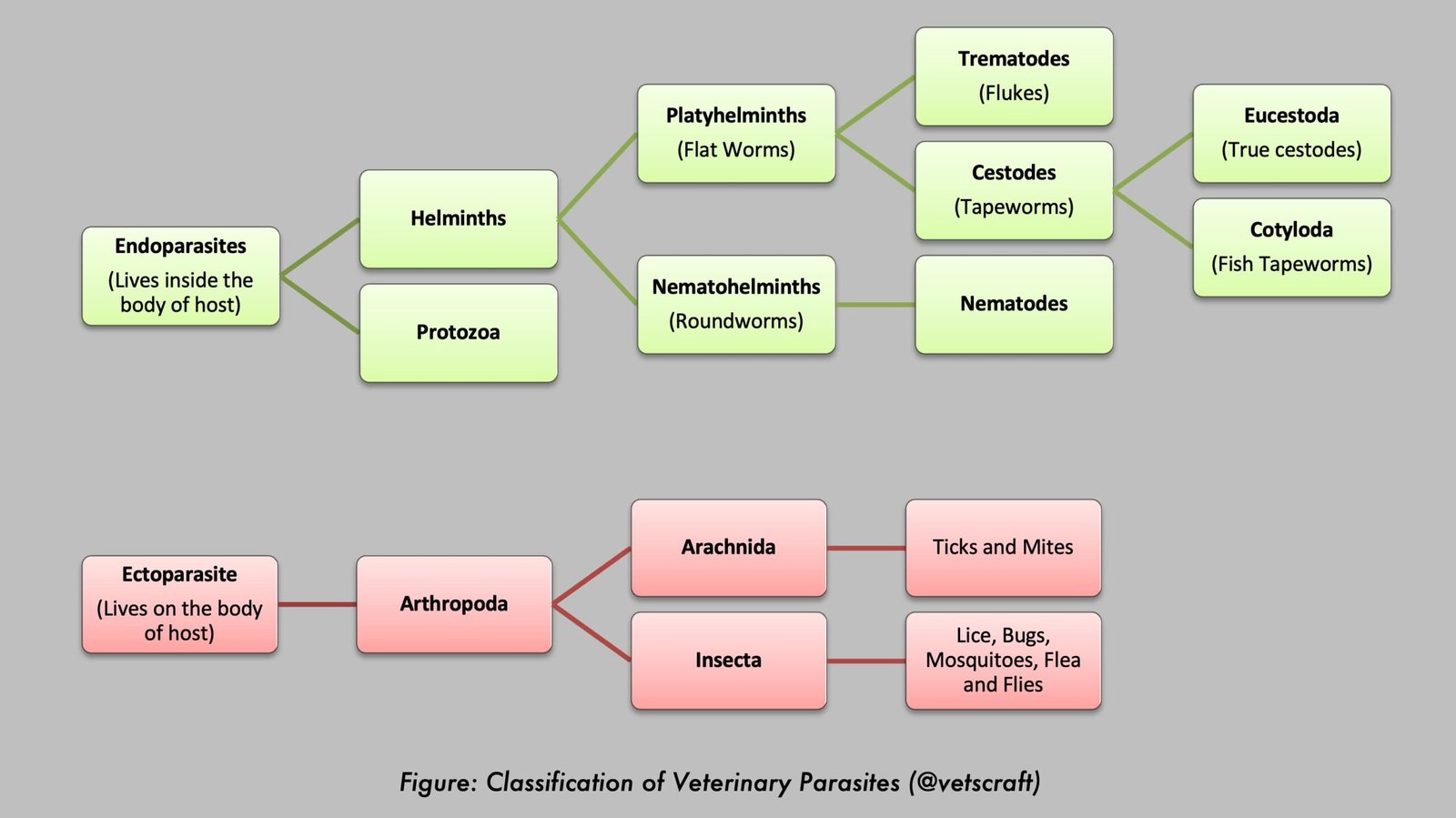
- Phylum: Platyhelminthes
- Class: Cestoda
- Subclass: Eucestoda
- Order: Cyclophyllidea
- Family: Mesocestoididae
- Genus: Mesocestoides
- Species: Mesocestoides lineatus
- Common Name: Mesocestoides tapeworm.
Morphology
- A small- to medium-sized tapeworm with an unarmed scolex.
- It has four elongate, oval suckers.
- The rostellum is absent. The genital pore is situated on the midventral line of the ventral surface.
- The ovary is bilobed.
- Approximately 50 testes are present.
- In the gravid segment, the uterus is replaced by a paruterine organ.
- There is no separate uterine pore.
Life Cycle
- The complete life cycle has not been fully elucidated. Based on experimental infections, it is believed to require two intermediate hosts.
- Oribatid mites or coprophagous beetles act as the 1st intermediate host, in which a cysticercoid-like developmental stage develops.
- When infected mites or beetles are ingested by the 2nd intermediate host, the tetrathyridium develops. It is primarily found in the peritoneal cavity of the 2nd intermediate host, where it multiplies asexually by longitudinal splitting of the parent scolex. The final host acquires infection by ingesting the infected 2nd intermediate host. The prepatent period is approximately 16–20 days.
Pathogenesis
Adult worms are generally considered to be of low pathogenicity. However, heavy infections may cause severe diarrhea in humans. When dogs act as the 2nd intermediate host, the tetrathyridium may cause peritonitis, ascites, and severe abdominal inflammation.
Diagnosis
- Identification of characteristic egg packets or proglottids in fecal examination.
- Tetrathyridiosis may be diagnosed by ultrasonography, radiography, exploratory laparotomy, cytological examination of peritoneal fluid, or histopathology.
- PCR and molecular techniques can be used for species confirmation in research or specialized diagnostic laboratories.
Treatment
Adult intestinal infections can be effectively treated with praziquantel (5 mg/kg PO as a single dose) in dogs and cats.
In cases of tetrathyridiosis, prolonged treatment with fenbendazole (50 mg/kg PO once daily for 28 days or longer) has been reported to be effective in reducing the parasite burden.
Supportive therapy, including fluid therapy, nutritional support, analgesics, and management of peritonitis or ascites, should be provided based on the severity of the disease.
Prevention and Control
- Prevent dogs and cats from hunting or consuming amphibians, reptiles, birds, or small mammals.
- Implement routine deworming programs in dogs and cats.
- Properly dispose of animal carcasses and viscera to reduce transmission.
- Maintain good sanitation and limit exposure to potential intermediate hosts.