TABLE OF CONTENTS
Heterodoxus spiniger (Biting Louse of Dogs): Morphology, Pathogenesis & Importance
Heterodoxus spiniger is a biting louse that primarily infests dogs and other canids. It is an amblyceran louse of the family Boopidae and can cause irritation, pruritus, dermatitis, and hair loss, particularly with heavy infestations. Heterodoxus spiniger is also of veterinary importance because it can serve as an intermediate host for Dipylidium caninum and Acanthocheilonema reconditum in dogs.
Morphology
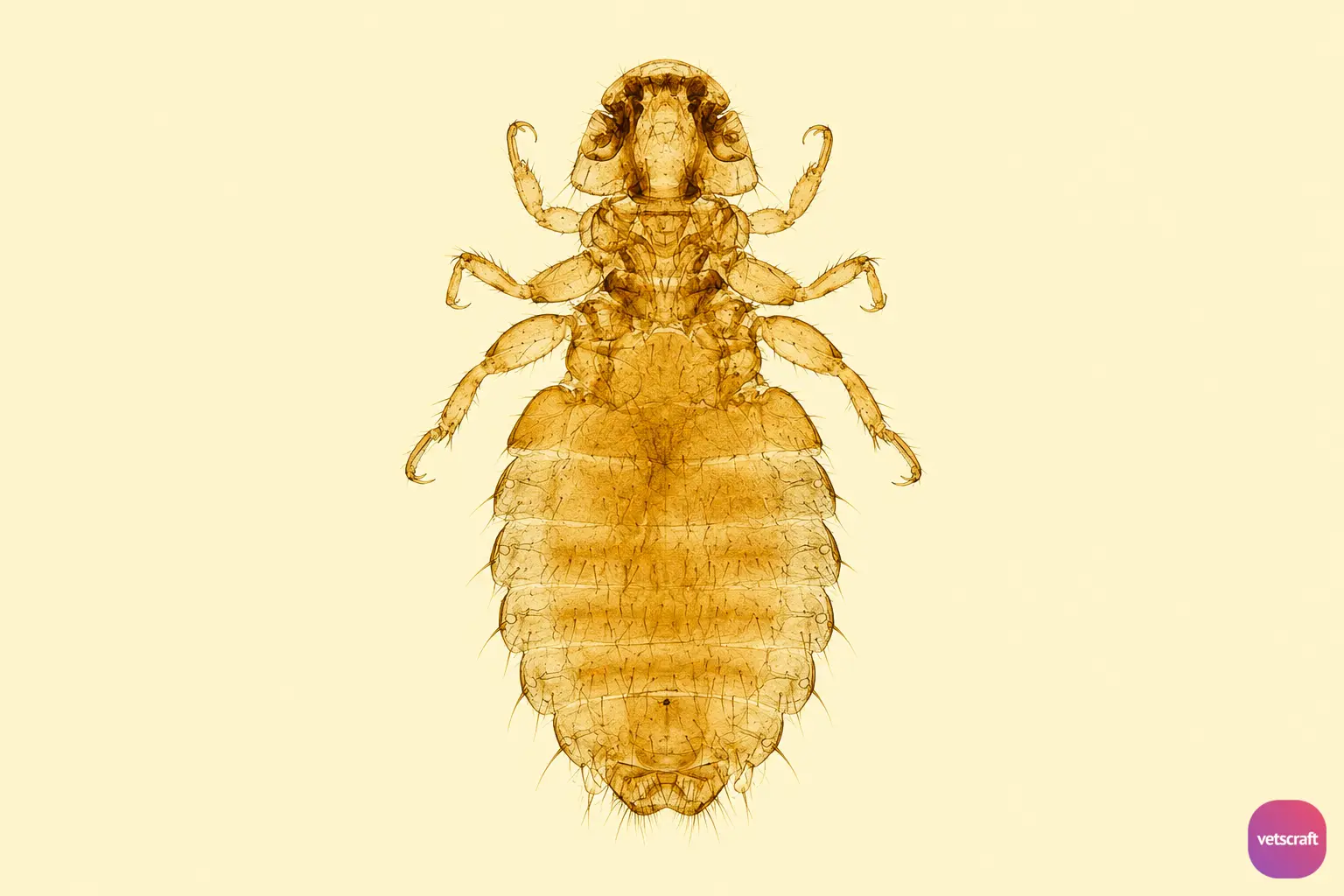
Yellowish in color; head is conical; antennae are 4-segmented and embedded in antennal sockets; mandibles bite horizontally; maxillary palps are present on either side; one row of bristles is present on each abdominal segment; three pairs of legs; tarsi end in two claws; lice move actively on the body of the host.
Pathogenesis
Heterodoxus spiniger (biting louse of dogs) is seen in large numbers during the summer months. Light infections have no significant effects, but pruritus and dermatitis may occur.
The animal may become restless and pull out its hair. Large numbers of hairless patches may develop, giving the animal a sick appearance. The animal may deteriorate in condition and become emaciated. It also acts as an intermediate host for Dipylidium caninum and Acanthocheilonema reconditum (formerly Dipetalonema reconditum) in dogs.