TABLE OF CONTENTS
Menacanthus stramineus (Chicken Body Louse): Morphology and Pathogenesis
Menacanthus stramineus, commonly known as the chicken body louse or yellow body louse, is a chewing louse that infests poultry. It is commonly found around the vent, thigh, and breast regions, where infestation can cause significant irritation, feather damage, skin lesions, weight loss, reduced egg production, and, in severe cases, anemia and mortality in young chicks.
Morphology
Abdomen is longer than broad, antennae are kept inside antennal sockets, mandibles bite horizontally, maxillary palps are present on either side, and there are two rows of bristles on each abdominal segment. There are three pairs of legs, and the lice move very actively on the body of the host.
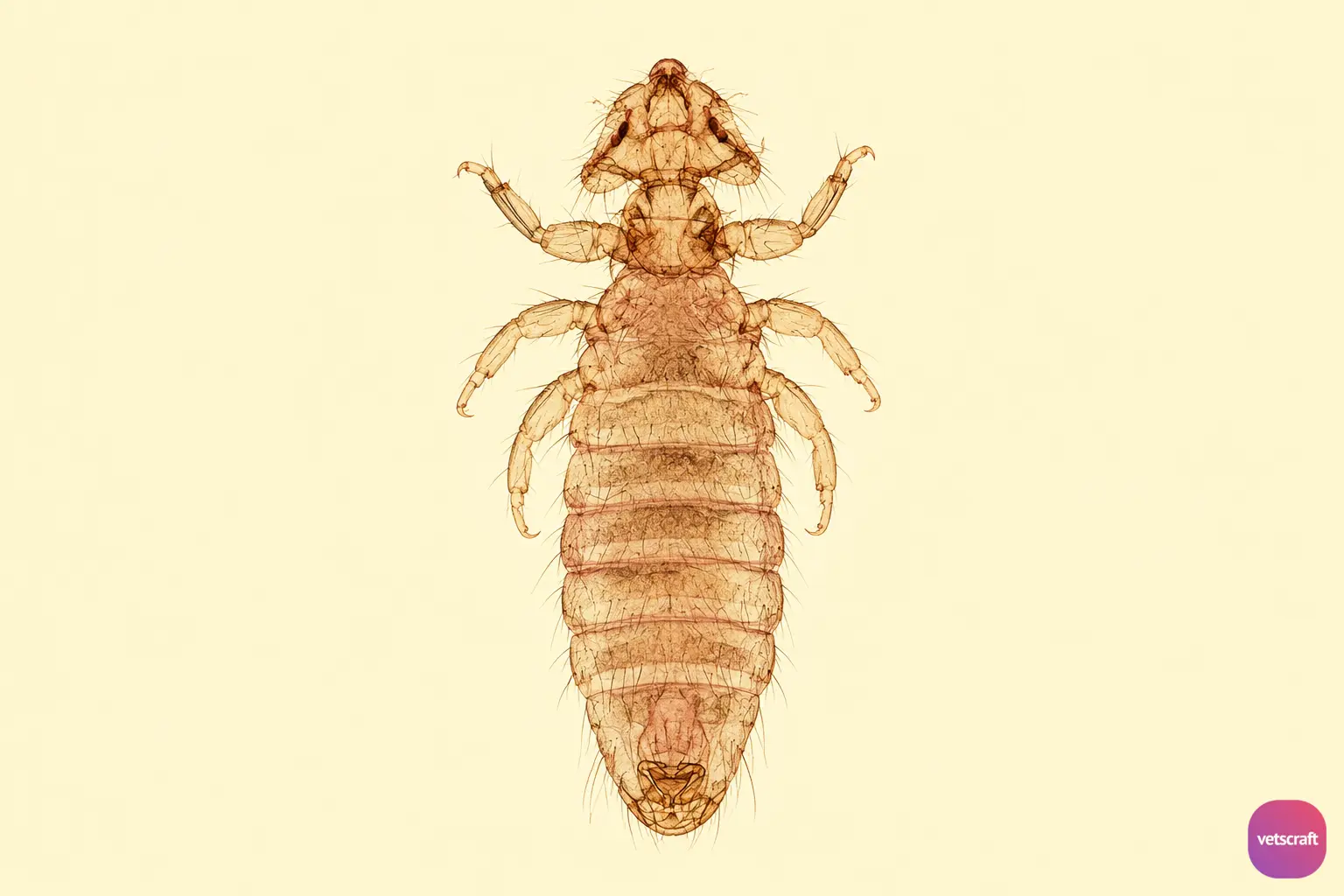
The eggs have filaments on the operculum and on the anterior half of the shell.
Pathogenesis
Menacanthus stramineus (chicken body louse) is a destructive louse of poultry. It occurs largely on the feathers of the vent, thigh, and breast regions. It causes severe irritation and the development of inflamed, scab-covered skin.
The birds become restless, pull out their feathers, and deplume themselves, resulting in decreased hen weight and clutch size, as well as death in young chicks. Weight loss occurs in adults, and egg production is reduced in layers. It causes anemia by puncturing the feather quills and feeding on the blood that oozes out.