TABLE OF CONTENTS
Pseudolynchia canariensis (Pigeon Fly): Morphology, Life Cycle, and Control
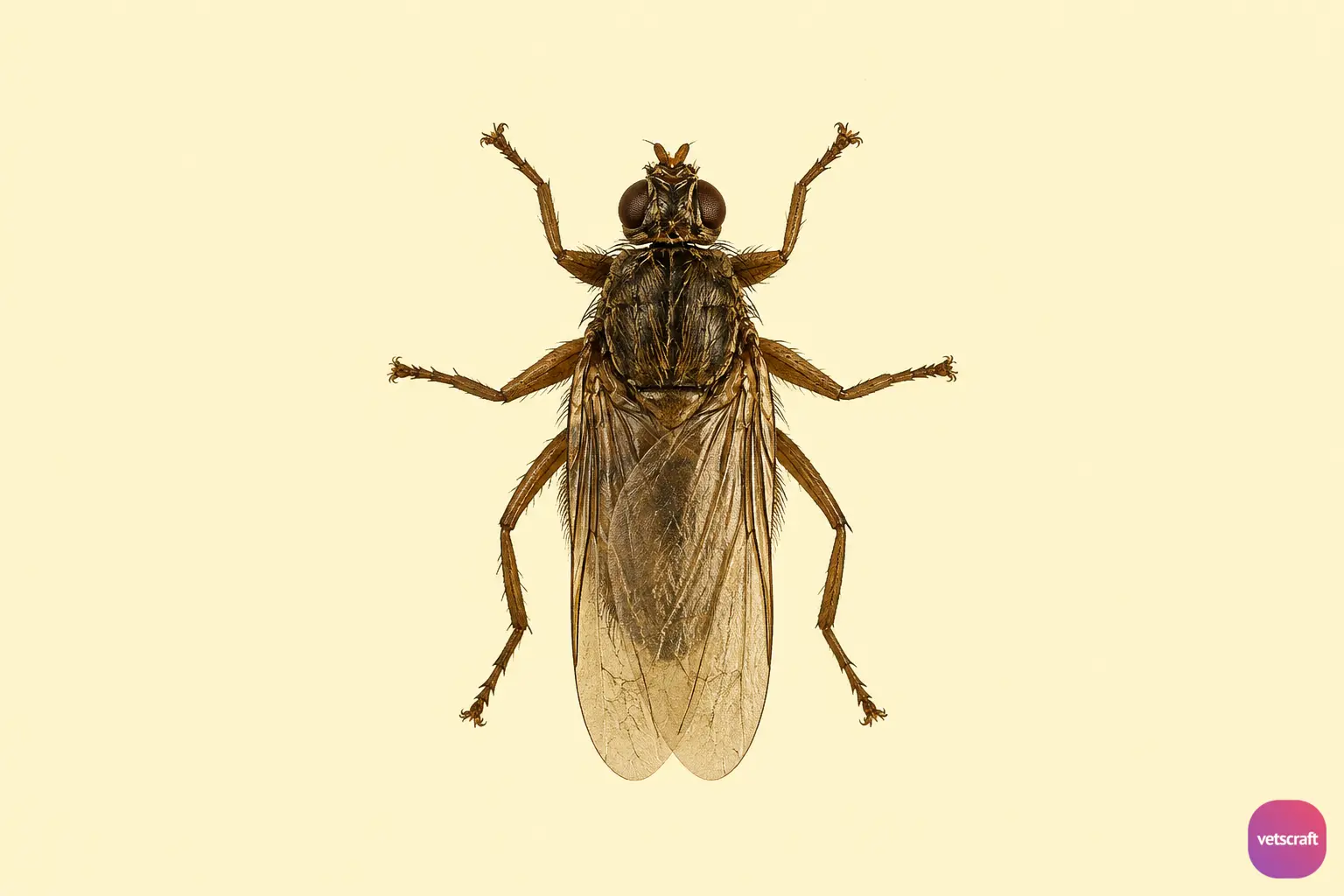
Pseudolynchia canariensis, commonly known as the pigeon fly or pigeon louse fly, is a winged, blood-feeding fly that infests pigeons. It is characterized by its brown coloration, strong claws, and transparent, tapering wings. This article covers the morphology, life cycle and habits, and control of Pseudolynchia canariensis, including its role in the transmission of Haemoproteus columbae in pigeons.
Morphology
- It is a winged fly, brown in color, and resembles the sheep ked.
- It has a pair of transparent, tapering wings.
- The veins of the wings are crowded along the anterior margin.
- The claws are strong and spurred.
- It lives on domestic pigeons.
Life Cycle and Habits
Pseudolynchia canariensis (pigeon flies) move through the feathers, suck blood, and can cause painful wounds in young pigeons. Copulation takes place on the host. Females produce four to five larvae.
The larvae are deposited in dark crevices of the pigeon house, after which they roll off into cracks and crevices. They are yellow with a dark posterior pole and turn into black pupae within a few hours. The pupal stage lasts 23–31 days in warm weather. They transmit Haemoproteus columbae, a blood protozoan of pigeons.
Control
Dusts or sprays containing coumaphos (an organophosphate) or carbaryl (a carbamate) are effective.