Taenia solium (Pork Tapeworm): Morphology, Life Cycle, Pathogenesis, Diagnosis & Treatment
Taenia solium, commonly known as the pork tapeworm, is a zoonotic cestode of significant medical and veterinary importance. Humans serve as the definitive host, while pigs are the primary intermediate host. The larval stage, Cysticercus cellulosae, causes porcine cysticercosis (measly pork) and can also infect humans, leading to cysticercosis and neurocysticercosis.
This article covers the taxonomy, morphology, life cycle, pathogenesis, diagnosis, treatment, and control of Taenia solium in a concise, exam-oriented format for veterinary students and professionals.
Parasite Overview
- Host: Humans
- Location: Small intestine
- Intermediate Host: Pig (Humans can also act as the intermediate host).
- Metacestode: Cysticercus cellulosae
The condition caused by the Cysticercus cellulosae larval stage is known as porcine cysticercosis or measly pork.
Taxonomical Classification
- Kingdom: Animalia
- Phylum: Platyhelminthes
- Class: Cestoda
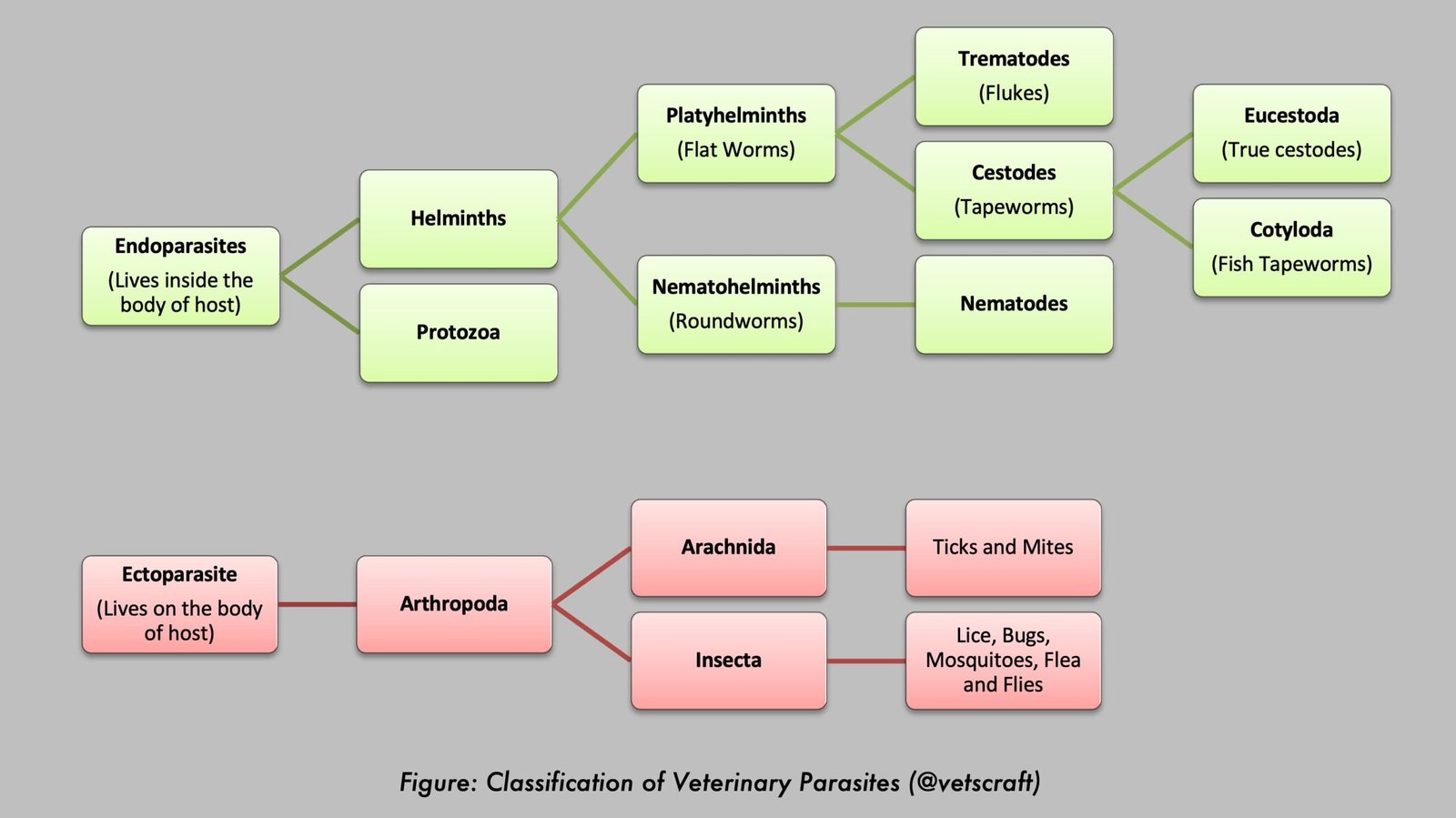
- Subclass: Eucestoda
- Order: Cyclophyllidea
- Family: Taeniidae
- Genus: Taenia
- Species: Taenia solium
- Common Name: Pork tapeworm
Morphology
- Adults measure 3–5 m in length.
- The scolex has four suckers.
- It has a rostellum armed with penknife-shaped hooks arranged in two rows.
- The gravid segment has 7–16 lateral uterine branches.
- The gravid segments do not leave the host spontaneously.
- The segments are passed in the feces as a chain.
- All other characteristics are similar to T. hydatigena.
- In pigs, Cysticercus cellulosae occurs in the tongue, neck, esophagus, intercostal muscles, and cardiac muscle.
- The larval stage is Cysticercus cellulosae, which reaches maturity in approximately 9–10 weeks. Pork infected with Cysticercus cellulosae is referred to as “measly pork.” Humans may also act as the intermediate host by ingesting eggs through contaminated food or by autoinfection.
- Autoinfection occurs only in individuals already infected with the adult worm. Due to reverse peristalsis, eggs are released from the gravid segments while passing through the intestine and hatch within the intestine itself. The oncospheres then penetrate the intestinal wall and migrate to various parts of the body, where they develop into cysticerci.
- In humans, cysticerci are primarily found in the brain, subcutaneous tissue, and ocular tissues.
Pathogenesis
- In Pigs: Myositis, myocarditis, and muscular stiffness may occur.
- In Humans: The adult worm is generally not harmful; however, abdominal pain, diarrhea, and constipation may occur.
- The larval stage is responsible for the severe pathogenesis in humans. Cysticerci commonly occur in the ventricles of the brain, causing pain and neurological signs such as epileptic seizures. This condition is known as “neurocysticercosis.”
Diagnosis
Fecal examination for eggs and gravid segments.
Treatment and Control
- Same as T. saginata, except that quinacrine should not be used.
- Proper meat inspection.