Taenia saginata (Beef Tapeworm): Morphology, Life Cycle, Pathogenesis, Diagnosis & Treatment
Taenia saginata, commonly known as the beef tapeworm, is an important zoonotic cestode that infects humans as the definitive host and cattle as the intermediate host. Human infection occurs through the consumption of raw or undercooked beef containing Cysticercus bovis, the larval stage of the parasite. Although infections are often asymptomatic, they may cause gastrointestinal disturbances and remain an important public health concern in regions where meat inspection and sanitation are inadequate.
This article provides a comprehensive overview of Taenia saginata, including its taxonomy, morphology, life cycle, pathogenesis, diagnosis, treatment, and control measures for veterinary students, veterinarians, and animal health professionals.
Parasite Overview
- Host: Humans
- Predilection Site: Small intestine
- Intermediate Host: Cattle
- Metacestode: Cysticercus bovis
Taxonomical Classification
- Kingdom: Animalia
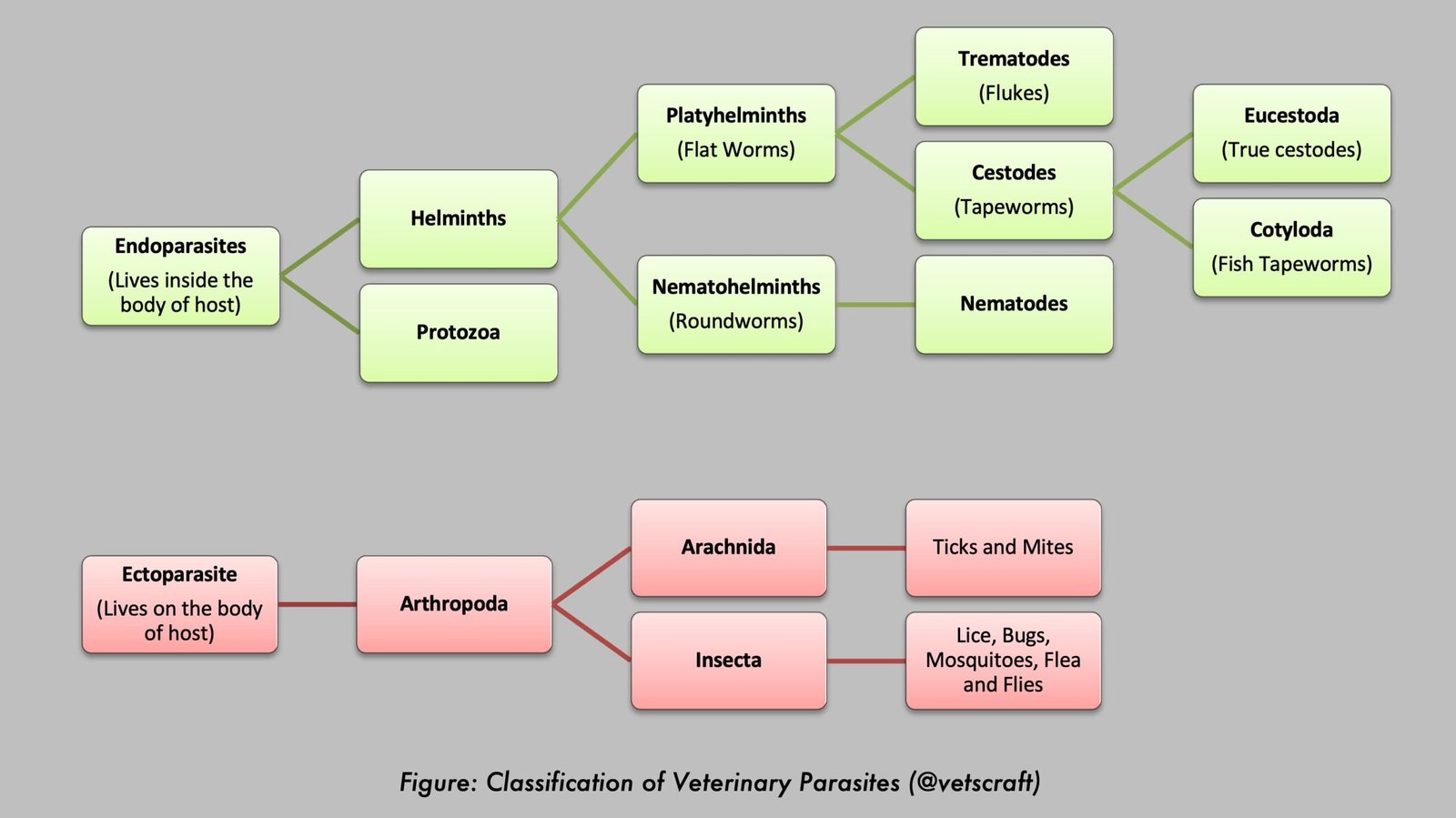
- Phylum: Platyhelminthes
- Class: Cestoda
- Subclass: Eucestoda
- Order: Cyclophyllidea
- Family: Taeniidae
- Genus: Taenia
- Species: Taenia saginata
- Common Name: Beef tapeworm
Morphology
- Adults are 4 to 8 m long, although they may rarely attain a length of up to 25 m. The scolex has four suckers.
- The rostellum and hooks are absent.
- The gravid segment has a uterus with 14 to 32 lateral branches.
Life Cycle
- Gravid segments are passed in the feces or may migrate spontaneously out of the anus.
- After being expelled, the segments may migrate onto clothing, bedding, or the floor. During this process, the eggs are released.
- Eggs ingested by the intermediate host (cattle) hatch in the small intestine. The oncospheres penetrate the intestinal wall and reach different parts of the body via the systemic circulation, where they develop into Cysticercus bovis, primarily in the heart, masseter muscles, tongue, and diaphragm. However, the highest density occurs in the heart and masseter muscles. The cysticerci attain maturity within 10 weeks and remain viable for up to 9 months.
- The larval stage is Cysticercus bovis. Beef infected with Cysticercus bovis is referred to as “measly beef.” Humans acquire the infection by ingesting infected beef.
Pathogenesis
- In Humans: Abdominal pain, diarrhea, and constipation may occur.
- In Cattle: Usually asymptomatic, but heavy infections may cause myositis, myocarditis, and muscle stiffness.
Diagnosis
- Perianal swab for the detection of eggs in humans.
- In cattle, postmortem examination.
Treatment
- Niclosamide: 2 g.
- Paromomycin: 5 mg/kg body weight.
- Quinacrine: 7–10 mg/kg body weight (should not be administered for Taenia solium infection because it may induce vomiting).
- Praziquantel: 10 mg/kg body weight.
Control
- Maintain good personal hygiene.
- Proper disposal of human feces.
- Public education.
- Avoid eating raw or undercooked beef.