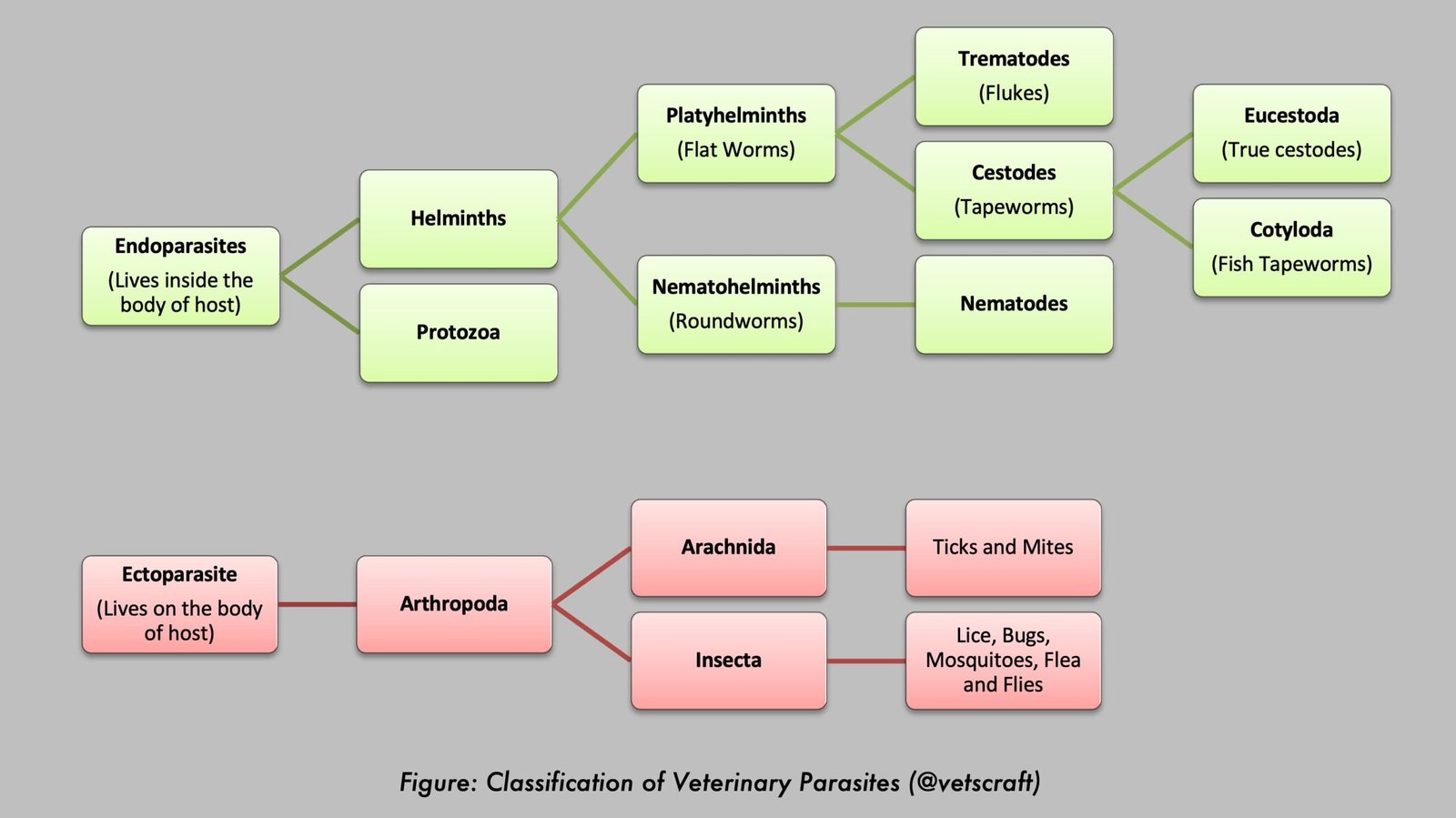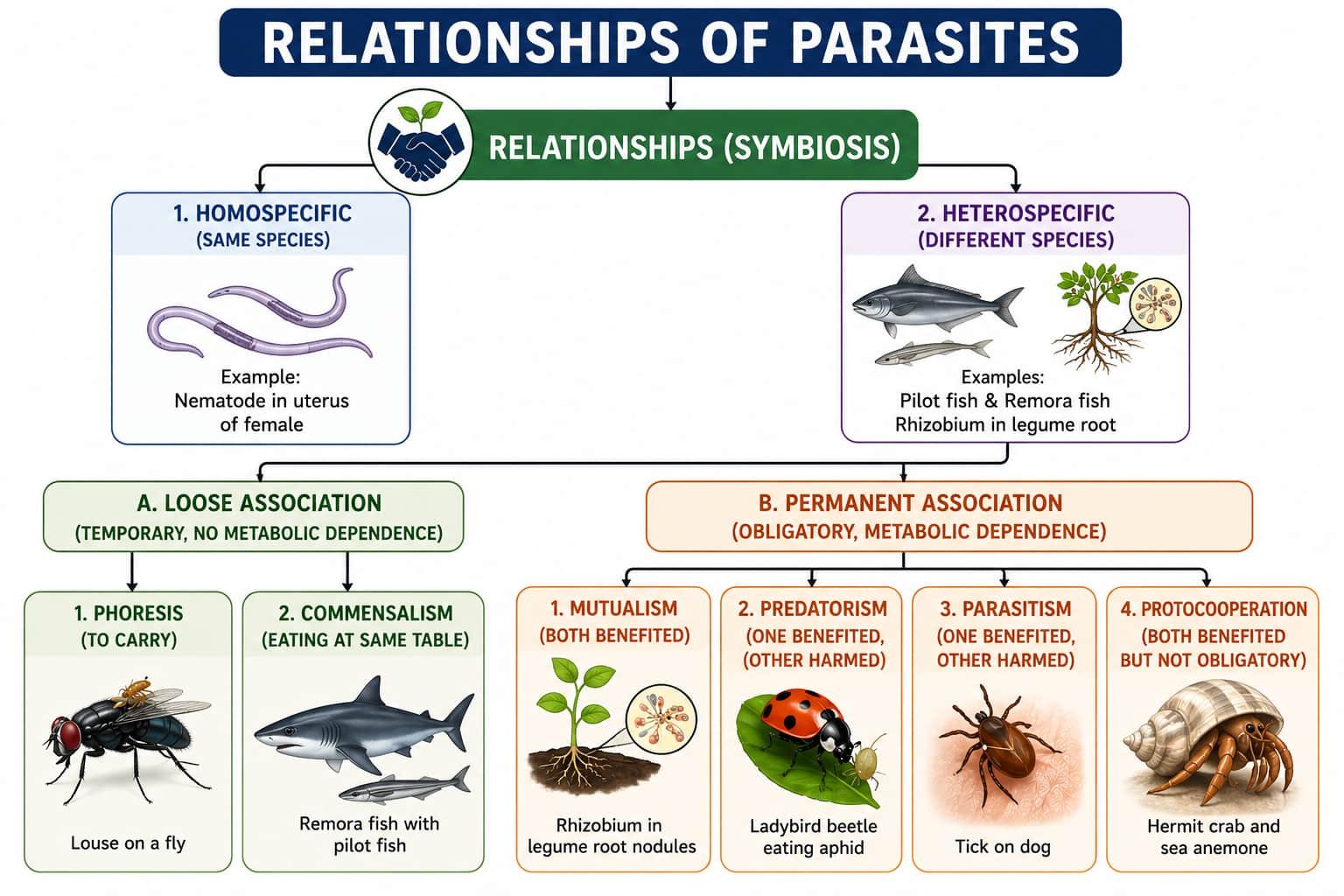
General Characteristics of Nematodes (Roundworms): Morphology, Body Structure & Key Features
Nematodes, commonly known as roundworms, are one of the largest and most diverse groups of helminths found in both free-living and parasitic forms. They are of great veterinary importance because many species infect domestic animals, causing significant health and economic losses.
Nematodes (roundworms) are free-living or parasitic. They are unsegmented, usually cylindrical, and elongate in shape. They possess a body cavity or coelom, but it is not a true coelom (pseudocoelom).
An alimentary canal is present. The body tapers toward both ends, except in the females of Tetrameres spp., which become spherical after copulation.
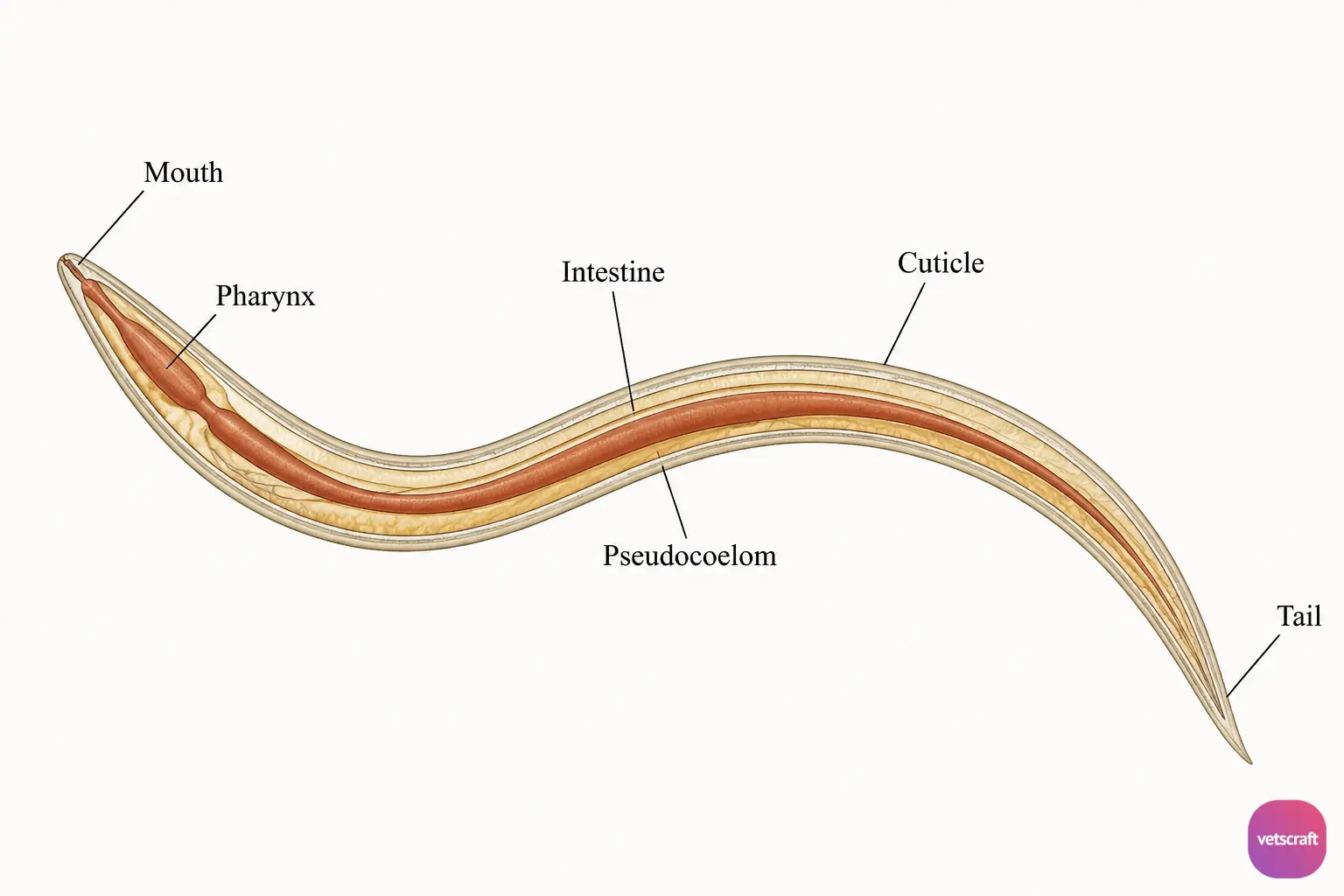
The body is covered with a cuticle, which may be smooth or striated. The cuticle may form specialized structures such as hooks (Tetrameres males), cuticular thickening (Gongylonema spp.), a cervical or cephalic collar (Physaloptera spp.), and a cephalic vesicle (Oesophagostomum spp.).
Many species have lateral flattened cuticular expansions called alae. When the alae are located in the cervical region, they are known as cervical alae, whereas cuticular expansions at the tail end are known as caudal alae.
We will discuss the following systems of nematodes in upcoming articles:
Taxonomical Classification
- Kingdom: Animalia
- Phylum: Nematoda
- Class: Chromadorea (Secernentea) and Enoplea (Adenophorea)
- Order: Includes several orders such as Ascaridida, Strongylida, Spirurida, Oxyurida, Trichocephalida, and Rhabditida
- Family: Numerous families depending on the species
- Representative Genera: Toxocara, Ascaris, Ancylostoma, Haemonchus, Strongyloides, Trichuris, Dirofilaria
- Common Name: Roundworms