Cutaneous Larva Migrans (Creeping Eruption): Etiology, Pathogenesis, Clinical Signs & Treatment
Cutaneous larva migrans (CLM), also known as creeping eruption, is a zoonotic skin disease caused by the migration of animal hookworm larvae within the epidermis. Humans are accidental (unnatural) hosts, and the larvae are unable to complete their life cycle.
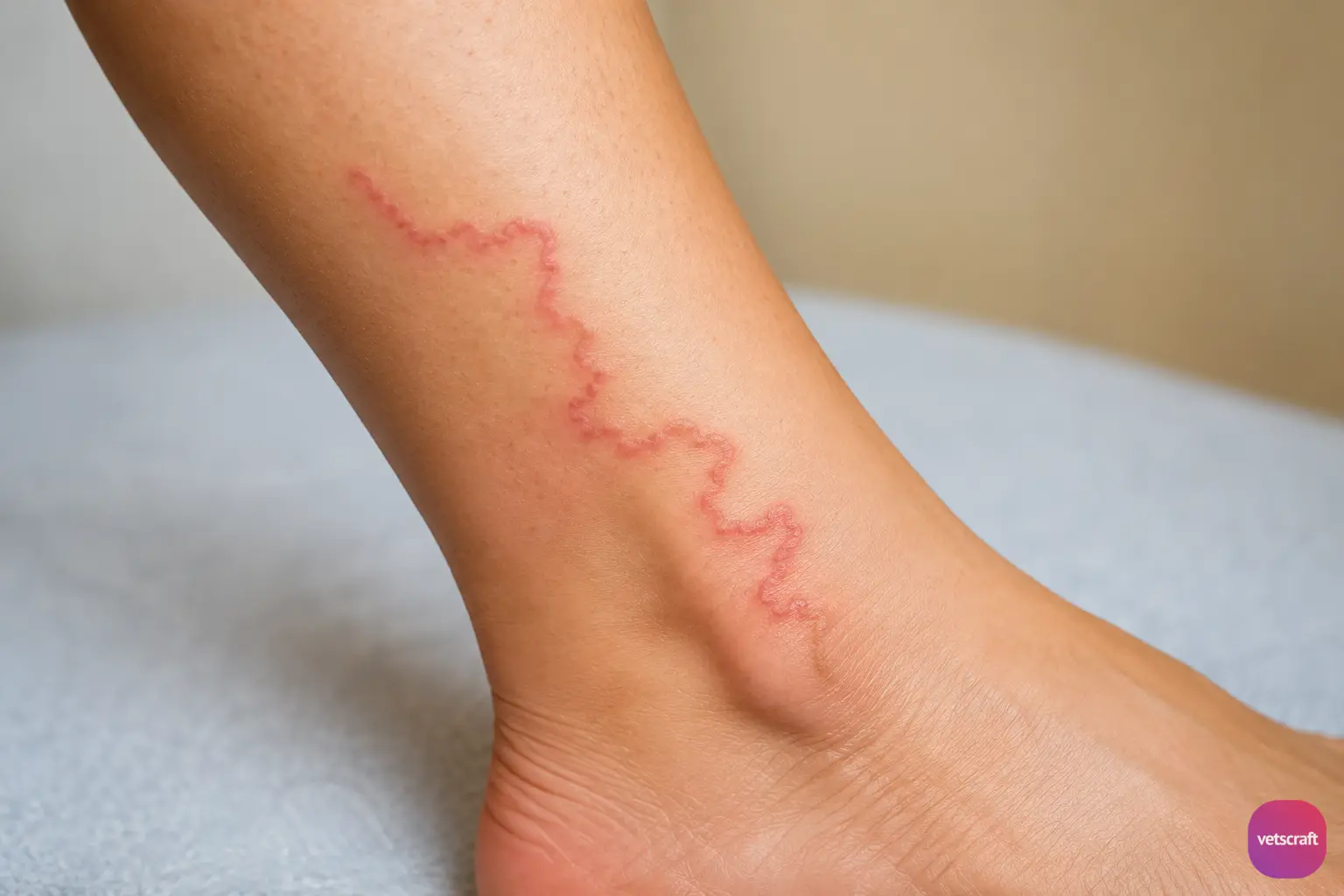
The condition is characterized by intensely pruritic, serpiginous, erythematous skin lesions that develop following larval penetration, most commonly after contact with contaminated soil or sand.
Etiology
Cutaneous larva migrans (CLM) or creeping eruption is caused by skin penetration by the infective larvae of Ancylostoma braziliense, Ancylostoma caninum, Ancylostoma duodenale, Uncinaria stenocephala, Necator americanus, Bunostomum phlebotomum, and Gnathostoma spinigerum.
Pathogenesis
During the initial exposure, larval skin penetration causes an inflammatory tract, papule formation, skin thickening, and pruritus. Repeated exposure may result in erythematous lesions, papule formation, burning sensation at the site of penetration, edema, and intensely pruritic lesions. In rare cases, the larvae may migrate to the lungs, and corneal involvement has also been reported.
Clinical Signs
- Intensely pruritic, serpiginous (snake-like), erythematous skin tracks.
- Raised, winding linear lesions that gradually migrate over time.
- Papules or vesicles at the site of larval penetration.
- Localized erythema, edema, and inflammation.
- Burning or tingling sensation before or during larval migration.
- Excoriations and secondary bacterial infection due to excessive scratching.
- Rarely, pulmonary signs (eosinophilic pneumonitis) or ocular involvement may occur due to aberrant larval migration.
Treatment
- Albendazole: 400 mg orally once daily for 3–7 days (commonly recommended).
- Ivermectin: 200 μg/kg orally as a single dose; may be repeated if necessary.
- Thiabendazole: Topical 10–15% preparation applied to localized lesions or oral therapy where indicated.
- Antihistamines may be administered to relieve pruritus.
- Secondary bacterial infections should be treated with appropriate antibiotics when indicated.
- Cryotherapy is generally not recommended because larvae often migrate beyond the visible end of the lesion.
Control and Prevention
- Educate pet owners about the zoonotic risk of hookworm infections and the importance of routine parasite control.
- Regular deworming of dogs and cats to reduce environmental contamination.
- Proper disposal of pet feces to prevent soil contamination with hookworm eggs.
- Avoid walking barefoot or sitting directly on contaminated soil or sand, particularly on beaches and playgrounds.
- Wear protective footwear and clothing when in areas potentially contaminated with animal feces.
- Prevent pets from defecating in public parks, playgrounds, and recreational beaches.
- Maintain good environmental sanitation and hygiene.