Parafilaria bovicola and Parafilaria multipapillosa: Morphology, Life Cycle, Pathogenesis & Treatment
Parafilaria bovicola and Parafilaria multipapillosa are vector-borne filarial nematodes that cause parafilariosis in cattle and horses, respectively. P. bovicola is the causative agent of verminous hemorrhagic dermatitis (bleeding nodules) in cattle, whereas P. multipapillosa causes the condition commonly known as summer bleeding or summer wound in horses. Adult worms inhabit the intermuscular and subcutaneous connective tissues, where they produce characteristic hemorrhagic nodules that bleed seasonally.
These parasites are transmitted by muscid flies acting as intermediate hosts and biological vectors. Although affected animals usually show minimal systemic illness, the lesions can cause substantial economic losses due to carcass trimming and downgrading in cattle, while recurrent seasonal bleeding in horses is of clinical significance. This article covers the morphology, taxonomy, life cycle, pathogenesis, clinical signs, diagnosis, treatment, and control of Parafilaria bovicola and Parafilaria multipapillosa in detail.
Parasite Overview
- In Cattle: P. bovicola (Verminous nodules or verminous hemorrhagic dermatitis)
- In Horses: P. multipapillosa (Summer bleeding or summer wound)
- Intermediate Hosts: Musca spp. (M. lusoria) in cattle and Haematobia spp. in horses
- Predilection Site: Nodules in the intermuscular and subcutaneous connective tissue
Taxonomical Classification
- Kingdom: Animalia
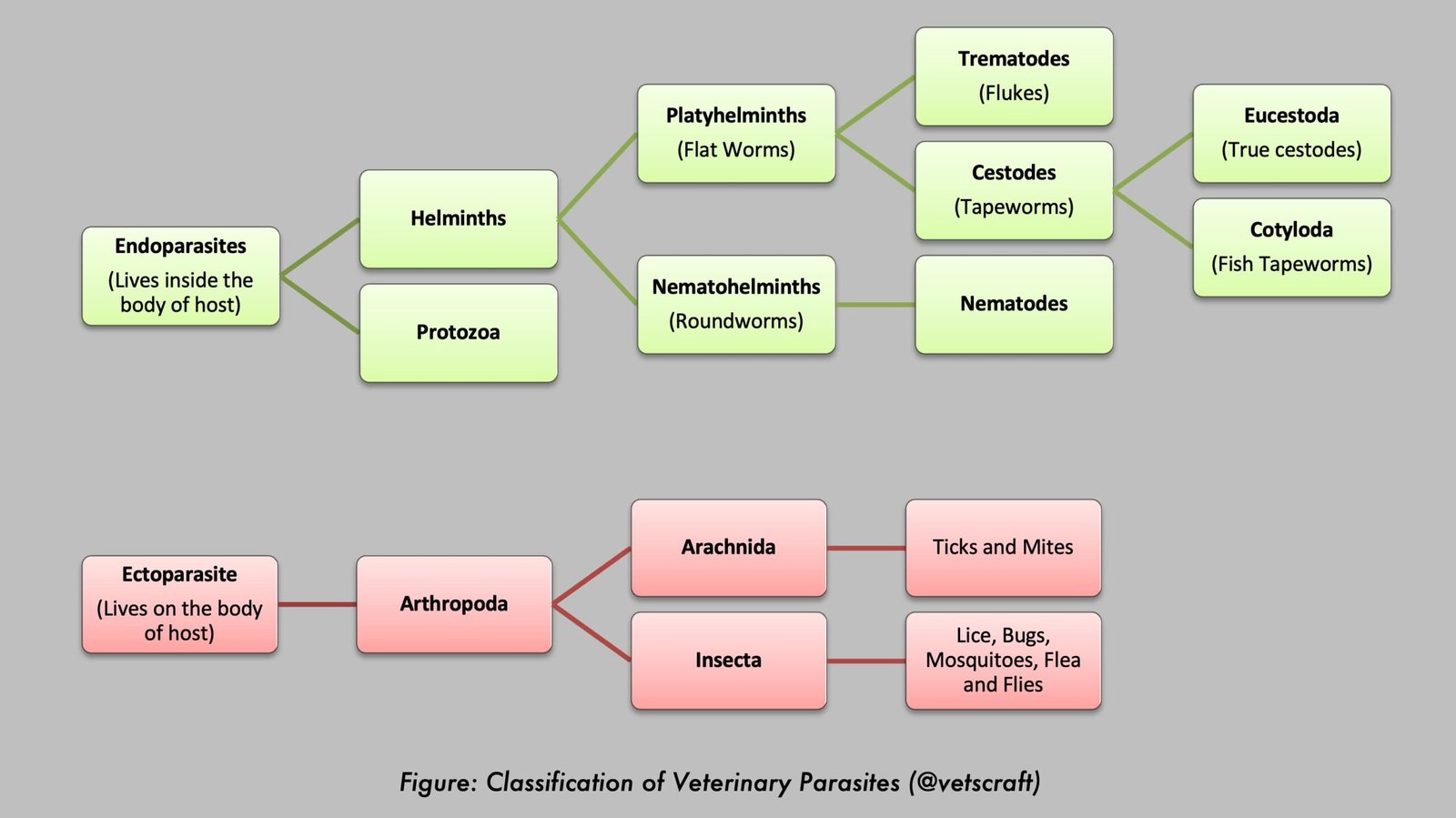
- Phylum: Nematoda
- Class: Chromadorea (Secernentea)
- Order: Spirurida
- Superfamily: Filarioidea
- Family: Filariidae
- Genus: Parafilaria
- Important Species: Parafilaria bovicola & Parafilaria multipapillosa
- Common Name: Bleeding filarial worm
Morphology
- The worm is whitish; males are 30–35 mm long, and females are 50–65 mm long.
- The anterior end of the worm bears 13 rows of cuticular elevations or papilliform thickenings.
- The remaining portion of the body is transversely striated.
- In females, the vulva is situated at the anterior end.
Life Cycle
The invertebrate hosts (Musca spp., face flies) pick up eggs from the skin surface of infected cattle at bleeding sites or from lacrimal secretions.
Development to the infective third-stage larvae in the fly takes 10–12 days.
Transmission to cattle probably occurs when flies feed on wounds, Parafilaria bleeding sites, or ocular secretions. The prepatent period is 7–10 months.
Pathogenesis
In Cattle (Parafilaria bovicola)
The worms live in the intermuscular and subcutaneous connective tissue of the forequarters and produce subcutaneous “hemorrhagic nodules” that resemble bruise-like lesions on a dressed carcass.
The lesions appear as slimy bruises; hence, the term “false bruising.” They have a greenish-yellow or dark red tinge due to the presence of a large number of eosinophils.
Although the health of the cattle does not appear to be significantly affected by the parasite, large portions of the carcass are discarded at slaughter due to these lesions, resulting in carcass downgrading.
In Horses (Parafilaria multipapillosa)
The condition is known as “summer bleeding” or “summer wound.” Lesions are seen mainly in the shoulder region and on the dorsal aspect of the body (loins, withers, and neck). The nodules measure 12–15 mm in diameter and 5–7 mm in height.
The adult filaria pierces the dermis and lays eggs around the periphery of the puncture site. During this period, the nodules enlarge, rupture, bleed, and subsequently heal.
Marked edema and infiltration of lymphocytes and neutrophils are observed. The condition occurs during summer and reappears the following summer.
Clinical Signs
Swelling of the back, forelimbs, hind limbs, neck, skin, subcutaneous tissues, and thoracic region may occur. Hemorrhage from affected areas, persistent bleeding, skin ulcers, erosions, and excoriations may also be observed.
“False bruising” reduces the value of the carcass after slaughter because the affected areas must be trimmed away.
Diagnosis
Diagnosis is based on the presence of seasonal bleeding and cutaneous nodules in affected cattle. In addition, the affected tissue has a characteristic, unpleasant metallic odor.
Treatment
- Nitroxynil: 20 mg/kg body weight, SC injection.
- Fenbendazole and Albendazole at high doses can be used.
- Ivermectin (200 µg/kg).
- Tartar emetic has also been used.
Control
Because flies serve as the intermediate hosts of this parasite, effective fly control measures should be implemented.