Physaloptera praeputialis in Domestic Cats and Wild Felids
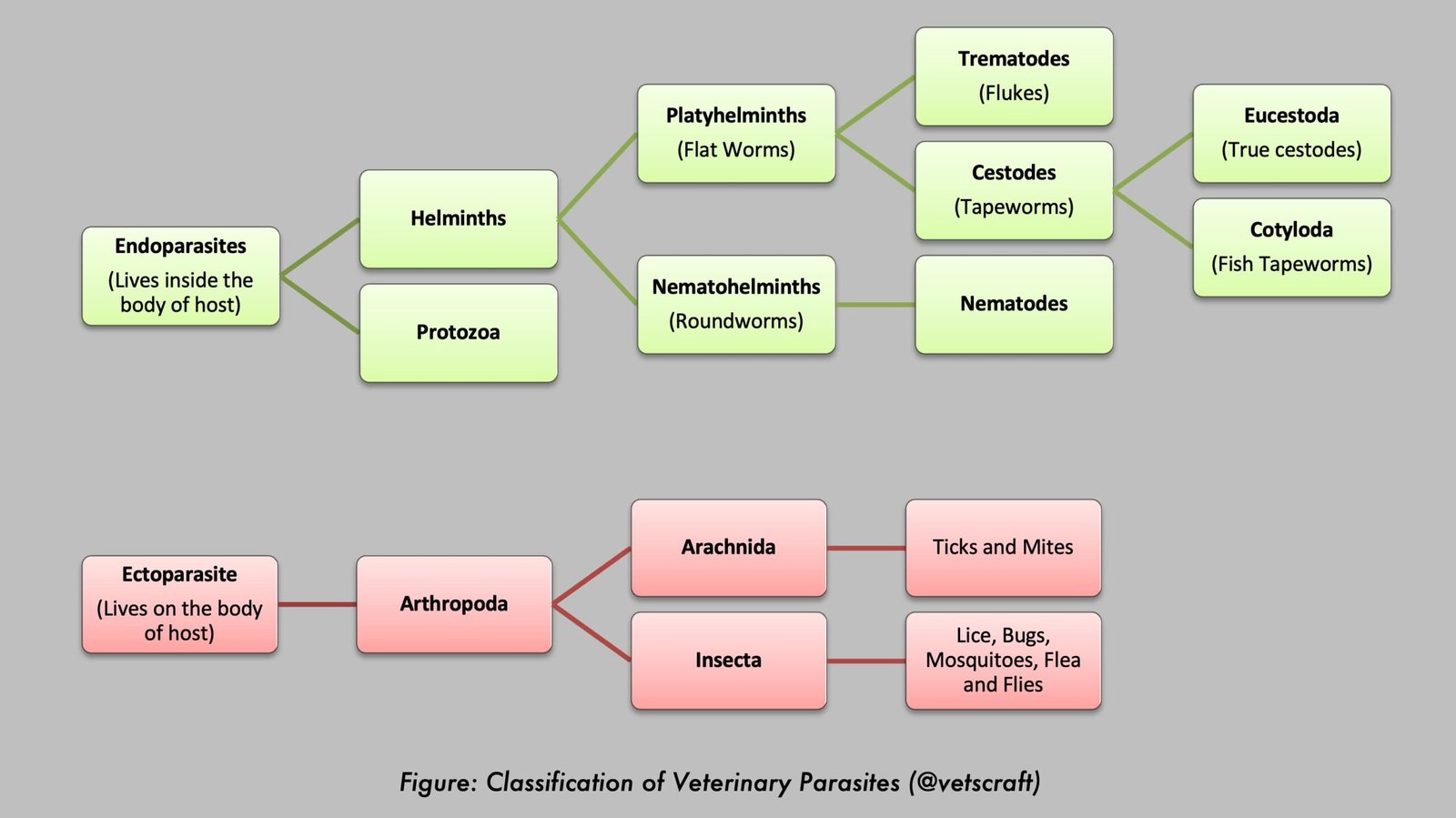
Physaloptera praeputialis is a spirurid nematode that parasitizes the stomach of domestic cats and wild felids. Adult worms firmly attach to the gastric mucosa, where they feed on blood and tissue fluids, causing gastritis and, in heavy infections, chronic vomiting and other gastrointestinal disturbances.
The parasite has an indirect life cycle involving arthropod intermediate hosts, such as beetles and orthopterans, while various vertebrates may serve as paratenic hosts that facilitate transmission to the definitive host.
Parasite Overview
- Definitive Hosts: Domestic cats and wild felids
- Intermediate Hosts: Beetles (especially dung beetles) and orthopterans (e.g., crickets and grasshoppers)
- Paratenic Hosts: Reptiles, amphibians, rodents, and birds may serve as paratenic (transport) hosts.
- Predilection Site: Stomach (attached to the gastric mucosa)
- Life Cycle: Indirect
Taxonomical Classification
- Kingdom: Animalia
- Phylum: Nematoda
- Class: Chromadorea (Secernentea)
- Order: Spirurida
- Family: Physalopteridae
- Genus: Physaloptera
- Species: Physaloptera praeputialis
Morphology
- Adult worms are creamy white, sometimes tightly coiled, and measure 1–4 cm in length.
- In fertilized females, the vulva is covered with a conspicuous ring of brown cement-like material.
Pathology and Clinical Signs
- The parasites attach to the gastric mucosa, causing inflammation and gastritis.
- Chronic intermittent vomiting is the most common clinical sign of Physaloptera infection in cats.
- Anorexia and melena may be observed.
Diagnosis and Treatment
- Fecal centrifugation may occasionally reveal Physaloptera eggs.
- Treatment: Pyrantel pamoate at 5 mg/kg PO for two doses administered 3 weeks apart.