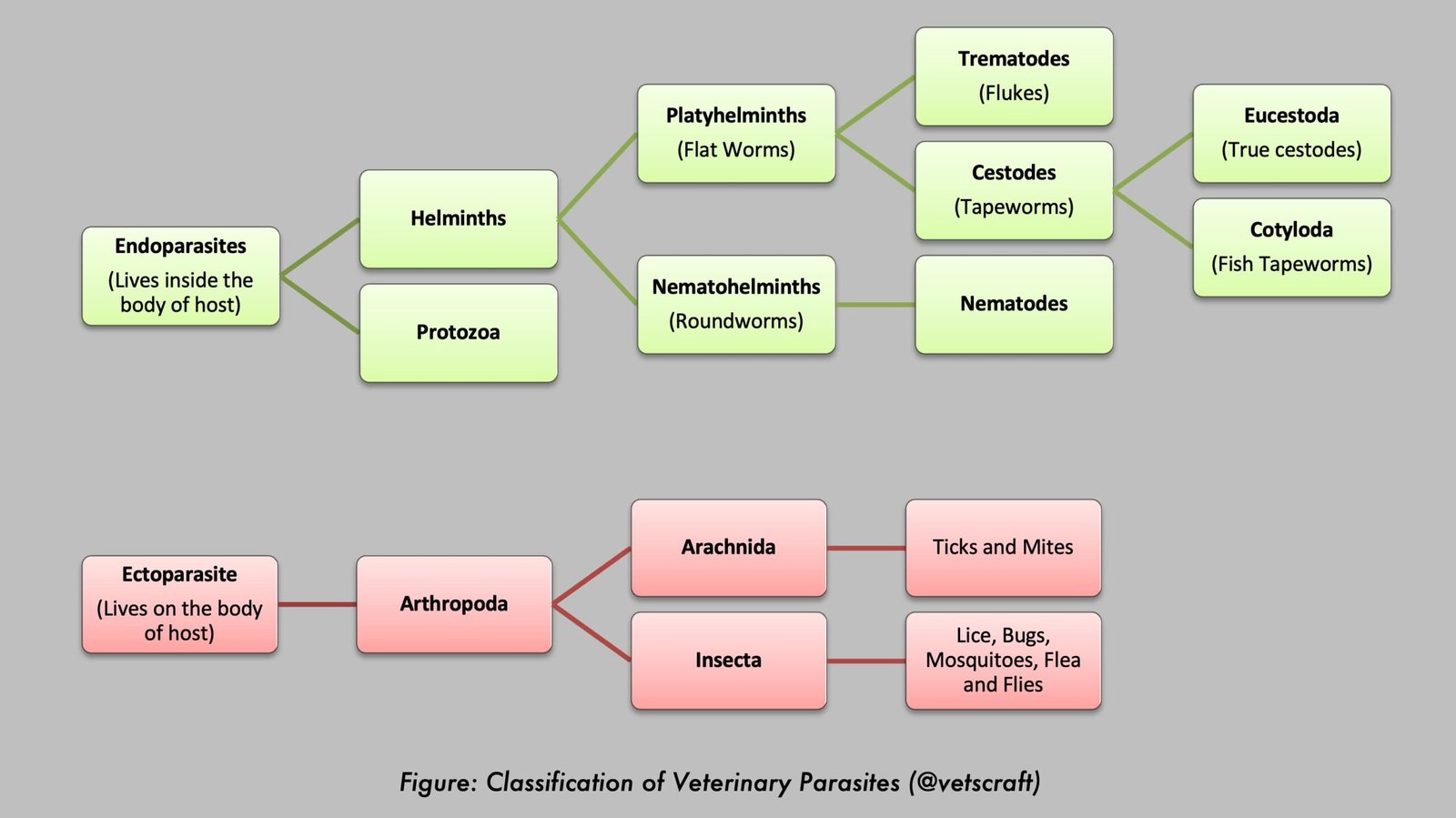
Metastrongylus elongatus (Pig Lungworm)
Metastrongylus elongatus, commonly known as the pig lungworm, is a parasitic nematode that infects the respiratory tract of domestic pigs and wild boars. Adult worms inhabit the bronchi and bronchioles, where they can cause parasitic bronchitis, reduced growth performance, and respiratory disease, particularly in young pigs.
This parasite has an indirect life cycle that requires earthworms as intermediate hosts. Metastrongylus elongatus is of veterinary importance because infection can impair productivity and predispose pigs to secondary respiratory infections.
Parasite Overview
- Common Name: Pig lungworm
- Predilection Site: Bronchi and bronchioles of the lungs
- Definitive Hosts: Domestic pigs and wild boars
- Intermediate Hosts: Earthworms
- Life Cycle: Indirect
- Infective Stage: Third-stage larvae (L3) within the earthworm (intermediate host)
- Disease Caused: Metastrongylosis (verminous bronchitis and pneumonia)
Taxonomical Classification
- Kingdom: Animalia
- Phylum: Nematoda
- Class: Chromadorea
- Order: Rhabditida
- Suborder: Strongylina
- Superfamily: Metastrongyloidea
- Family: Metastrongylidae
- Genus: Metastrongylus
- Species: Metastrongylus elongatus
Importance and Clinical Significance
Metastrongylus elongatus is a parasitic nematode that inhabits the bronchi and bronchioles of pigs. The earthworm serves as the intermediate host.
The primary importance of pig lungworm infection is that it causes growth retardation in affected pigs.
Clinical signs include coughing due to parasitic bronchitis.
The adult worms are grossly visible within the bronchi. Microscopically, the parasites cause catarrhal bronchitis with eosinophilic infiltration and lobular atelectasis.