Effects of Parasitism in Animals: Pathogenesis and Mechanisms
Parasites affect animals in several ways, ranging from mild physiological disturbances to severe pathological conditions and death. The pathogenic effects of parasites depend on the parasite species, host immunity, site of infection, and intensity of infestation.
Generally, the majority of parasites are mildly pathogenic or non-pathogenic, but they affect the normal physiological functions of the host. This may be manifested in the form of stunted growth, reduced reproductive performance, and increased susceptibility to other serious diseases due to weakened immunity.
However, a few parasites are highly pathogenic, in which the effects of parasitism are manifested due to the following reasons:
- Removal of Body Fluids
- Destruction of Host Tissues
- Mechanical Obstruction
- Competition for Nutrients
- Alteration of Cellular Structure or Texture
- Release of Toxins
- Secondary Complications
- Pressure Atrophy
1. Removal of Body Fluids
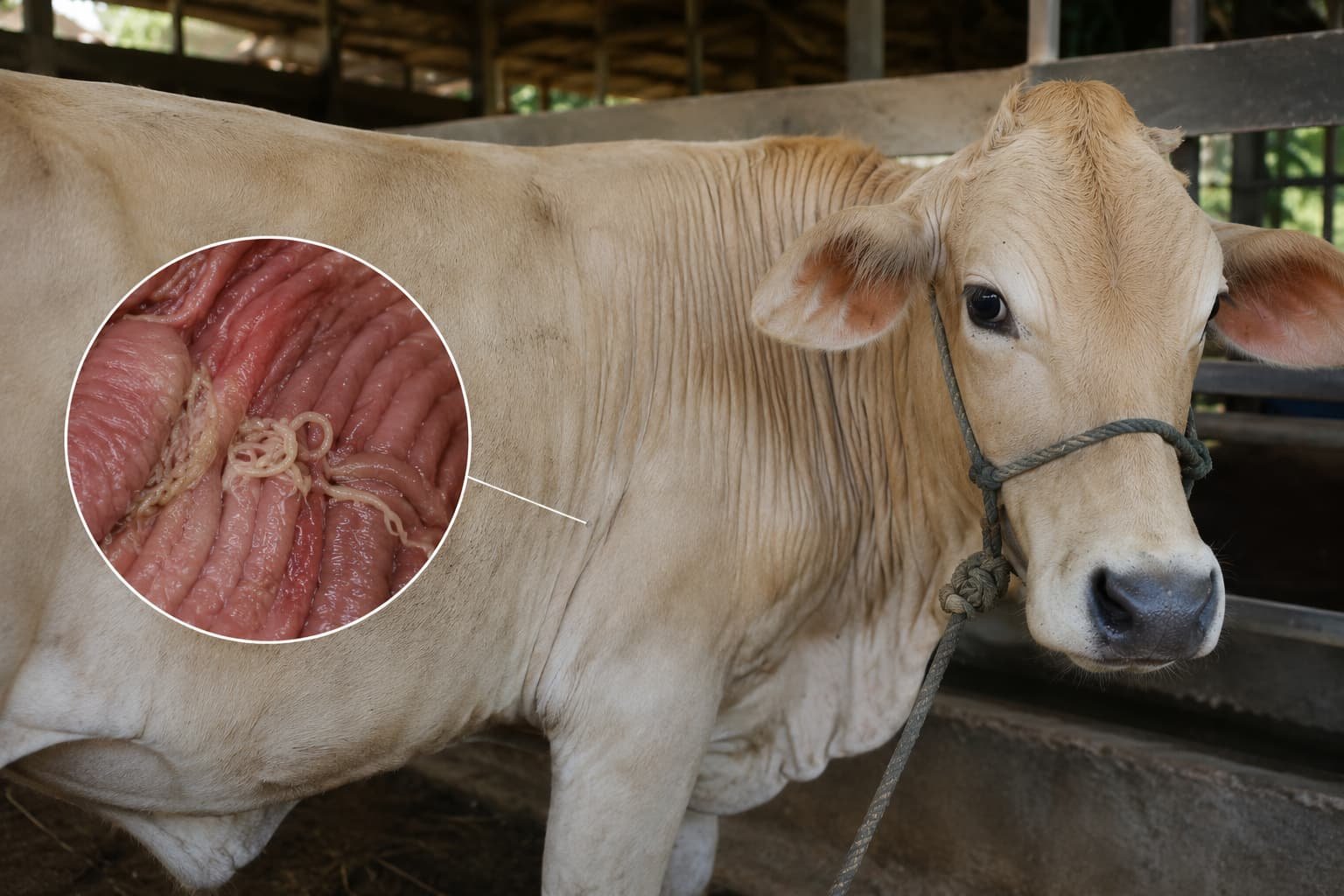
Some parasites suck blood or lymph from animals, causing anemia and even death in severe infections or infestations. For example, hookworms and Haemonchus contortus (hematophagous nematodes), as well as biting flies and ticks, cause blood loss leading to anemia.
2. Destruction of Host Tissue
Varying degrees of tissue damage occur during parasitic infections as a result of mechanical injury, immunological responses elicited against parasites, and bacterial invasion. Parasites cause injury to host tissues at different phases of their development.
Some parasites cause injury during entry; for example, the cercariae of schistosomes and the L3 larvae of hookworms enter the host through skin penetration, causing tissue destruction. Others produce damage after entering the host, especially during migration through various organs, such as Toxocara canis.
In some parasitic infections, the host immune response elicited against the parasite may itself cause tissue destruction. Examples include the formation of avascular granulomas in schistosome infections in cattle, cercarial dermatitis in humans, and flea bite dermatitis in both animals and humans.
3. Mechanical Obstruction
In heavy parasitic infections, the intestinal tract, blood vessels, lymphatic vessels, and bile ducts may become obstructed, resulting in severe pathological conditions.
Examples of mechanical obstruction include:
- Obstruction of the intestinal tract in Moniezia and ascarid infections
- Obstruction of lymphatic vessels by microfilariae of Wuchereria bancrofti
- Obstruction of blood vessels (pulmonary artery) in Dirofilaria immitis infection
- Obstruction of the bile duct in infections caused by Fasciola spp. and Clonorchis sinensis
4. Competition for Nutrients
Parasites compete with the host for essential nutrients, leading to deficiency diseases in the host. For example, Diphyllobothrium latum competes with the host for vitamin B12, resulting in pernicious anemia.
5. Alteration of Cellular Structure or Texture
Parasitic infections cause alterations in cellular structure, such as metaplasia and hyperplasia, leading to malabsorption of nutrients and minerals. This may be manifested as poor growth, weight loss, and reduced reproductive performance.
Examples of alteration of cellular structure include:
- Oesophagostomum spp. infection – formation of “pimply gut” nodules in the intestine
- Coccidiosis – rupture of epithelial cells and villous atrophy
- Trichostrongylus infection – immature cells fail to secrete HCl, resulting in improper digestion
6. Releasing of Toxin
Some parasites produce toxins or metabolites that cause toxicosis and tick paralysis in animals.
Tick paralysis is a condition that occurs in domestic animals due to the toxin holocyclotoxin released by Ixodes ricinus and Ixodes holocyclus.
7. Secondary Complication
Some pathological conditions may occur as secondary complications of parasitic diseases. For example, in Spirocerca lupi infection, pulmonary osteoarthropathy of long bones, esophageal tumors, pyemic nephritis, aplastic anemia, and spondylitis may occur as secondary complications.
Similarly, in sheep, black disease caused by Clostridium novyi may occur as a secondary complication of acute fasciolosis.
8. Pressure Atrophy
Pressure atrophy refers to injury to tissues caused by pressure exerted by parasites. For example, in Coenurus cerebralis infection, perforation of the skull may occur due to pressure exerted by the parasite.