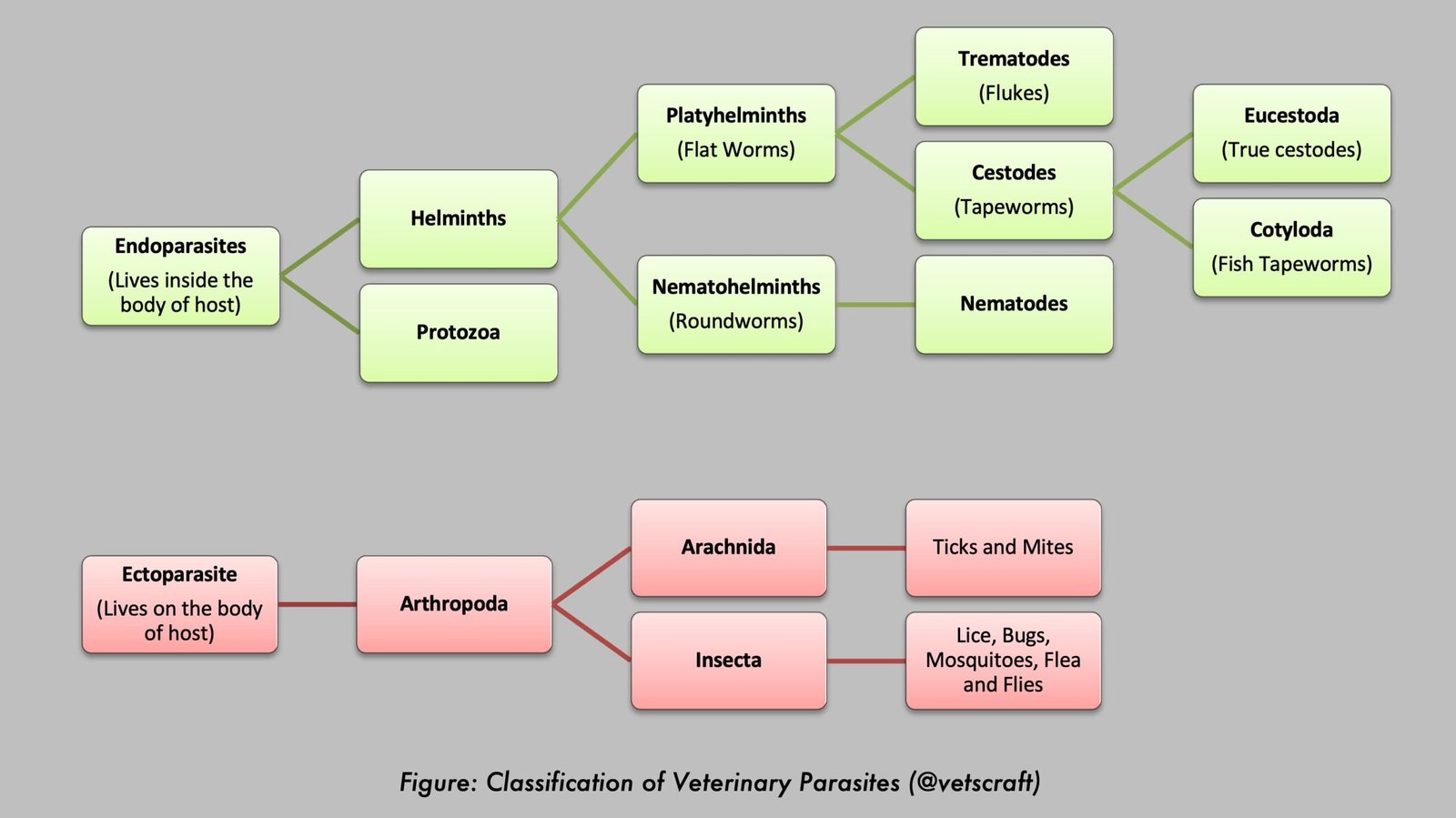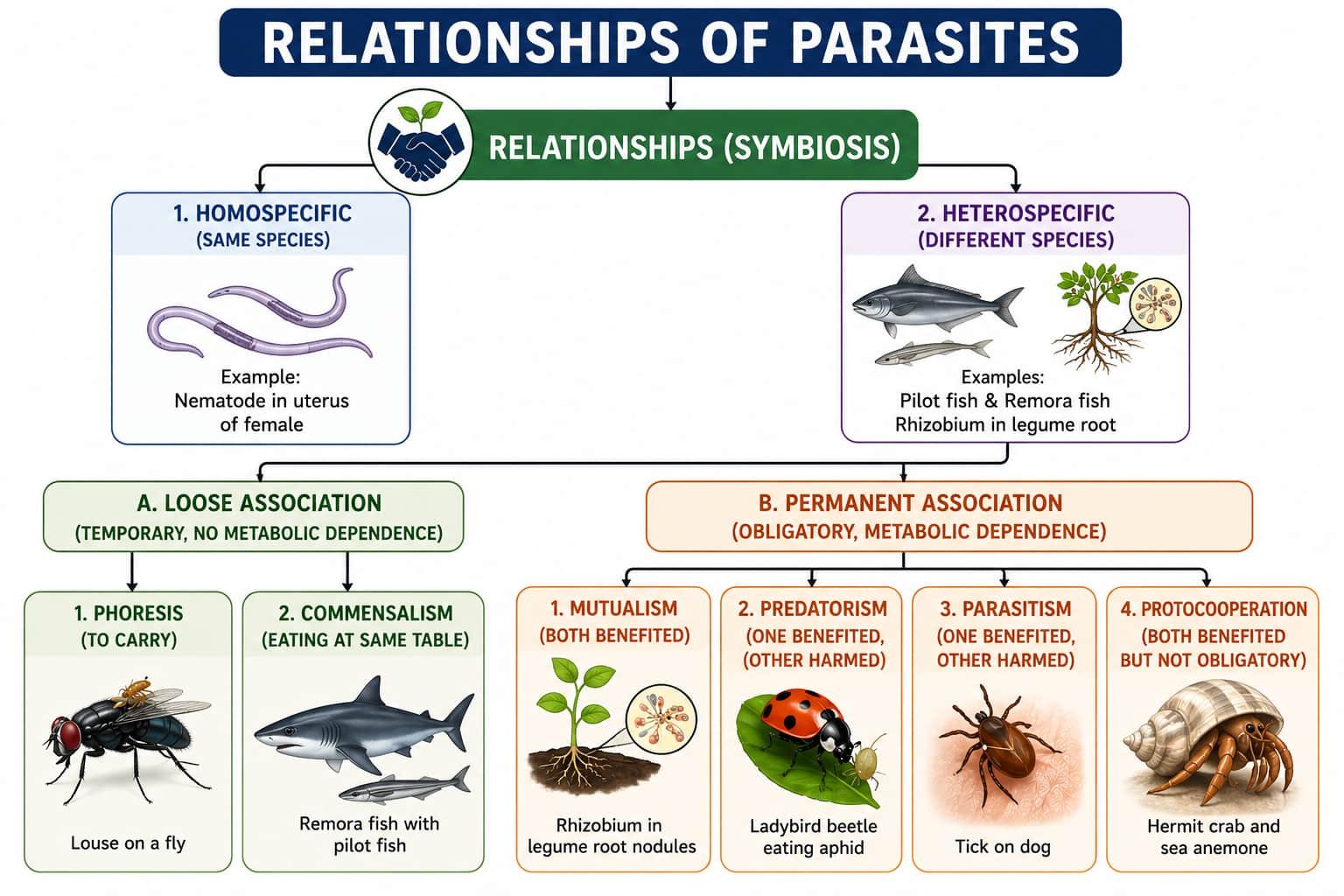
Control and Treatment of Parasitic Diseases in Animals
Parasitic diseases are major causes of economic loss and health problems in livestock, poultry, and companion animals worldwide. Effective control and treatment of parasitic diseases in animals require an integrated approach involving antiparasitic drugs, management practices, vector control, and immunoprophylaxis.
Parasitic diseases are controlled through chemotherapy, management practices, and immunoprophylaxis.
There are three commonly used approaches for the control and treatment of parasitic diseases in animals:
- Chemotherapy
- Managemental Control
- Immunoprophylaxis
1. Chemotherapy
Treatment of diseases caused by parasites or pathogens using specific chemical compounds is called chemotherapy. The chemical compounds used for the treatment of parasitic diseases are known as antiparasitic drugs.
Antiparasitic Drug
A drug that kills, paralyzes, or inhibits the multiplication of parasites is called an antiparasitic drug.
Ideal Characters of Antiparasitic Drugs
- It should have a high safety margin and broad-spectrum activity.
- It should be easy to administer.
- It should have prolonged bioavailability in the system (anthelmintics and antiprotozoals) and a longer residual effect (insecticides), so that a greater number of parasites are exposed to the drug.
- It should be inexpensive.It should not produce side effects.
- It should not induce resistance.
- It should leave no residues in meat, milk, or eggs.
Classification Antiparasitic Drugs
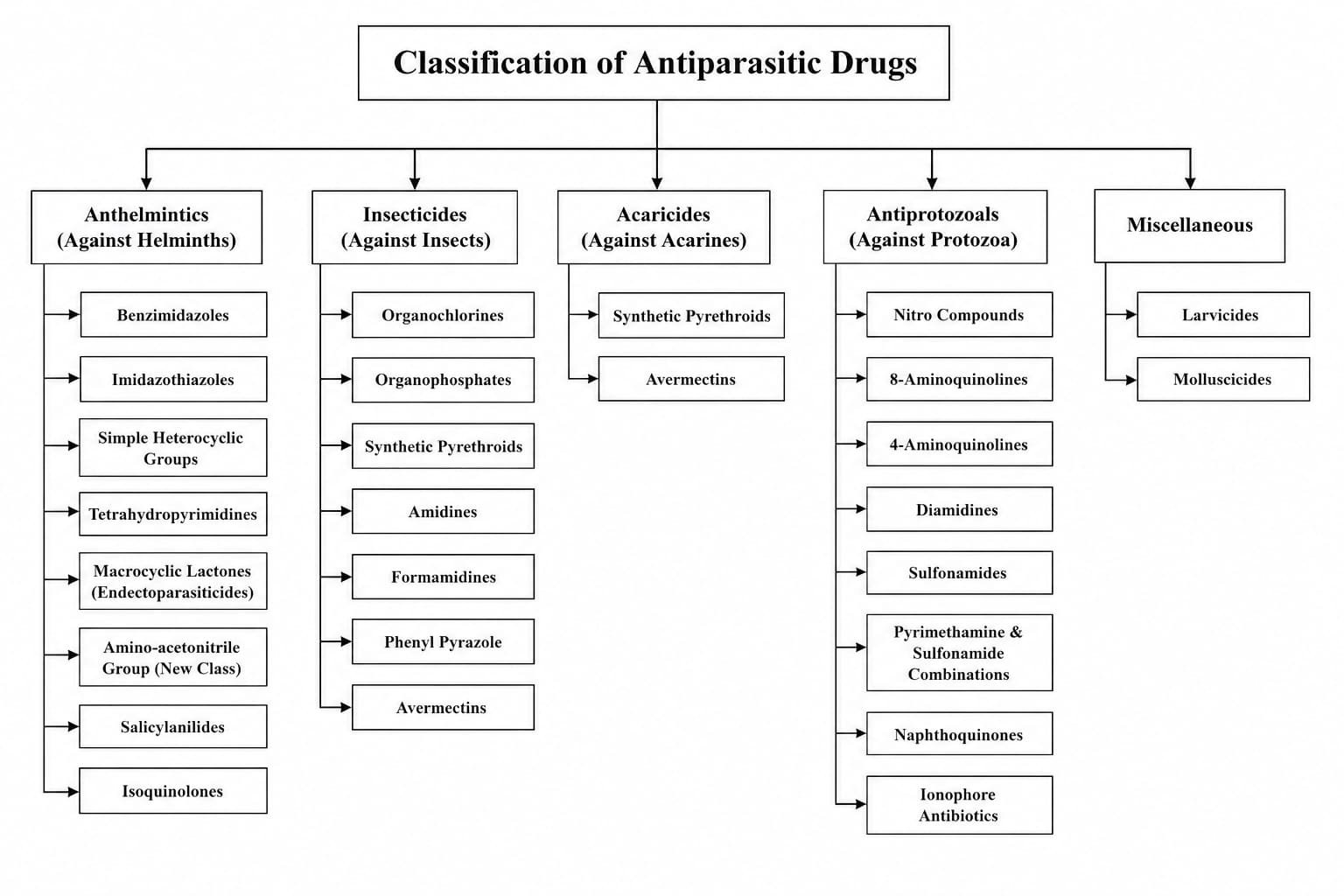
- Anthelmintic: A drug that kills or paralyzes helminth parasites and facilitates their expulsion through peristaltic movement is called an anthelmintic.
- Vermicide: A drug that kills worms.
- Vermifuge: A drug that does not kill worms but causes paralysis, after which the worms are expelled from the host by peristaltic activity.
- Insecticide: Chemicals used for killing insects, such as flies, lice, and bugs.
- Acaricide: Chemicals used for killing acarines, such as ticks and mites.
- Antiprotozoal: A drug used against protozoan parasites.
Classes of Anthelmintics
- Benzimidazoles: Thiabendazole, Fenbendazole, Albendazole, and Mebendazole (effective against nematodes), and Triclabendazole (effective against immature and mature Fasciola).
- Imidazothiazoles: Levamisole and Tetramisole (effective against nematodes).
- Simple Heterocyclic Groups: Phenothiazine and Piperazine (effective against ascarids).
- Tetrahydropyrimidines: Pyrantel and Morantel (effective against ascarids and hookworms in dogs).
- Macrocyclic Lactones (Endectoparasiticides): Ivermectin, Doramectin, Milbemycin Oxime, Selamectin, Eprinomectin, and Moxidectin.
- Amino-acetonitrile Group (New Class): Monepantel (effective against nematodes).
- Salicylanilides: Closantel (endectoparasiticide), Oxyclozanide and Rafoxanide (effective against fasciolosis and amphistomosis), and Niclosamide (effective against trematodes and cestodes).
- Isoquinolones: Praziquantel, the drug of choice for tapeworm infections in dogs.
NOTE
The drugs of the Macrocyclic Lactone class are effective against ectoparasites and nematodes, but not against trematodes and cestodes, because these parasites lack GABA as an inhibitory neurotransmitter. They are contraindicated in Collie dogs because of the presence of the MDR1 gene (mutant multidrug resistance gene).
Anthelmintic drugs should be used rotationally among different classes on a yearly basis and administered at the correct dose to avoid the development of resistance. To enhance the efficacy of anthelmintics, deworming should be performed on an empty stomach after 12–24 hours of fasting. The dose should be calculated based on the largest animal in the flock. After deworming, green forage should be avoided; instead, dry forage should be provided.
Classes of Insecticides
- Synthetic Pyrethroids: These chemicals are potent and possess a greater knockdown effect. They are biodegradable when exposed to air and light, and hence weekly or biweekly applications provide excellent control of insects. Pyrethroids have a greater insecticide effect when the temperature is low. Pyrethroids initially stimulate and then depress nerve cell function and eventually cause paralysis. The fast knockdown of insect is the result of rapid muscular paralysis.
Examples: Permethrin, Cypermethrin, Deltamethrin, Flumethrin - Carbamates: Inhibits the acetylcholine esterase (AChE). But this inhibition is reversible.
Examples: Propoxur, Sevin and Methomyl - Organophosphates (OPC): Inhibits the acetylcholine esterase (AChE). But this inhibition is irreversible.
Examples: Dichlorvos, Tetrachlorvinphos, Chlorpyrifos, Coumaphos, Malathion and Sumithion - Formamidines: Amitraz (drug of choice for Demodicosis)
- Neonicotinoids: They bind to nicotinic acetylcholine receptors (nAChR), serving as agonists. They have rapid flea killing action.
Example: Imidacloprid - Phenylpyrazole Insecticide: A potent antagonist of gamma amino butyric acid (GABA) gated chloride channel. Effective against ticks, chewing lice, fleas and Sarcoptic mange.
Example: Fipronil - Repellents: DEET
- Insect Growth Regulators (IGRs):
- 1. Cyromazine: It blocks the formation of new cuticle in the fly larvae. It is molting disruptor. It is commonly used for control of house flies in poultry farms.
- 2. Lufenuron: Inhibit chitin synthesis and deposition. It is used for control of fleas in dog.
NOTE
Insecticides should be used rotationally among different classes on a yearly basis and applied at the correct concentration to avoid the development of resistance. Insecticides are usually used externally and should therefore be applied during bright sunlight. Before application, animals should be allowed to drink water to satiety to avoid accidental ingestion of insecticide-contaminated water.
Antiprotozoal Drug
- Thiamine Analogue: Amprolium (Coccidiosis in chicken, cattle, sheep and goats, pigs, dog and cats.)
- Aromatic Diamidine: Diminazene aceturate (Babesiosis and Trypanosomosis), Imidocarb (Babesiosis)
- Quinapyramine Derivatives: Quinapyramine methyl sulphate and Quinapyramine methyl Chloride (Antrycide Prosalt) (Drug of choice for Trypanosomiasis)
- Lonophore Antibiotic: Lasalocid, Monensin and Salinomycin (These are fermentation products of soil dwelling bacteria Streptomyces spp.; These drugs used for Coccidiosis in chicken, cattle, sheep and rabbits.
- Sulphonamides: Sulphadimidine, Sulfamethazine, Sulfaquinoxaline (The sulphonamides are structural analogs of Para amino benzoic acid (PABA) that competitively inhibit the dihyropterate synthetase step in the synthesis of folic acid, which is required for synthesis of RNA and DNA. These drugs are used for Coccidiosis in cattle, swine, chicken and turkeys)
- Napthoquinones: Buparvaquone (drug of choice for theileriosis).
- Nitroimidazole: Metronidazole (drug of choice for amoebiasis, Balantidiosis and Giardiosis).
2. Managemental Control
- Animal housing facilities should be maintained hygienically through proper disposal of manure and waste materials.
- To control strongyle nematode infections, animals should not be allowed to graze during the early morning and late evening, because a higher number of infective larvae are present on grass blades at these times. Animals may be dewormed 15 days after the onset of the rainy season.
- To control trematode infections, animals should not be allowed to graze near water bodies.
- Young animals should be separated from adults.
- Overstocking should be avoided.
- Rotational grazing may be practiced if pasture is available. In rotational grazing systems involving animal species that do not share parasitic infections, such as horses and cattle, the pasture can be used alternately by each species for 6 months. This practice helps eliminate infective stages due to the absence of a suitable host.
- Control of vectors and intermediate hosts should be practiced.
- Periodic screening of feces, skin scrapings, and blood should be carried out for parasitic diseases.
- Animals with a high worm burden should be dewormed.
- Infected animals should be separated from healthy animals.
3. Immunoprophylaxis
Animals can also be protected against parasitic infections through vaccination. However, only a few vaccines have been successfully developed against parasitic diseases. The major reasons for the difficulty in developing vaccines against parasitic diseases include the antigenic complexity of parasites (different developmental stages possessing different antigenic types) and antigenic variation in trypanosomes.
The following vaccines have been successfully developed:
- Rakshavac-T: Theileriosis
- Toxovax: Toxoplasmosis
- Pirodog: Babesia canis infection
- Leishmune: Leishmaniasis
- Anaplaz: Anaplasmosis
- Coccivac, Immucox, Paracox, and CoxAbic: Coccidiosis in chickens
- TickGARD and Gavac™: Recombinant vaccines against ticks (Boophilus microplus)
- Dictol (Dictyocaulus viviparus) and Difil (Dictyocaulus filaria)
- TrichGuard: Trichomonosis in cattle
- NeoGuard: Neosporosis