Veterinary Protozoology: Introduction, Structure, and Nucleus of Protozoa
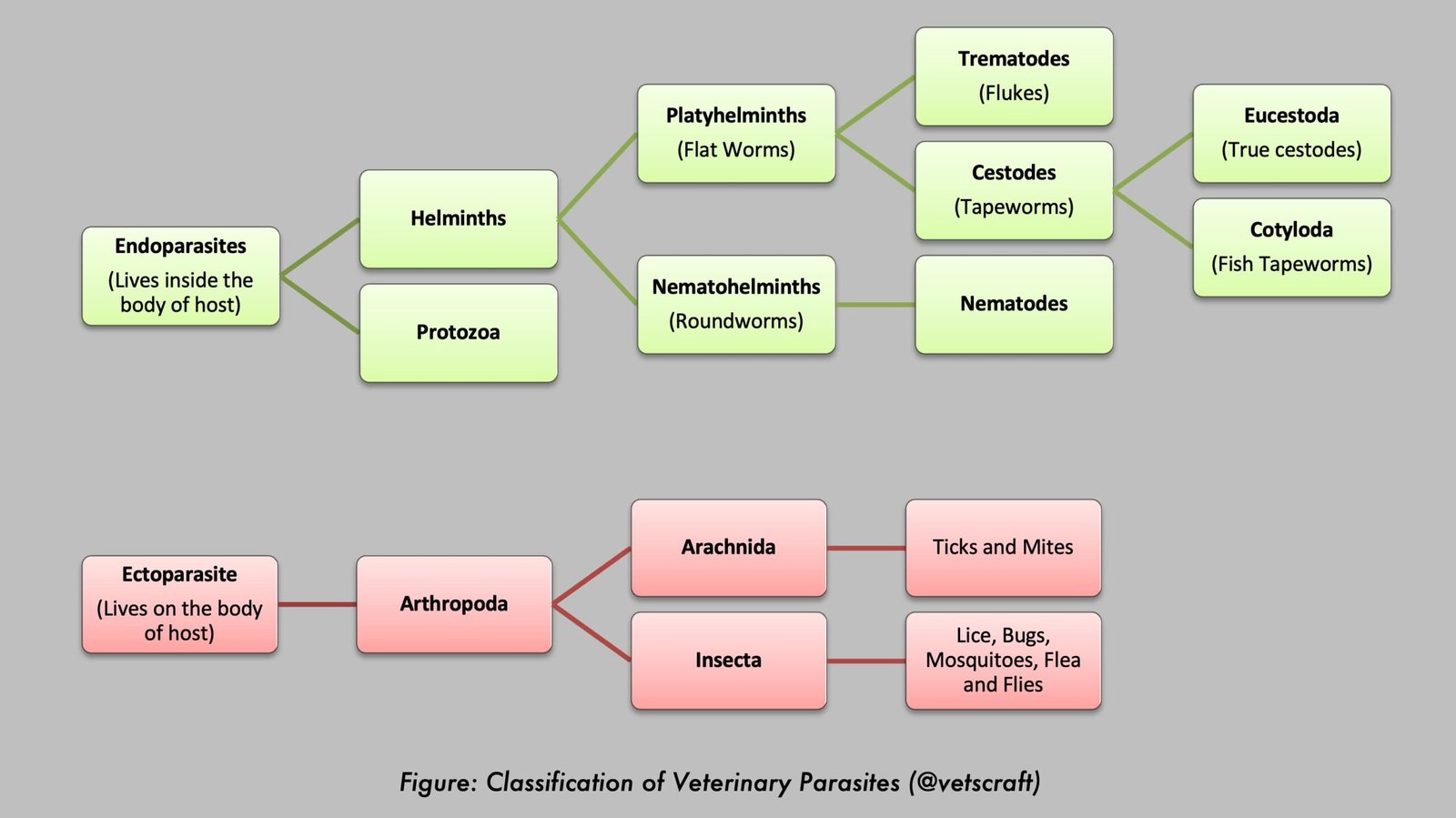
Protozoology is a branch of biology that deals with the study of organisms belonging to the subkingdom Protozoa of the kingdom Protista in the five-kingdom (Monera, Protista, Plantae, Fungi, and Animalia) classification of living organisms. Veterinary Protozoology is a branch of Parasitology that focuses on protozoan parasites of veterinary importance, particularly those that cause diseases in domestic and wild animals.
Protozoa are unicellular, microscopic organisms that occur in all habitats wherever life can exist. They abound in seas, ponds, streams, and soil. The chalk used in classrooms is prepared from the skeletal remains of protozoa that cover the ocean floor. Until the seventeenth century, no protozoa had been discovered due to the unavailability of microscopes. In 1632, Antoni van Leeuwenhoek, a Dutch scientist, invented a microscope.
Subsequently, he discovered a number of free-living protozoa such as Euglena and Vorticella. In 1674, he recorded the first parasitic protozoan, Eimeria stiedai, from the gallbladder of a rabbit, and also recorded Giardia lamblia from his own stool. To date, as many as 65,000 species of protozoa have been described.
Protozoa play a dual role. Some protozoa, such as Plasmodium, Entamoeba, Trypanosoma, Babesia, and Theileria, cause disease in animals and humans, whereas others, such as Trichonympha corbula, are flagellates that occur in the hindgut of termites and help digest the cellulose they consume.
A large number of protozoa (Diplodinium and Entodinium) that occur in the rumen of sheep and cattle are essential for feed digestion. They also produce hydrogen, carbon dioxide, and volatile fatty acids.
Structure of Protozoa
The structures of protozoa are referred to as organelles rather than organs (organs are composed of cells). Organelles are differentiated portions of a cell. These organelles carry out various physiological activities, such as locomotion, excretion, and metabolism, as they do in metazoans.
Protozoa have a mass of protoplasm containing one or more nuclei and cytoplasm. Cytoplasm is the extranuclear part of the protozoan cell, which is differentiated into an outer ectoplasm and an inner endoplasm. The ectoplasm is responsible for protection, locomotion, prehension, excretion, and respiration. In addition, cilia, flagella, and pseudopodia arise from the ectoplasm.
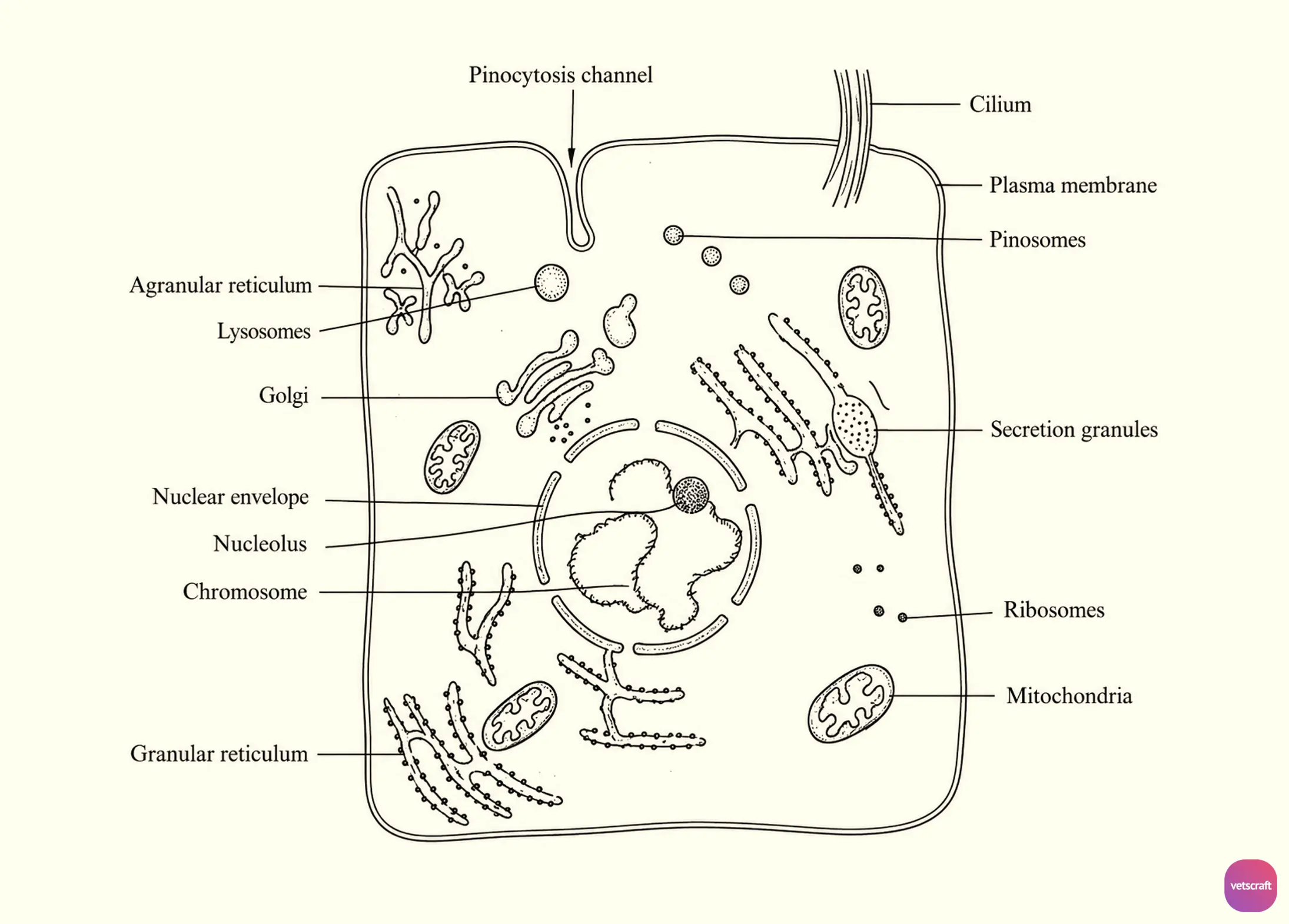
The inner granular endoplasm is responsible for nutrition and reproduction. It contains nuclei, food vacuoles, contractile vacuoles, chromatoid bodies, ribosomes, mitochondria, Golgi apparatus, lysosomes, pinosomes, etc.
Nucleus
Protozoa are eukaryotic, i.e., the nucleus is enclosed by a membrane, as opposed to prokaryotic bacteria, in which the nucleus is not enclosed by a nuclear membrane. Usually, one nucleus is present in protozoa. However, more than one nucleus may be present in some species (ciliates) or developmental stages.
Types of Nucleus
Two types of nuclei, namely vesicular and compact, are found in protozoa. The compact type of nucleus is seen in ciliates, whereas the vesicular type is found in all other protozoa.
1. Vesicular Nucleus
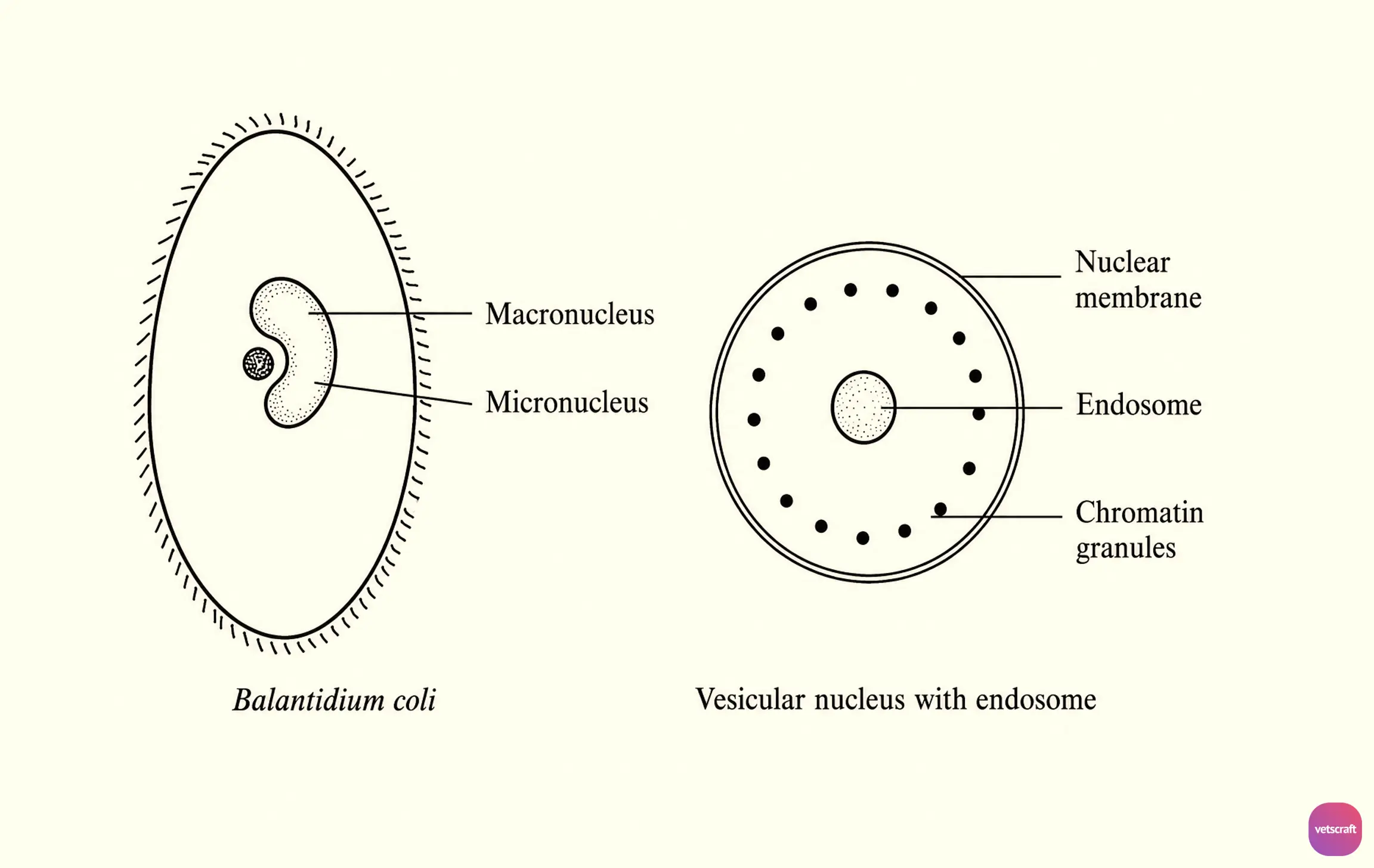
In this type, the nuclear membrane encloses the nucleoplasm and a more or less centrally located intranuclear body called the endosome or nucleolus. This nucleus is further classified as a vesicular nucleus with an endosome (karyosome) and a vesicular nucleus without an endosome.
Vesicular Nucleus with Endosome
A vesicular nucleus with an endosome has no DNA within the endosome; the chromatin material lies between the nuclear membrane and the endosome. This type of vesicular nucleus is seen in trypanosomes and parasitic amoebae.
Vesicular Nucleus without Endosome
A vesicular nucleus without an endosome has one or more nucleoli containing DNA, and the chromatin material is distributed throughout the nucleus. This type of vesicular nucleus is seen in members of the phylum Apicomplexa.
2. Compact Nucleus
A compact nucleus contains a large amount of chromatin and a small amount of nucleoplasm. This type is found in ciliates as the macronucleus and micronucleus.
The micronucleus is relatively small, diploid, and divides mitotically. It is responsible for reproduction.
The macronucleus is large, polyploid, and divides amitotically. It is responsible for vegetative functions.