Trichuris ovis (True Whipworm): Morphology, Pathogenesis, Diagnosis & Treatment
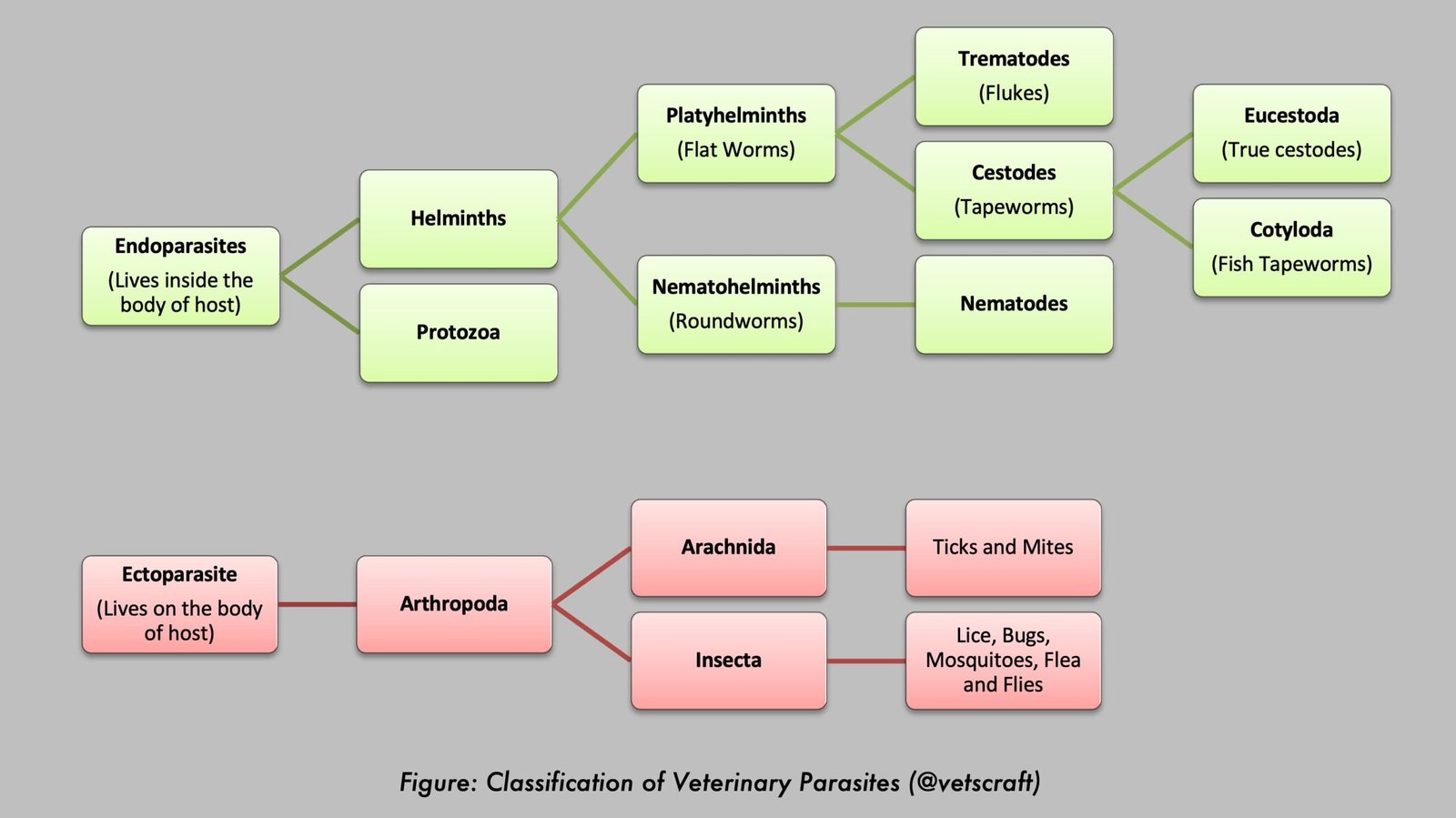
Trichuris ovis, commonly known as the true whipworm or cecal whipworm, is a parasitic nematode that primarily infects the cecum of sheep and goats, although it may also occur in cattle. It belongs to the family Trichuridae and is widely distributed in grazing livestock worldwide. Adult worms possess a characteristic whip-like appearance, with a long, slender anterior end and a short, thick posterior end.
Most T. ovis infections are subclinical because sheep and goats are relatively resistant to the parasite. However, heavy infections can damage the cecal mucosa, impair fluid absorption, and lead to diarrhea, poor body condition, and reduced productivity. Diagnosis is primarily based on fecal egg examination, while effective control relies on strategic anthelmintic treatment and good pasture management. This article provides a comprehensive overview of the morphology, pathogenesis, clinical signs, diagnosis, and treatment of Trichuris ovis.
Trichuris Species
- Trichuris ovis: Sheep, goats, and cattle
- Trichuris suis: Pig
- Trichuris vulpis: Dog
- Trichuris felis: Cat
- Trichuris muris: Mouse
- Trichuris trichiura: Humans
Taxonomical Classification
- Domain: Eukaryota
- Kingdom: Animalia
- Phylum: Nematoda
- Class: Enoplea
- Order: Trichocephalida
- Family: Trichuridae
- Genus: Trichuris
- Species: Trichuris ovis
- Common Name: True whipworm
Morphology
This species of whipworm is white and is characterized by a long, thin anterior portion that comprises two-thirds of its body and a short, thick posterior portion.
Male T. ovis usually range from 53.04–75.08 mm in length, while females are approximately 32.03–70.19 mm long.
The spicule length ranges from 4.18–5.62 mm in males. Both sexes possess bacillary bands. T. ovis infecting different species of sheep or goats may exhibit slight morphological variations.
Clinical Signs & Pathogenesis
T. ovis primarily inhabits the host’s cecum. However, sheep and goats are relatively resistant to infection and often do not exhibit significant clinical signs.
In heavily infected animals, a large number of blood vessels within the cecal wall are damaged. This eventually results in thickening of the cecal wall, impairing fluid absorption in that region of the large intestine and causing diarrhea. This can be particularly detrimental during periods of drought.
Although sheep and goats are relatively resistant to infection, T. ovis is one of the most common nematode parasites infecting these hosts.
Diagnosis
- The only accurate way to diagnose worm infections before productivity losses occur is to perform a fecal egg count (FEC). The results help determine the most appropriate anthelmintic treatment for the situation.
- Visible signs usually appear only after significant production losses have already occurred. These signs may also be associated with other parasitic or infectious diseases.
- The worms are also easily identified during postmortem examination. In addition, whipworm eggs have a distinctive appearance and are readily identified during fecal egg counts.
Treatment
- Fenbendazole: 5–20 mg/kg BW, orally
- Levamisole: 7.5 mg/kg BW, SC