Capillaria hepatica (Hepatic Capillary Worm): Life Cycle, Diagnosis & Treatment
Capillaria hepatica, commonly known as the hepatic capillary worm, is a zoonotic parasitic nematode that primarily infects the liver of rodents but can also affect a wide range of wild and domestic mammals, including humans. It is the causative agent of hepatic capillariasis, a relatively uncommon yet clinically significant disease characterized by chronic liver inflammation and fibrosis.
Unlike most nematodes, Capillaria hepatica has a unique life cycle in which eggs remain trapped within the liver and are released into the environment only after the death and decomposition of the host or when the host is consumed by a predator or scavenger. This distinctive transmission pattern makes its epidemiology and life cycle especially important in veterinary parasitology.
This article provides a comprehensive overview of Capillaria hepatica, including its taxonomical classification, hosts, life cycle, pathogenesis, clinical significance, diagnosis, and treatment, making it a valuable resource for veterinary students, practitioners, and researchers.
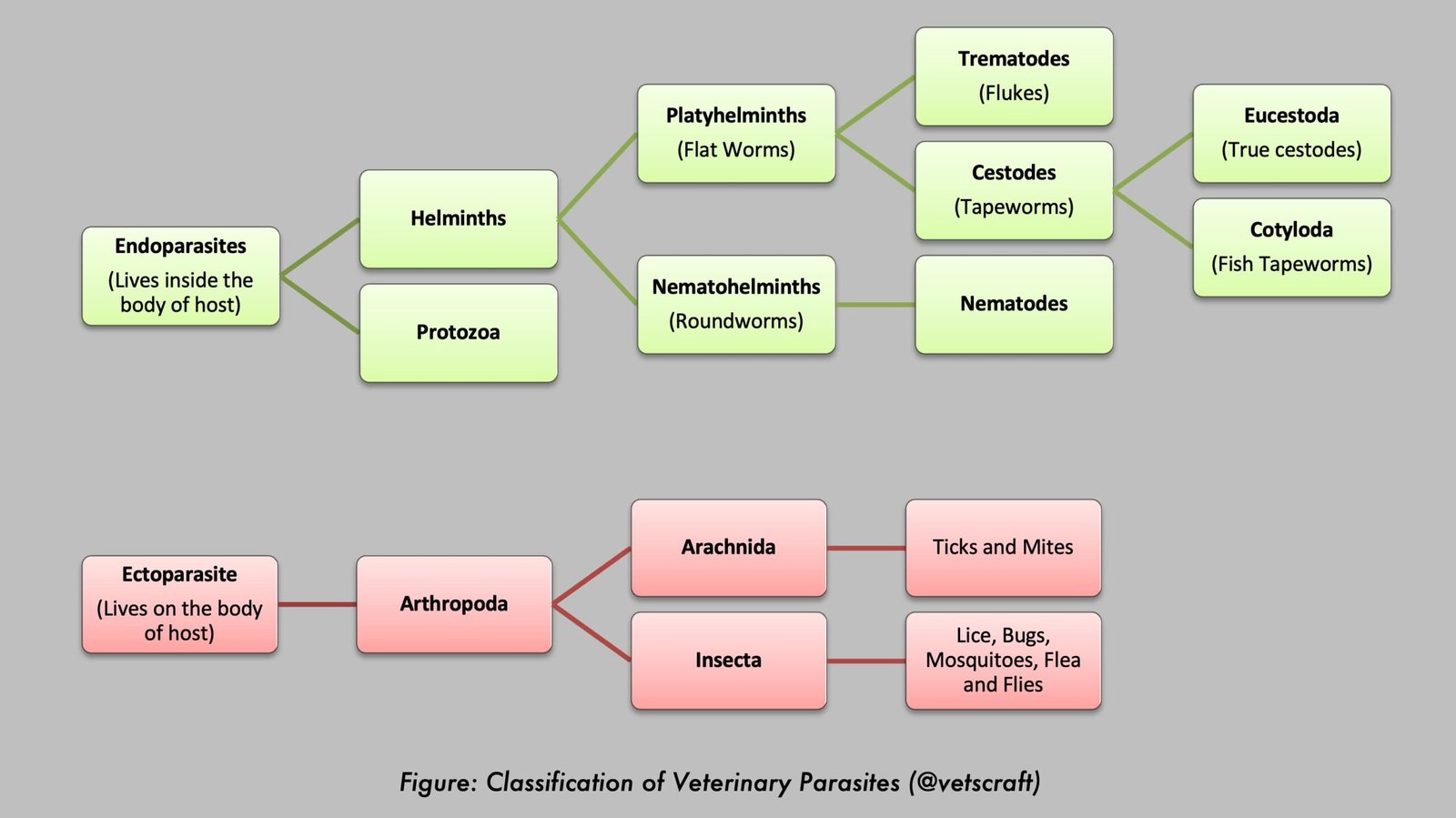
Capillaria Species
- Capillaria hepatica: Liver of rodents; causes hepatic capillariasis
- Capillaria annulata: Crop and esophagus of poultry
- Capillaria plica: Urinary bladder of dogs
NOTE
The currently accepted scientific name for Capillaria hepatica is Calodium hepaticum. However, the name Capillaria hepatica remains widely used in veterinary medicine, parasitology textbooks, scientific literature, and educational resources. For consistency with commonly used veterinary terminology, this article uses the name Capillaria hepatica throughout.
Capillaria hepatica is a parasitic nematode that causes hepatic capillariasis in rodents and numerous other mammalian species, including humans. The life cycle of C. hepatica may be completed within a single host species.
However, the eggs, which are laid in the liver, must mature outside the host’s body (in the environment) before infecting a new host. Therefore, the death of the host in which the adults reach sexual maturity, either through predation or natural decomposition, is necessary for completion of the life cycle.
Taxonomical Classification
- Kingdom: Animalia
- Phylum: Nematoda
- Class: Enoplea
- Order: Trichocephalida (Trichinellida)
- Family: Capillariidae
- Genus: Capillaria
- Species: Capillaria hepatica
- Common Name: Hepatic capillary worm
Hosts
Adults are commonly found in dozens of rodent species but also occur in a wide variety of other wild and domestic mammals, and occasionally in humans.
Life Cycle
Capillaria hepatica has a direct life cycle with no intermediate host. It can develop with only one definitive host but likely requires two hosts to complete its life cycle. Adult worms are located deep within the liver parenchyma of the host and lay hundreds of eggs in the surrounding parenchymal tissue.
The eggs trapped in the parenchyma cannot be passed in the feces of the host and remain in the liver until the animal dies or, more commonly, is eaten by a predator, scavenger, or intercalary host.
Eggs ingested by scavengers are unembryonated (non-infective) and pass through the digestive tract before being excreted in the feces, providing an efficient mechanism for releasing eggs into the environment. This is considered the primary route of transmission in nature. The eggs embryonate in the environment, where they require oxygen and moist soil to become infective.
Under natural conditions, embryonation is slow and may take between 6 weeks and 5 months. The cycle continues when embryonated eggs are ingested by a suitable mammalian host. Infective eggs hatch in the intestine, releasing first-stage larvae.
The larvae penetrate the intestinal wall and migrate via the portal vein to the liver parenchyma within 3–4 days. They take approximately 3–4 weeks to mature into adults and mate. Humans are usually infected after ingesting embryonated eggs in fecally contaminated food, water, or soil.
Pathogenesis
In humans, C. hepatica causes hepatic capillariasis, a serious liver disorder. The nematode migrates through the liver, causing hepatocellular damage and subsequent loss of liver function.
As adult C. hepatica worms begin to die within the liver tissue, their decomposition intensifies the host’s immune response. This results in chronic inflammation and encapsulation of the dead worms within collagen fibers, eventually leading to septal fibrosis (abnormal connective tissue growth) and cirrhosis.
The eggs remain behind and may become encased within granulomatous tissue, with large areas of the liver parenchyma being replaced by these egg masses. Capillaria hepatica may also cause hepatomegaly.
Infections with C. hepatica may present with several clinical signs, including abdominal pain over the liver region, weight loss, decreased appetite, fever, chills, hepatitis, ascites, and hepatolithiasis.
Diagnosis
- Diagnosis is made by identifying eggs or adult C. hepatica in liver tissue obtained from biopsy or necropsy specimens.
- Encapsulated eggs and adult worms may appear as white nodules measuring 2–3 mm in diameter on both the surface and within the liver during necropsy.
Treatment
- Successful treatment of human cases with thiabendazole or albendazole (with or without corticosteroids) has been reported.
- Albendazole should be taken with food because a high-fat meal increases the bioavailability of the drug.