
Gastrodiscus hominis
Veterinary ParasitologyLearn about Gastrodiscus hominis, the intestinal amphistome of humans and pigs. Explore its hosts, morphology, life cycle, pathogenesis, distribution, and veterinary significance.
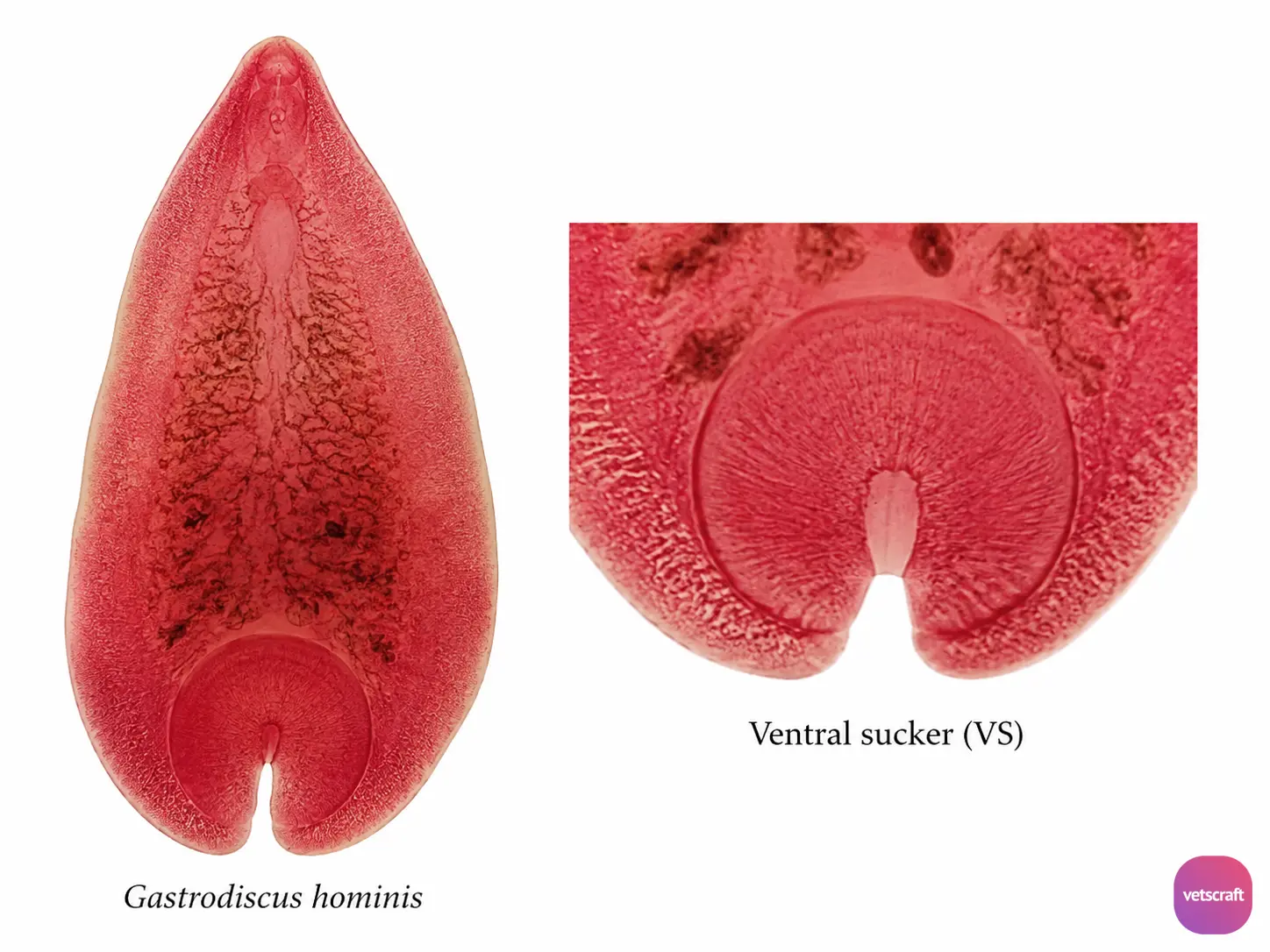
Learn about Gastrodiscus hominis, the intestinal amphistome of humans and pigs. Explore its hosts, morphology, life cycle, pathogenesis, distribution, and veterinary significance.
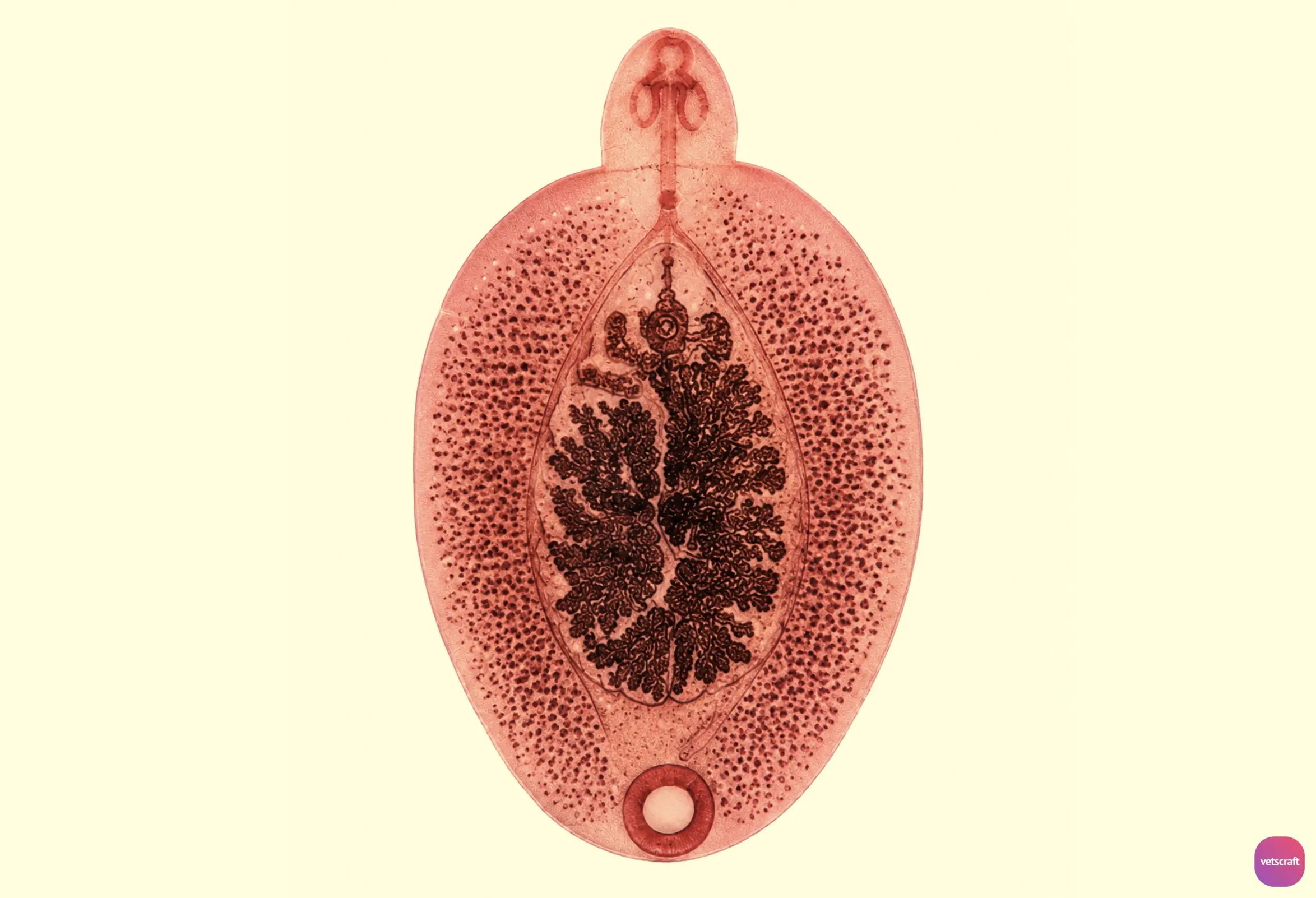
Learn about Gastrodiscus aegyptiacus, the intestinal amphistome of equines and pigs. Explore its morphology, hosts, location, intermediate host, life cycle, and veterinary significance.
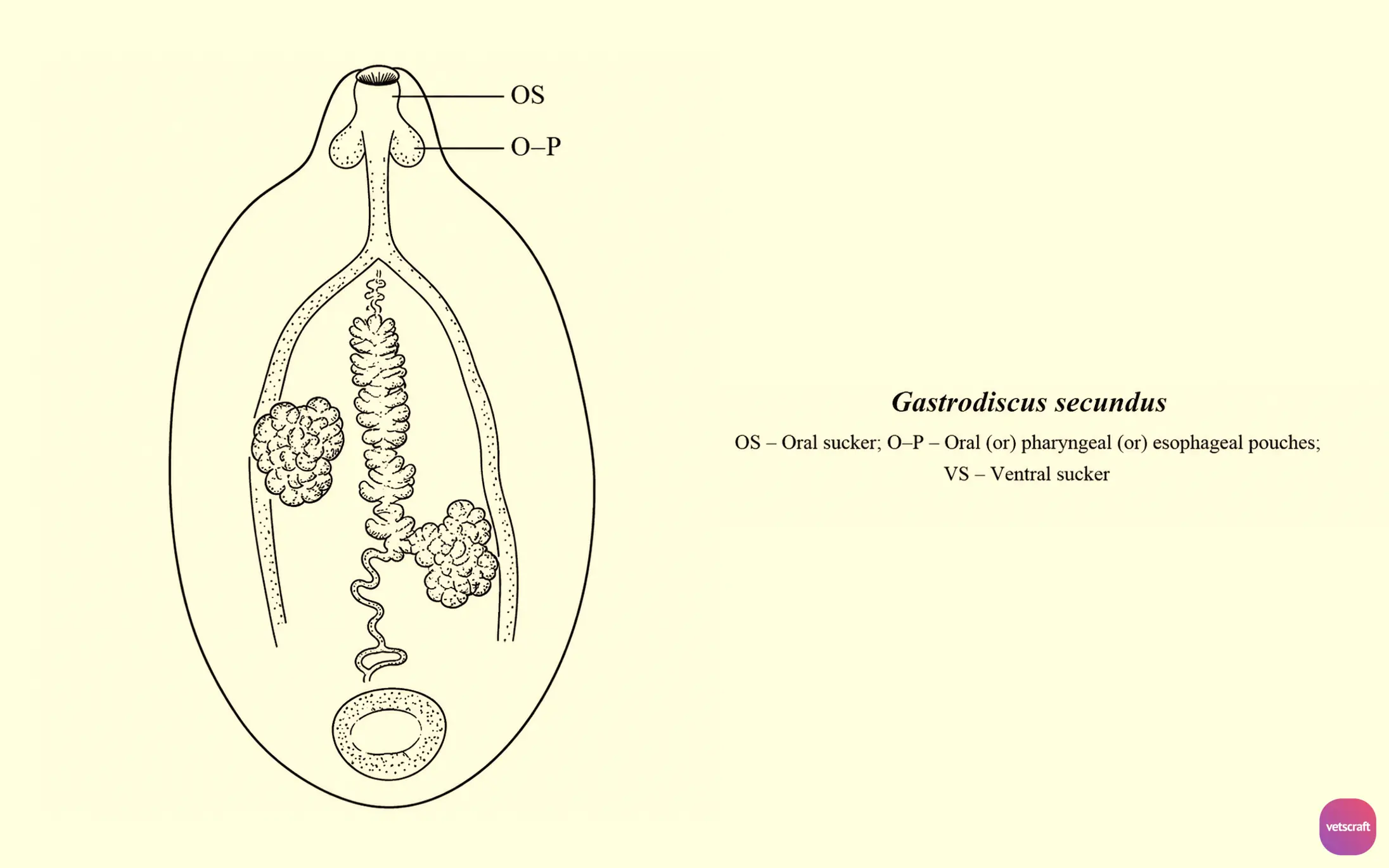
Learn about Gastrodiscus secundus, the intestinal amphistome of equines and elephants. Explore its morphology, hosts, intermediate host, habitat, and veterinary significance.
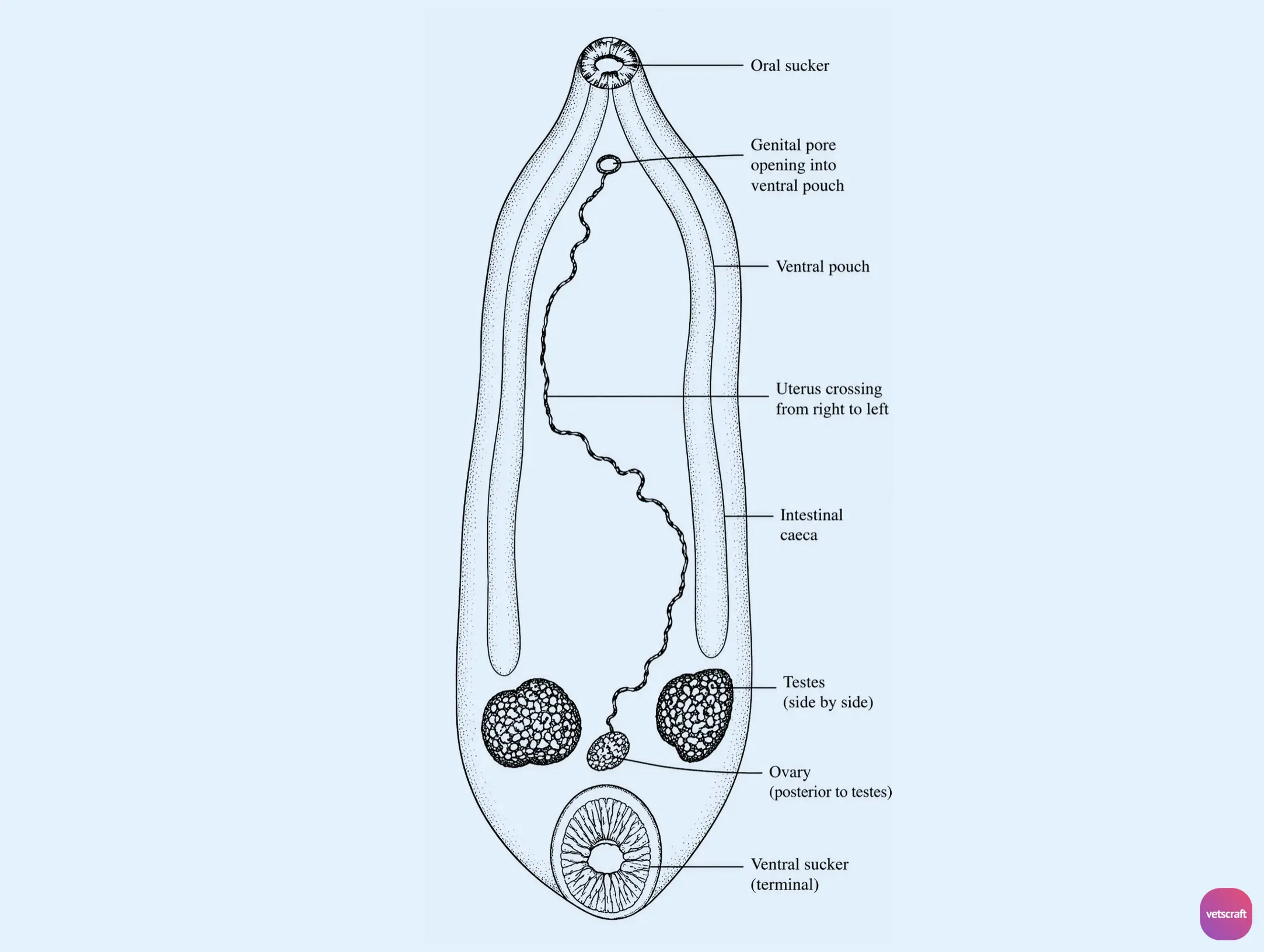
Learn about Gastrothylax crumenifer (Pouched Amphistome), a rumen fluke of ruminants. Explore its morphology, host range, intermediate host, identification features, and veterinary significance.
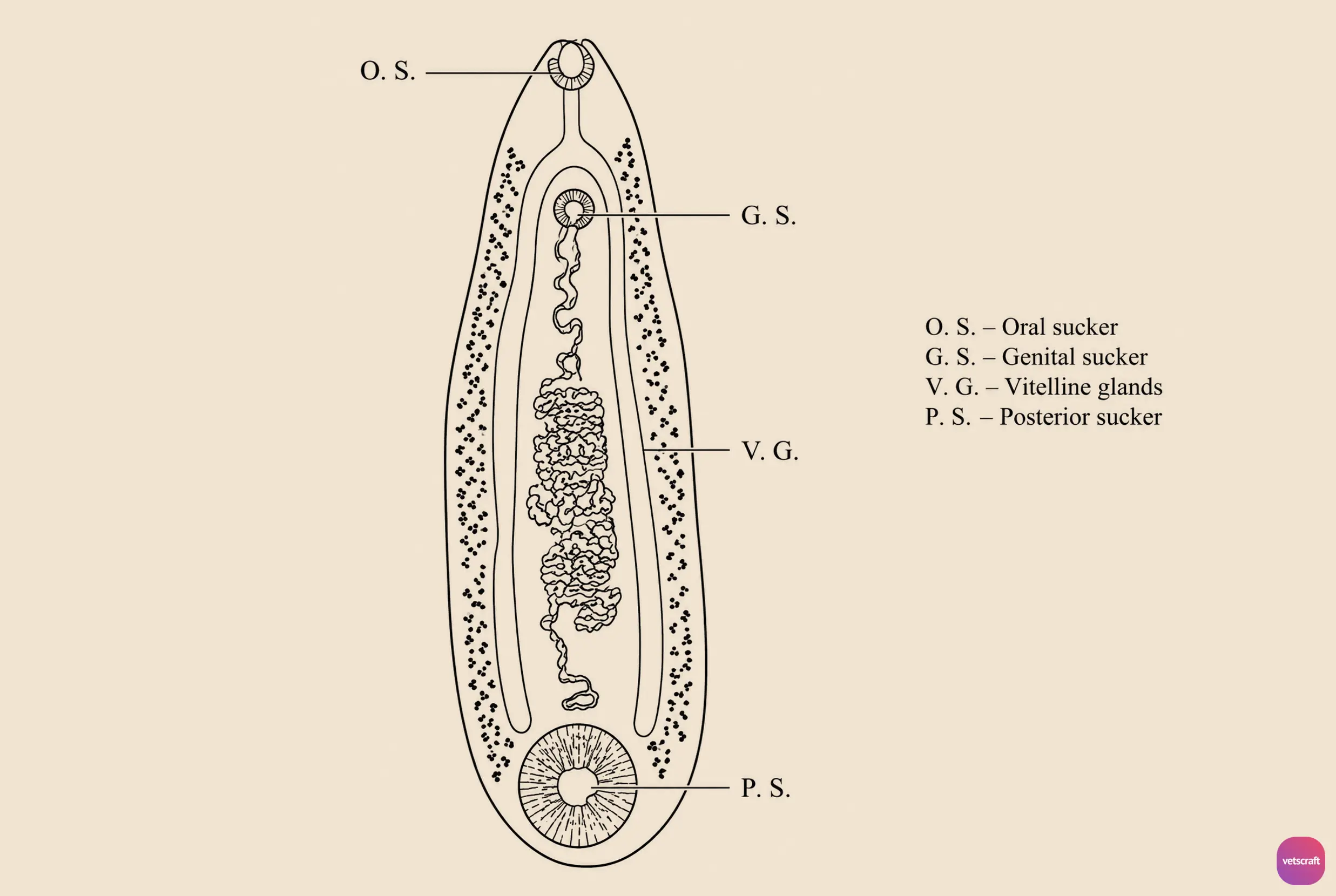
Learn about Cotylophoron cotylophorum (rumen fluke), including its morphology, hosts, predilection site, intermediate host, distribution, and key identification features in ruminants.
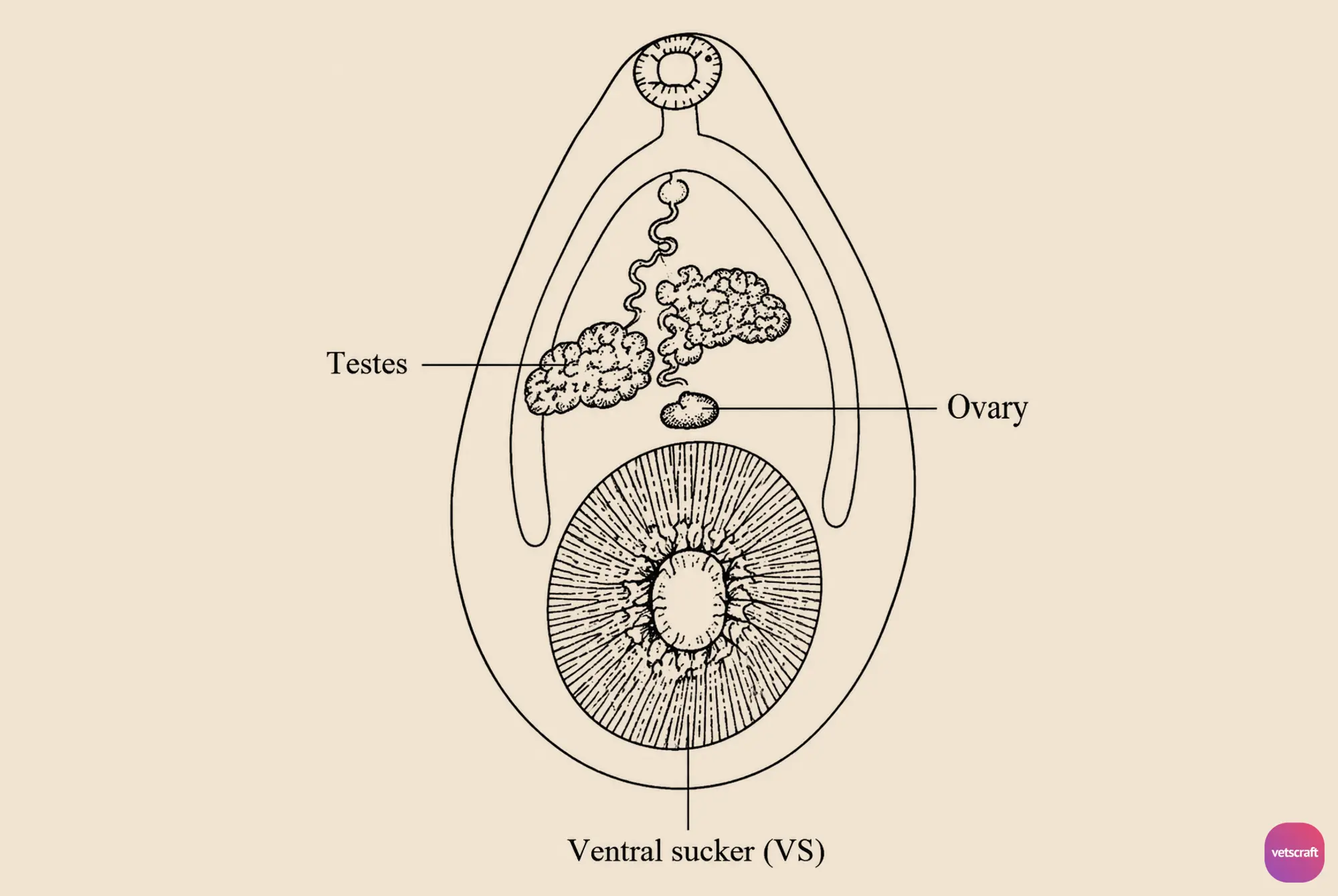
Gigantocotyle explanatum is a bile duct amphistome of buffaloes and other ruminants. Learn its morphology, hosts, location, egg characteristics, and pathogenic significance in veterinary parasitology.
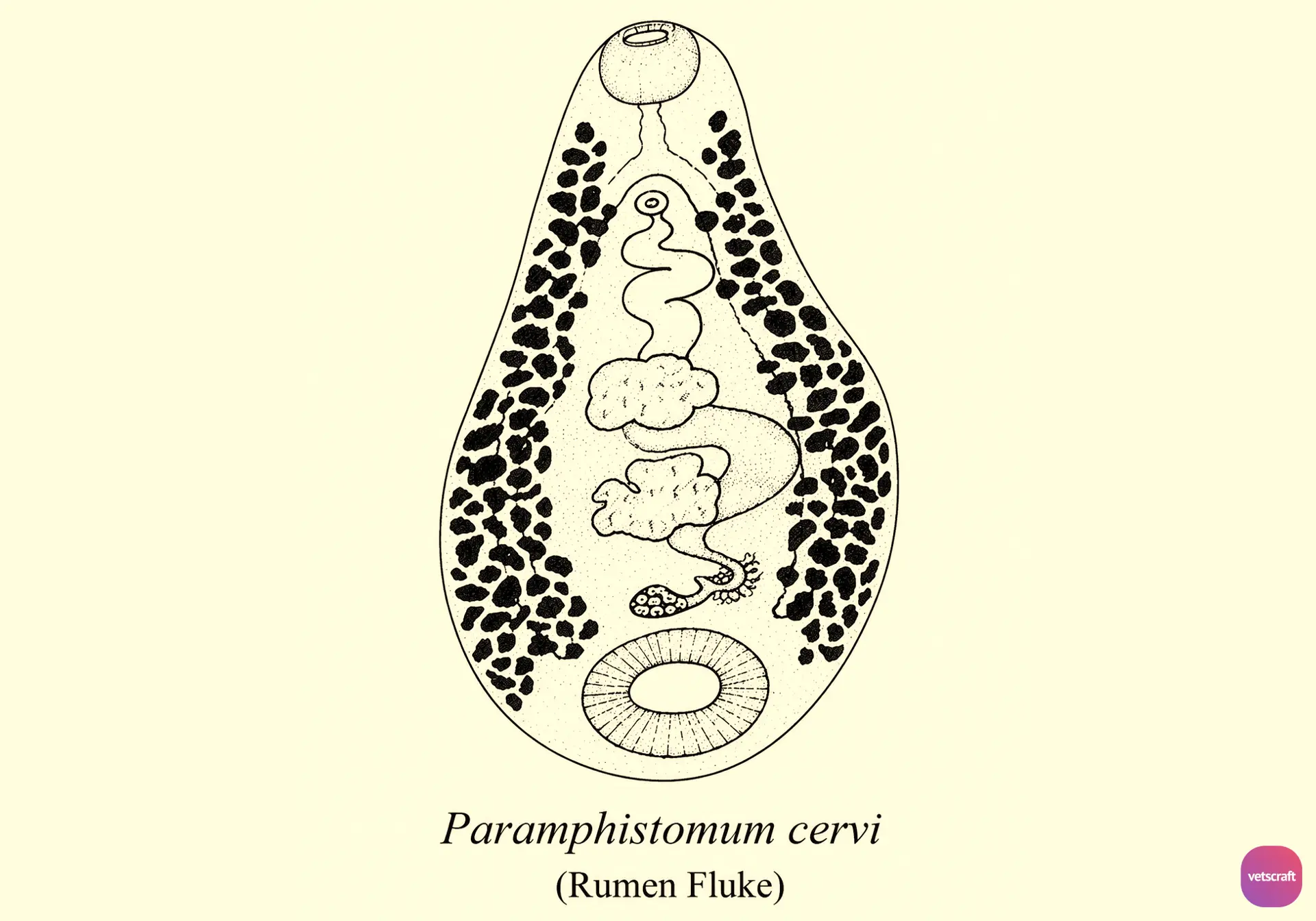
Learn about Paramphistomum cervi (P. gotoi)(rumen fluke), including its hosts, morphology, location, intermediate hosts, distribution, and key identification features in veterinary parasitology.
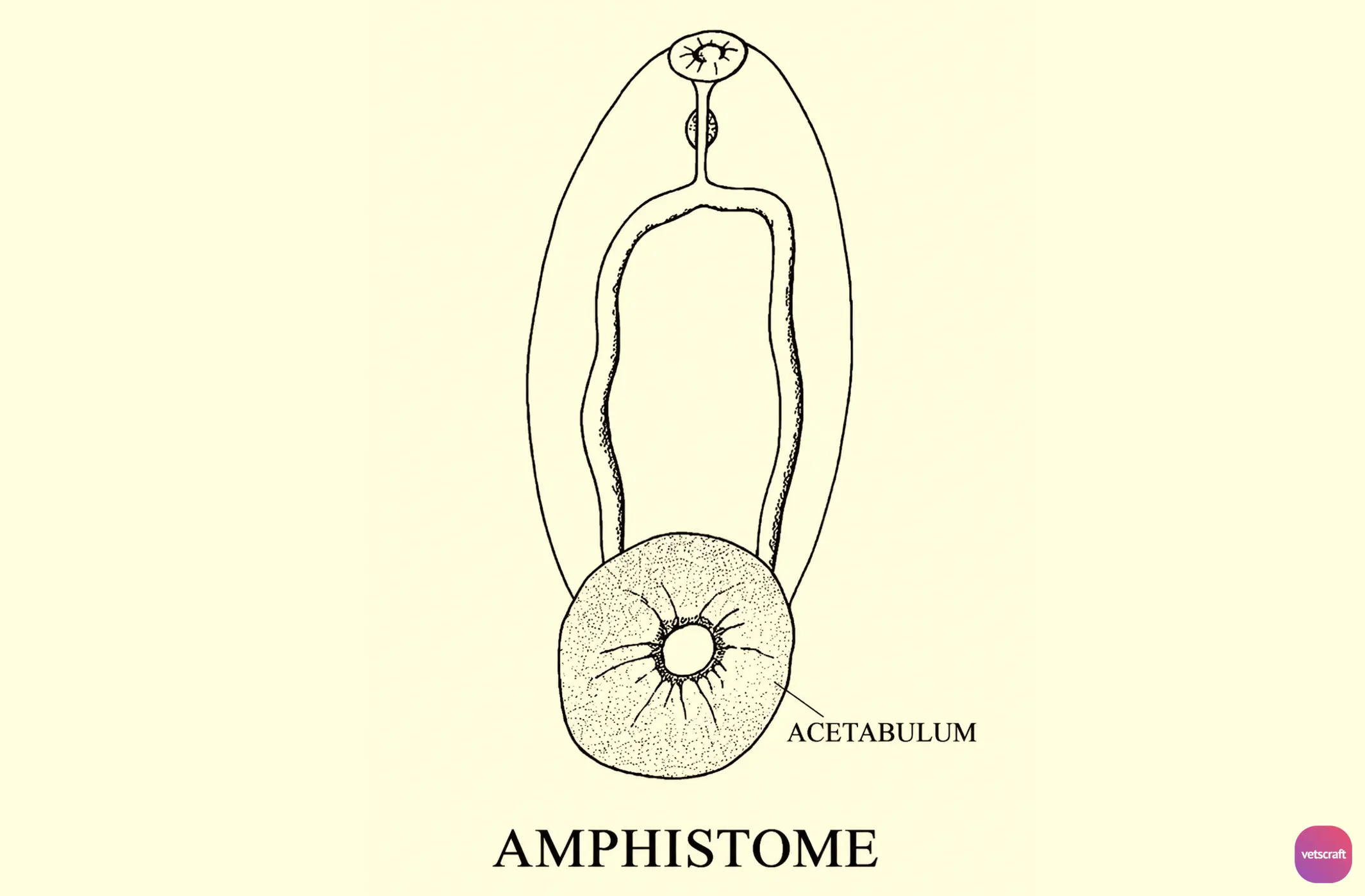
Learn about amphistomes (rumen flukes) in livestock, including morphology, life cycle, pathogenesis, clinical signs, diagnosis, treatment, and control.
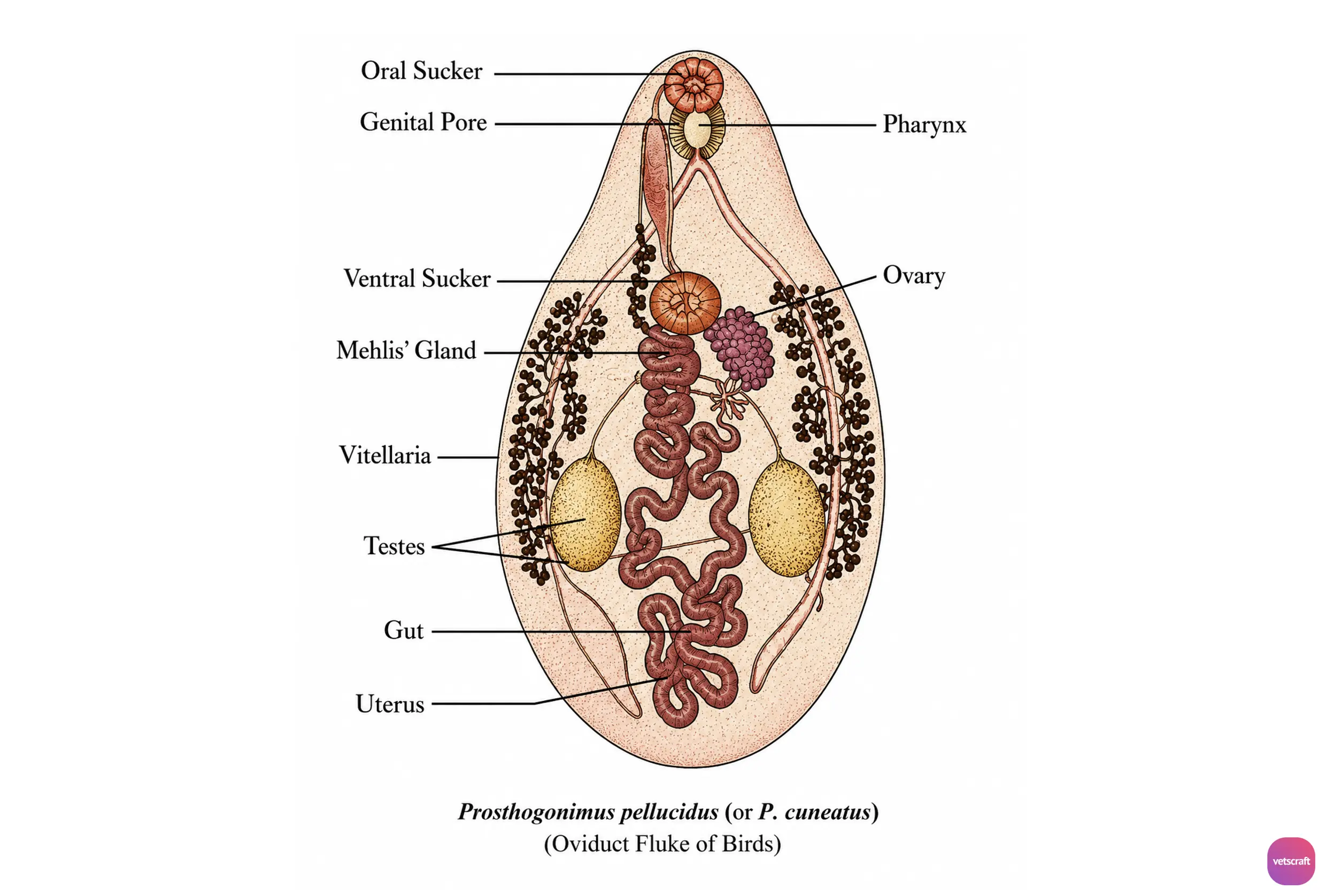
Learn about Prosthogonimus (oviduct flukes) in poultry, including morphology, life cycle, pathogenesis, clinical signs, diagnosis, treatment, and prevention in chickens and other birds.
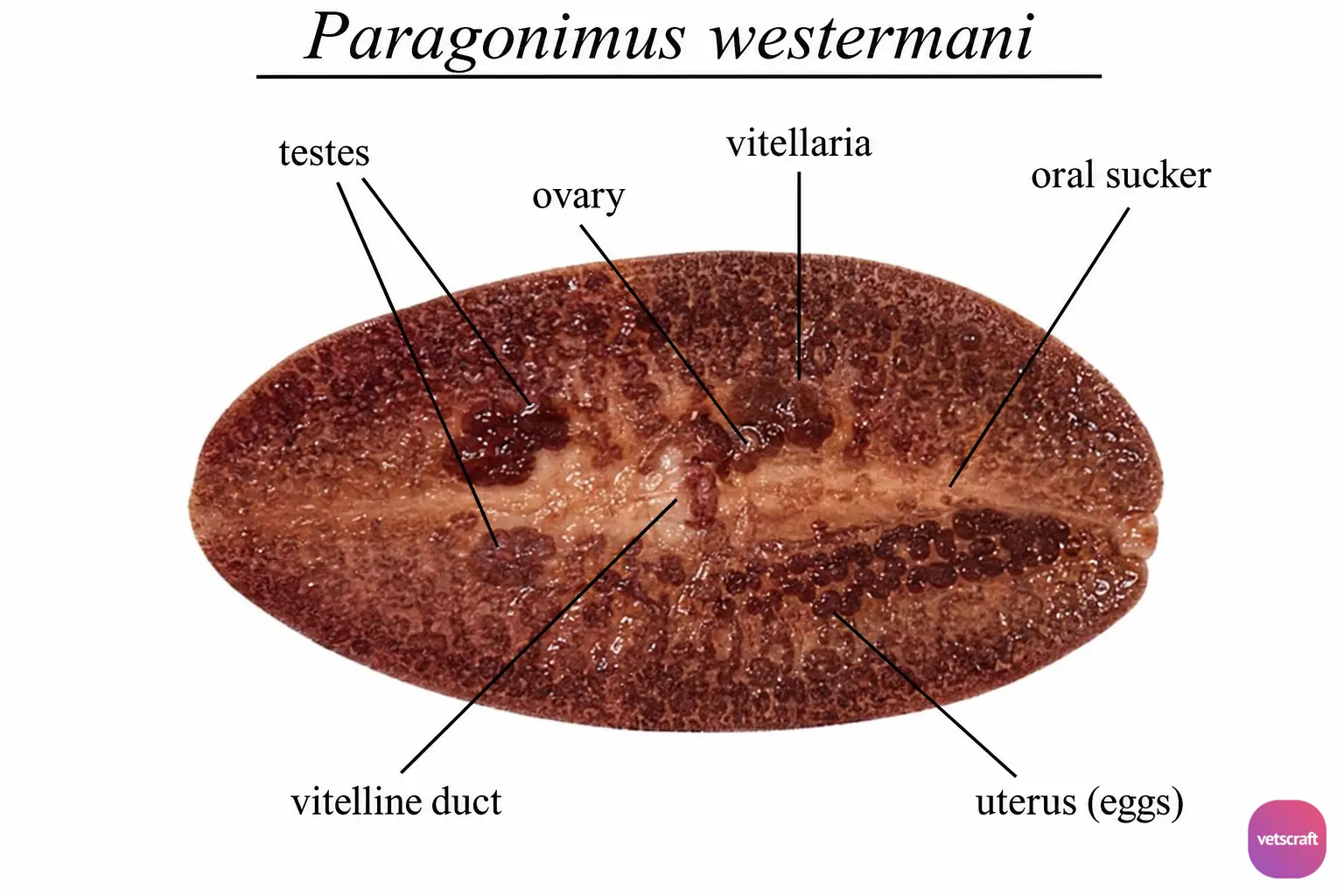
Learn about Paragonimus westermani (Oriental Lung Fluke) and P. kellicotti, including morphology, life cycle, pathogenesis, clinical signs, diagnosis, treatment, and prevention in animals and humans.
Paragonimus westermani (Oriental Lung Fluke) and P. kellicotti Read More »