Gastrodiscus hominis (Intestinal Amphistome of Humans and Pigs)
Gastrodiscus hominis is an intestinal amphistome (fluke) that primarily infects pigs and humans. The parasite inhabits the cecum and colon, where heavy infections may cause gastrointestinal disturbances, particularly mucous diarrhea. Pigs serve as the principal reservoir host, contributing to the maintenance and transmission of infection in endemic regions of Asia.
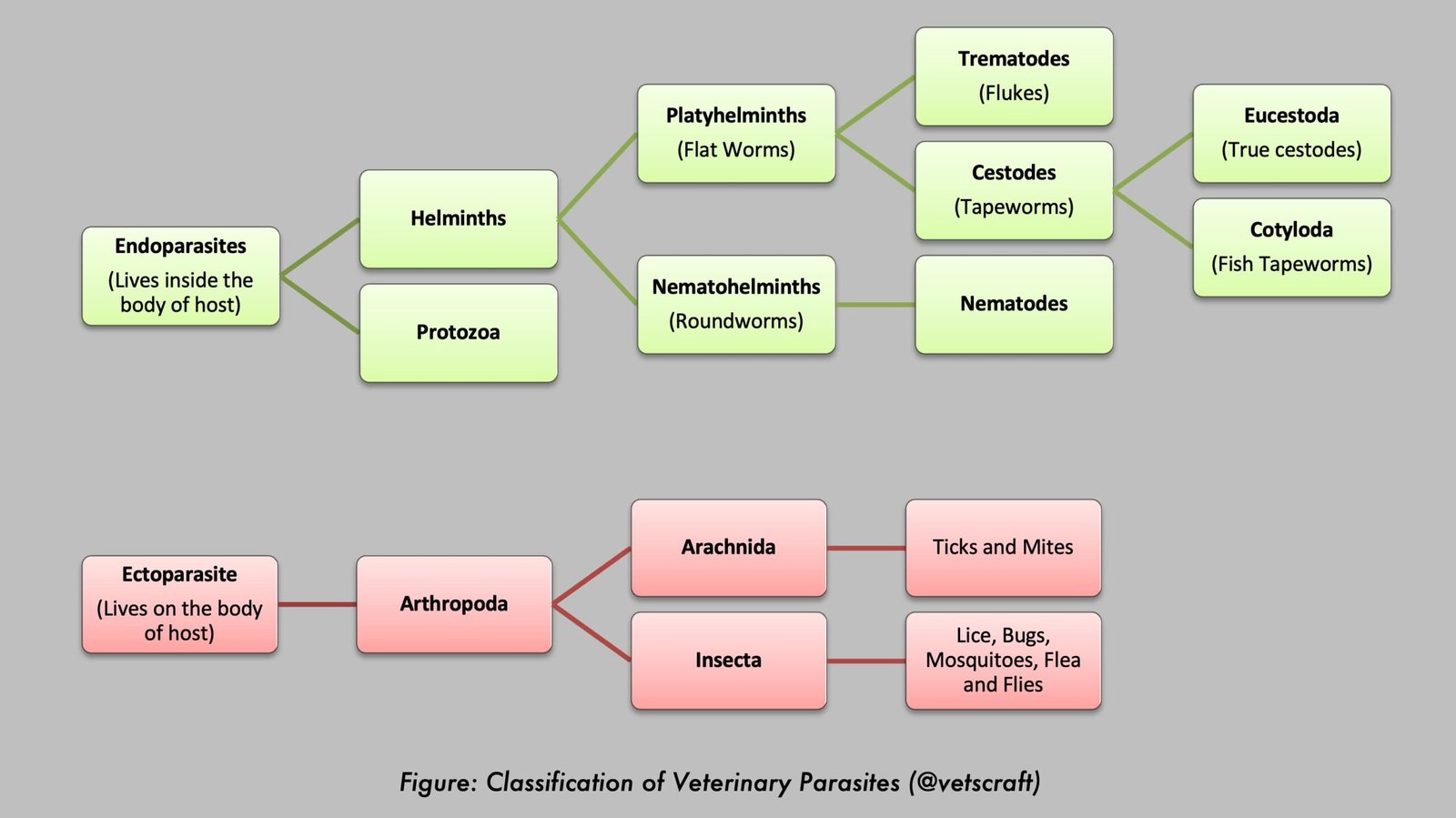
Taxonomical Classification
- Kingdom: Animalia
- Phylum: Platyhelminthes
- Class: Trematoda
- Subclass: Digenea
- Order: Echinostomida
- Suborder: Paramphistomata
- Superfamily: Paramphistomoidea
- Family: Gastrodiscidae
- Genus: Gastrodiscus
- Species: Gastrodiscus hominis
Parasite Overview
- Common Name: Cecal fluke of humans/Colon fluke of pigs/Intestinal amphistome of humans and pigs
- Hosts: Humans, pigs, rhesus monkeys, and rats. The pig is the primary reservoir and natural host.
- Distribution: Asia, including India (Assam, West Bengal, Bihar, and Odisha)
- Location: Cecum and ascending colon in humans; colon in pigs
- Intermediate Host: Planorbid snail, Helicorloa coenosus
Morphology
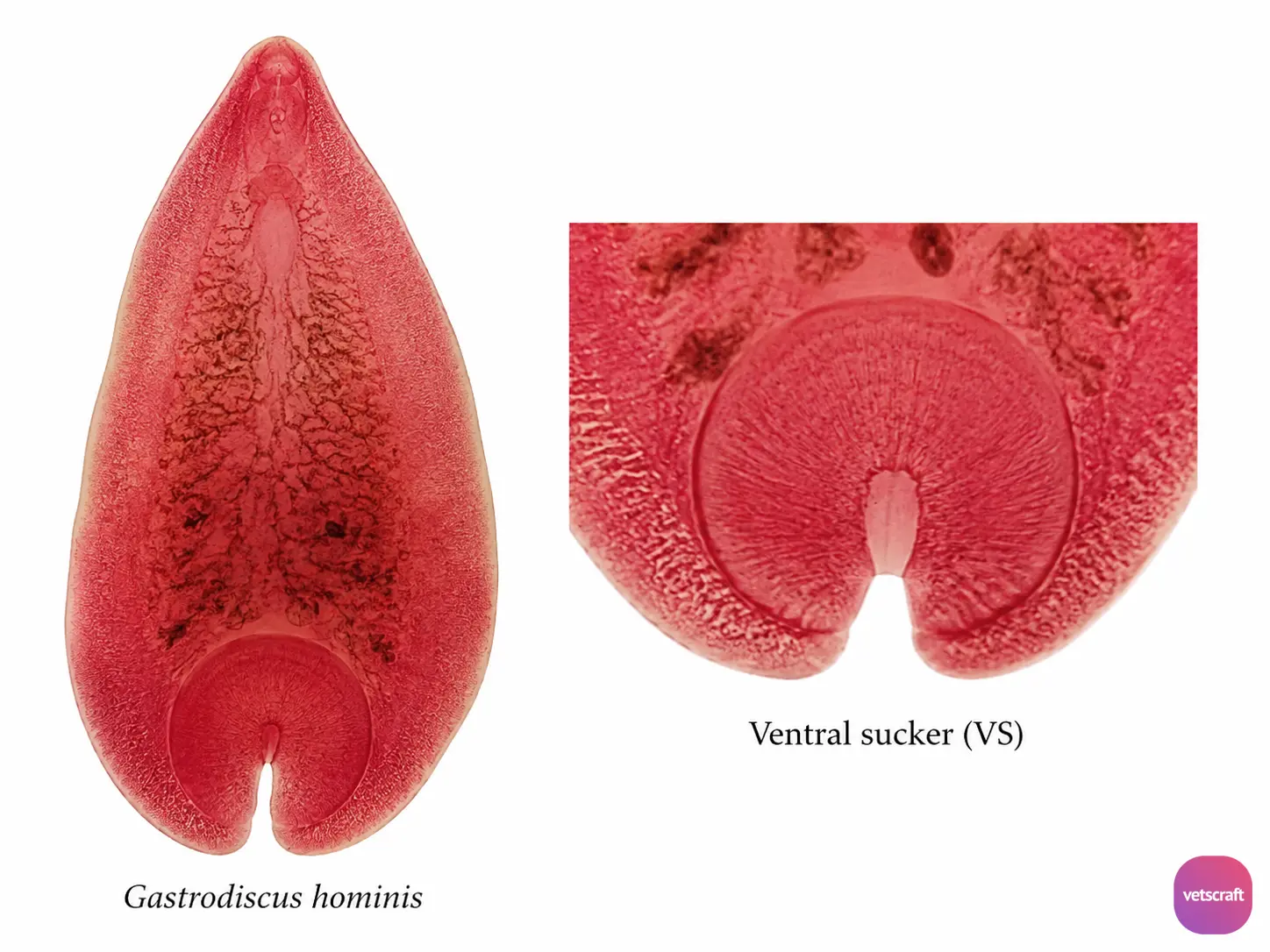
- Gastrodiscus hominis measures approximately 0.5–0.6 × 0.8–1.4 cm.
- It is a bright pinkish, pyriform fluke with a conical anterior portion and a discoid posterior portion, lacking papillae.
- A pharyngeal pouch is present.
- A genital cone is present slightly behind the middle of the anterior portion.
- The large, conspicuous ventral sucker (VS) is located on the ventral margin of the posterior part of the worm and possesses a deep cleft at its posterior end.
- The ventral surface, especially around the genital sinus, is covered with papillae.
- Two large, obliquely situated, lobate testes are present.
Life Cycle
Gastrodiscus hominis has an indirect life cycle involving a planorbid snail as the intermediate host. Eggs passed in feces hatch in water, releasing miracidia that infect the snail. Cercariae emerge from the snail and encyst as metacercariae on aquatic vegetation. Infection occurs when humans or pigs ingest vegetation contaminated with metacercariae.
Pathogenesis
In humans, Gastrodiscus hominis attaches to the cecum and ascending colon and may cause mucous diarrhea.
Zoonotic Importance
- Human infections occur in endemic regions.
- Pigs act as reservoir hosts.
- Infection occurs through ingestion of vegetation contaminated with metacercariae.
For information on the general life cycle, epidemiology, pathogenesis, histopathological lesions, clinical signs, diagnosis, treatment, and control of amphistome infections, refer to our detailed article on Amphistomes. The principles discussed in that article are broadly applicable to infections caused by Gastrodiscus hominis.