Gastrodiscus secundus (Intestinal Amphistome of Equines and Elephants)
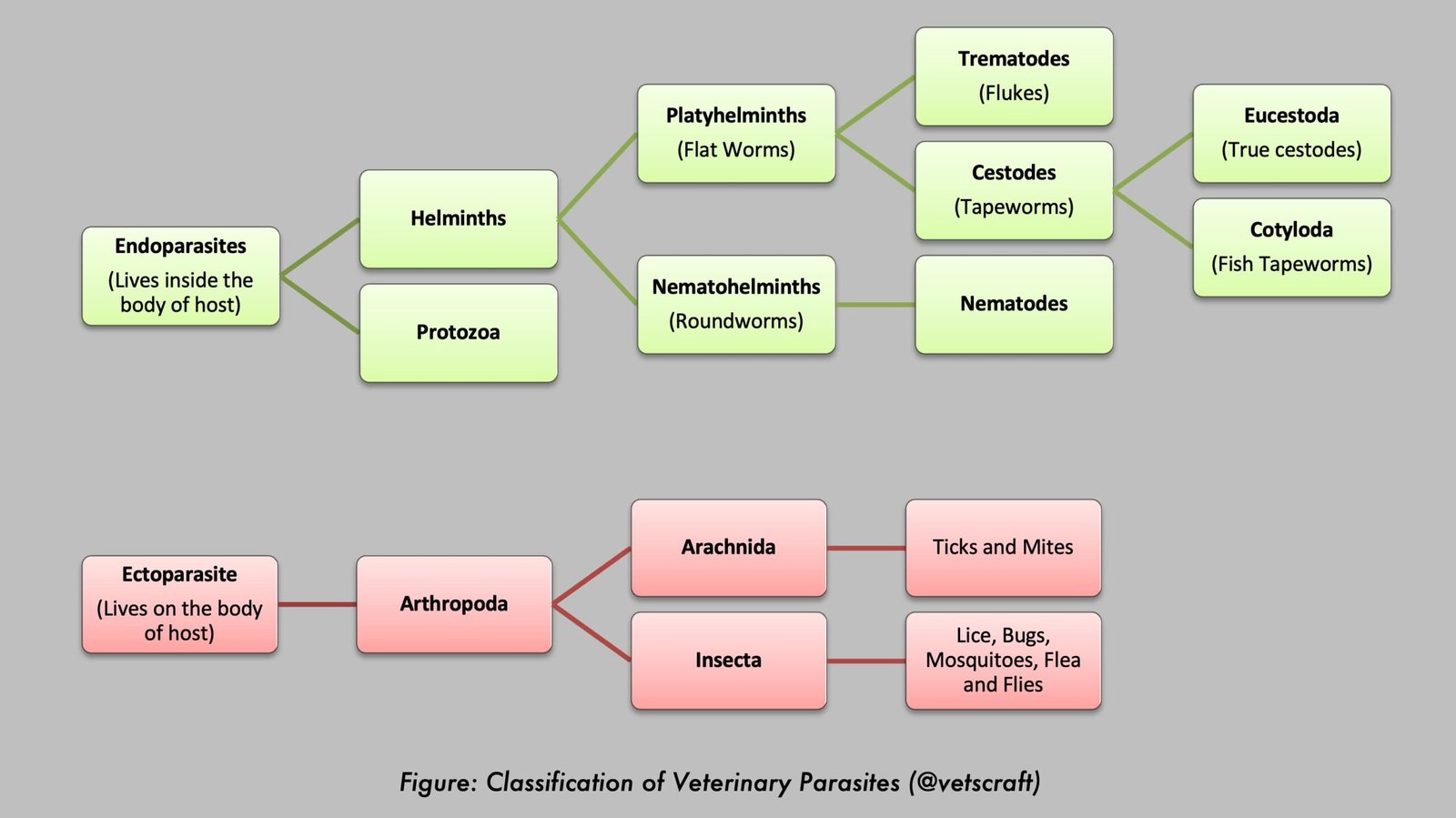
Gastrodiscus secundus is an intestinal amphistome (fluke) primarily found in equines and elephants. Adult parasites inhabit the cecum and colon, where they may contribute to gastrointestinal disturbances, particularly in heavily infected animals. The parasite has an indirect life cycle involving the freshwater snail Indoplanorbis exustus as the intermediate host.
Taxonomical Classification
- Kingdom: Animalia
- Phylum: Platyhelminthes
- Class: Trematoda
- Subclass: Digenea
- Order: Echinostomida
- Suborder: Paramphistomata
- Superfamily: Paramphistomoidea
- Family: Gastrodiscidae
- Genus: Gastrodiscus
- Species: Gastrodiscus secundus
Parasite Overview
- Common Name: Intestinal amphistome of equines and elephants
- Hosts: Equines and elephants
- Location: Colon and cecum
- Intermediate Host: Indoplanorbis exustus
- Cercaria: Diplocotyle group
Morphology
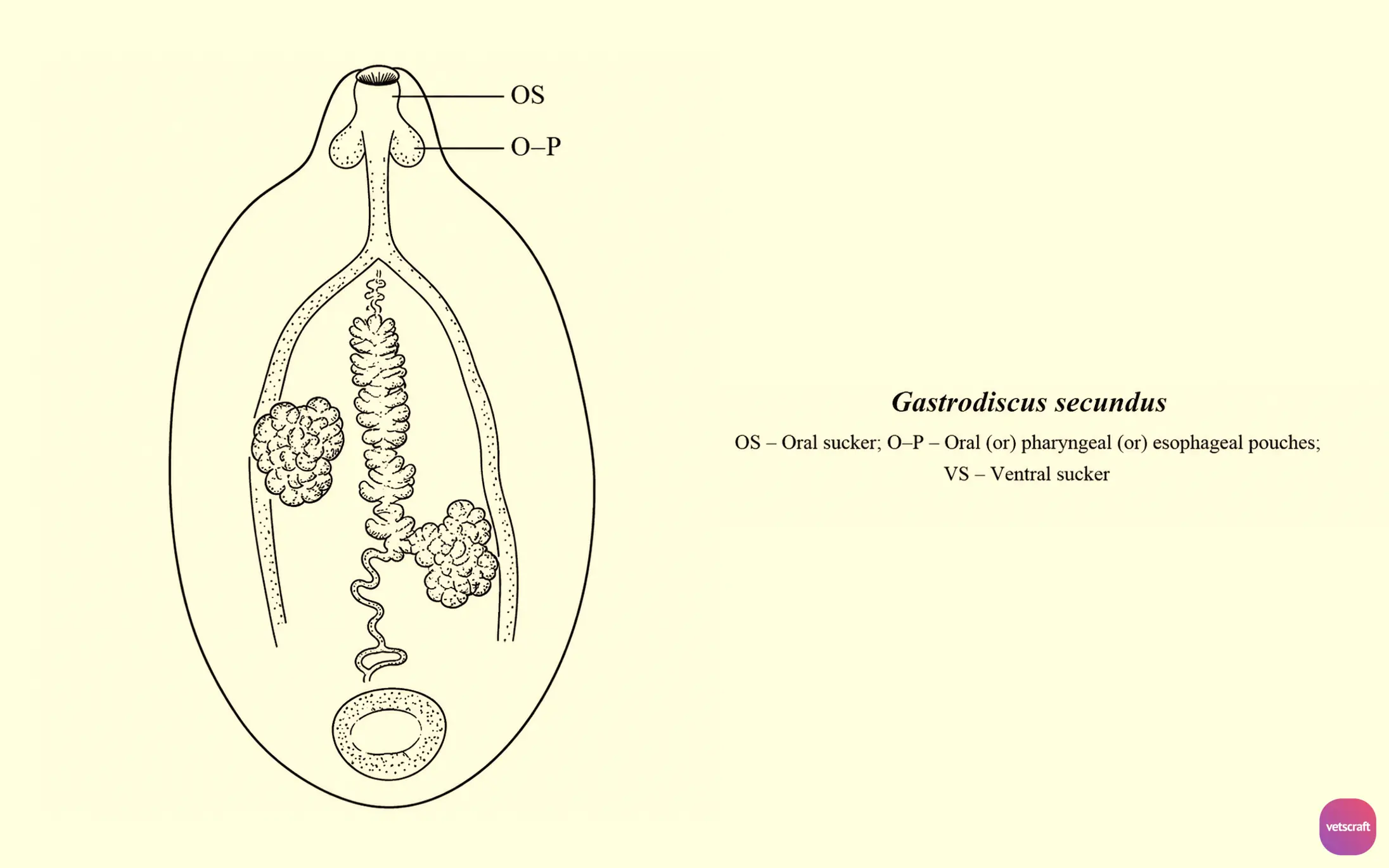
- Gastrodiscus secundus measures approximately 0.7–0.8 × 0.45–0.5 cm.
- The anterior end of the fluke is globoid, cone-shaped, or more or less cylindrical, measuring approximately 4 mm in length and 2.5 mm in width.
- The posterior end is discoidal or saucer-shaped. The discoidal portion is ventrally concave and contains numerous papillae arranged in rows.
- The oral sucker (OS) possesses a pair of posterolateral pouches known as oral, pharyngeal, or esophageal pouches.
- The ventral sucker (VS) is located subterminally.
- The testes are lobed, slightly diagonal in position, and situated in the middle region of the body, with the ovary located posterior to them.
- The vitellaria occupy the lateral fields.
- The genital pore opens at the level of the intestinal bifurcation.
Life Cycle
Gastrodiscus secundus has an indirect life cycle involving a freshwater snail as the intermediate host. Eggs passed in the feces of infected equines hatch in water and release miracidia, which penetrate suitable snail hosts. Inside the snail, the parasite develops through sporocyst, redia, and cercaria stages. The cercariae leave the snail and encyst on aquatic vegetation as metacercariae.
Horses and other equids become infected by ingesting vegetation contaminated with metacercariae during grazing. Following ingestion, immature flukes migrate to the large intestine and mature in the cecum and colon, where adult parasites complete their life cycle.
For information on the general life cycle, epidemiology, pathogenesis, histopathological lesions, clinical signs, diagnosis, treatment, and control of amphistome infections, refer to our detailed article on Amphistomes. The principles discussed in that article are broadly applicable to infections caused by Gastrodiscus secundus.