Gastrothylax crumenifer (Pouched Amphistome): Morphology, Host, and Identification
Gastrothylax crumenifer is an amphistome (rumen fluke) commonly found in the rumen of ruminants, particularly cattle and buffaloes. It is one of the important amphistome species affecting domestic ruminants and is characterized by a prominent ventral pouch that distinguishes it from many other amphistome species.
Taxonomical Classification
- Kingdom: Animalia
- Phylum: Platyhelminthes
- Class: Trematoda
- Subclass: Digenea
- Order: Echinostomida
- Suborder: Paramphistomata
- Superfamily: Paramphistomoidea
- Family: Gastrothylacidae
- Genus: Gastrothylax
- Species: Gastrothylax crumenifer
Parasite Overview
- Common Name: Pouched Amphistome, Rumen Fluke
- Host: Cattle, buffaloes, sheep, and goats
- Location: Rumen
- Intermediate Host: Gyraulus convexiculus
Morphology
- Gastrothylax crumenifer measures approximately 0.9–1.8 × 0.5 cm.
- The body is elongate and fleshy.
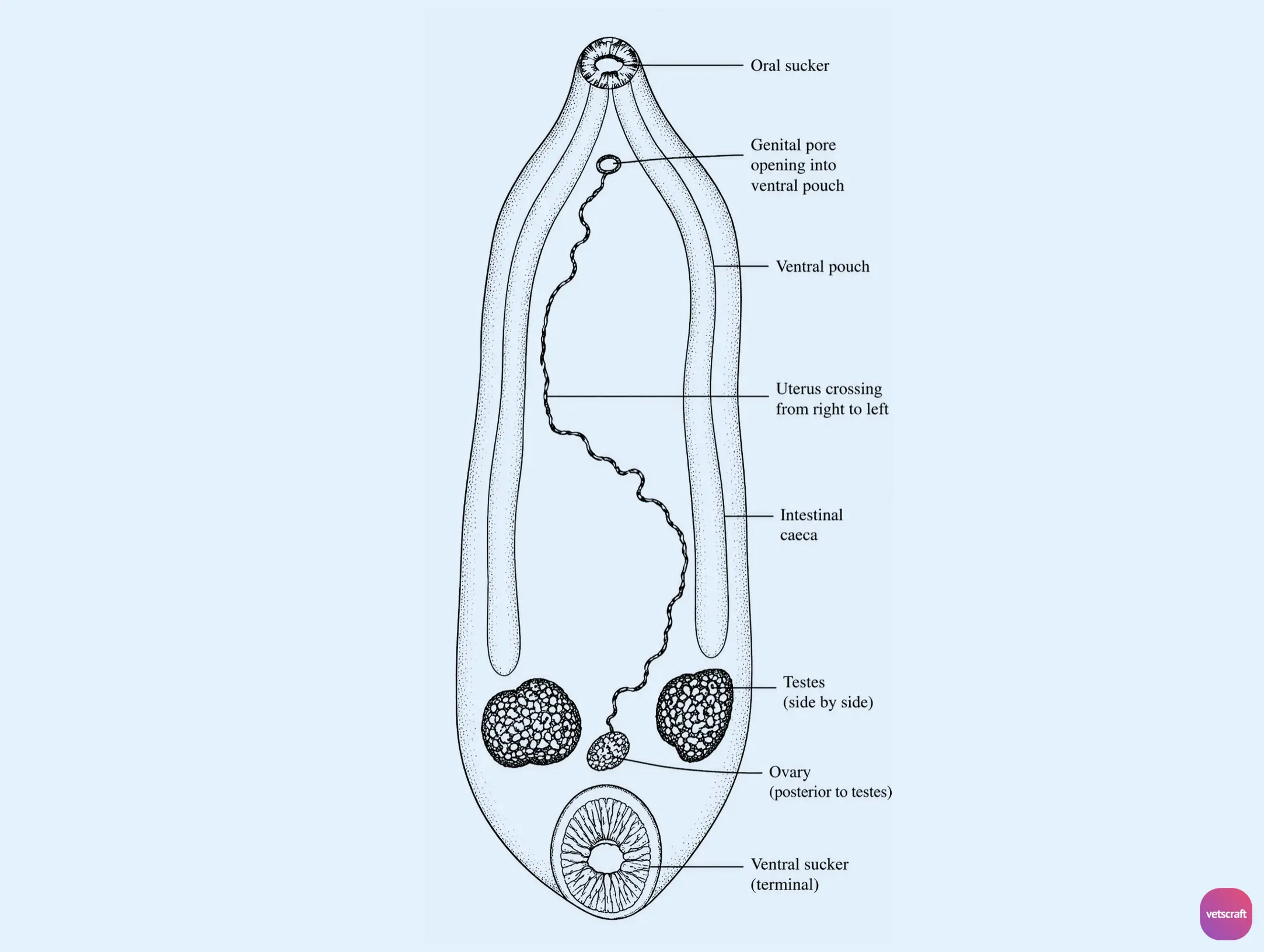
- The ventral sucker (VS) is terminal.
- Gastrothylax crumenifer possesses a large ventral pouch that opens anteriorly behind the oral opening and extends up to the posterior sucker. In fresh specimens, the ventral pouch appears dark red in color. The genital pore opens into the ventral pouch.
- The intestinal caeca are straight and terminate anterior to the ovary.
- The uterus crosses from the right side to the left side near the middle of the body.
- The testes are positioned side by side (horizontally).
- The ovary is located posterior to the testes.
The large ventral pouch is a characteristic feature used for species identification.
Life Cycle
Gastrothylax crumenifer has an indirect life cycle involving a freshwater snail as the intermediate host. Eggs passed in the feces of infected ruminants hatch in water and release miracidia, which infect suitable snail hosts. Within the snail, the parasite undergoes development through sporocyst, redia, and cercaria stages. Cercariae emerge from the snail and encyst on aquatic vegetation as metacercariae.
Cattle, buffaloes, sheep, goats, and other ruminants become infected by ingesting vegetation contaminated with metacercariae while grazing. After ingestion, immature flukes develop in the small intestine before migrating to the rumen and reticulum, where they mature into adults and complete their life cycle.
For information on the general life cycle, epidemiology, pathogenesis, histopathological lesions, clinical signs, diagnosis, treatment, and control of amphistome infections, refer to our detailed article on Amphistomes. The principles discussed in that article are broadly applicable to infections caused by Gastrothylax crumenifer (Pouched Amphistome).