Cotylophoron cotylophorum (Rumen Fluke): Morphology, Hosts and Identification
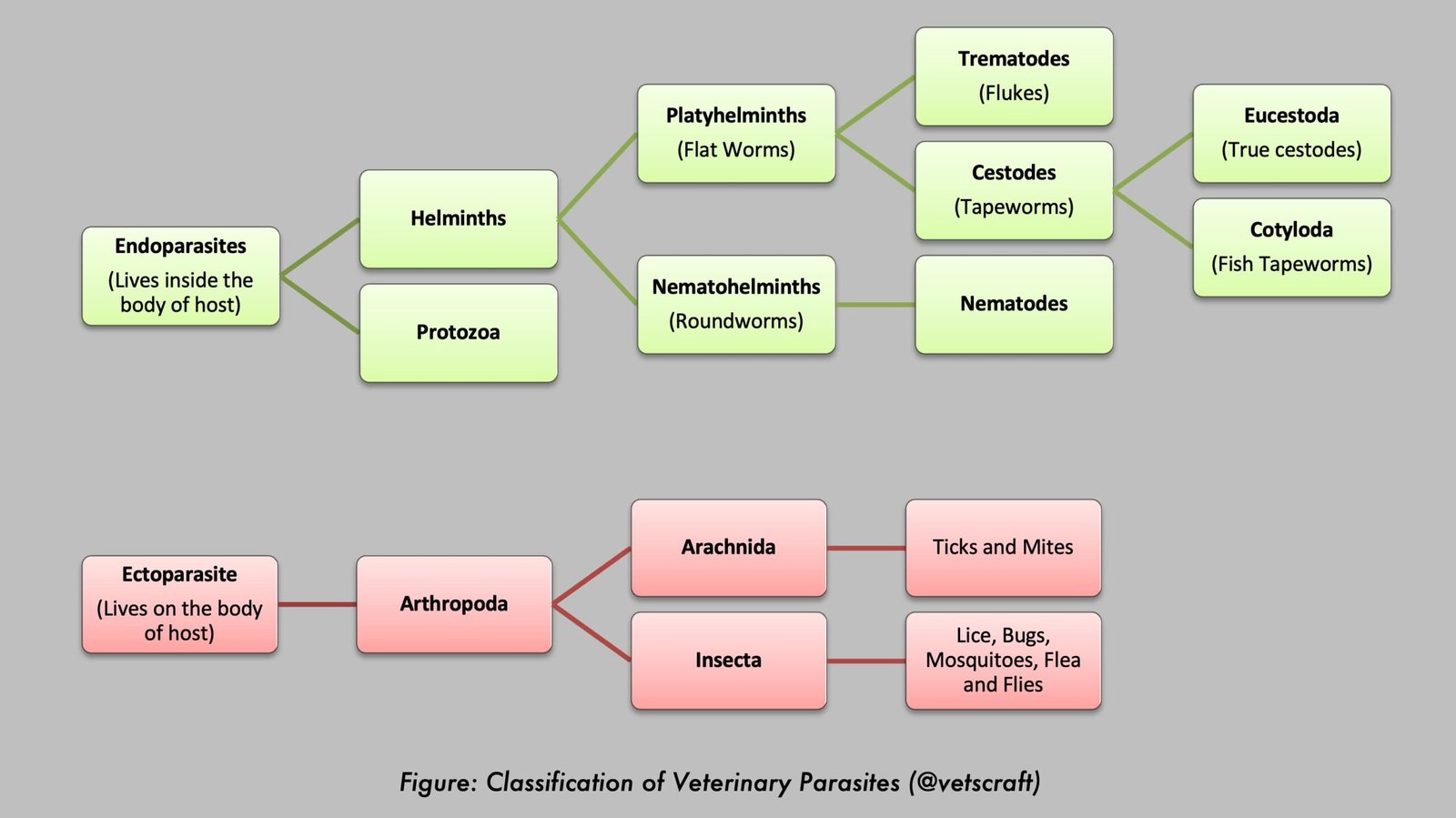
Cotylophoron cotylophorum is an amphistome (rumen fluke) belonging to the family Paramphistomatidae and is one of the most common trematode parasites of domestic ruminants. Adult flukes inhabit the rumen and reticulum of cattle, buffaloes, sheep, and goats, where they are generally considered relatively non-pathogenic.
However, the immature stages migrating through the small intestine can cause severe enteritis and significant economic losses in affected herds. This species is widely distributed in tropical and subtropical regions and utilizes the freshwater snail Indoplanorbis exustus as its intermediate host.
Taxonomical Classification
- Kingdom: Animalia
- Phylum: Platyhelminthes
- Class: Trematoda
- Subclass: Digenea
- Order: Echinostomida
- Suborder: Paramphistomata
- Superfamily: Paramphistomoidea
- Family: Paramphistomidae
- Genus: Cotylophoron
- Species: Cotylophoron cotylophorum
Parasite Overview
- Family: Paramphistomatidae
- Common Name: Rumen Fluke, Conical Fluke
- Hosts: Cattle, buffaloes, sheep, and goats
- Predilection Site / Location: Rumen and reticulum
- Intermediate Host: Indoplanorbis exustus
- Distribution: Widely distributed in tropical and subtropical regions
Morphology
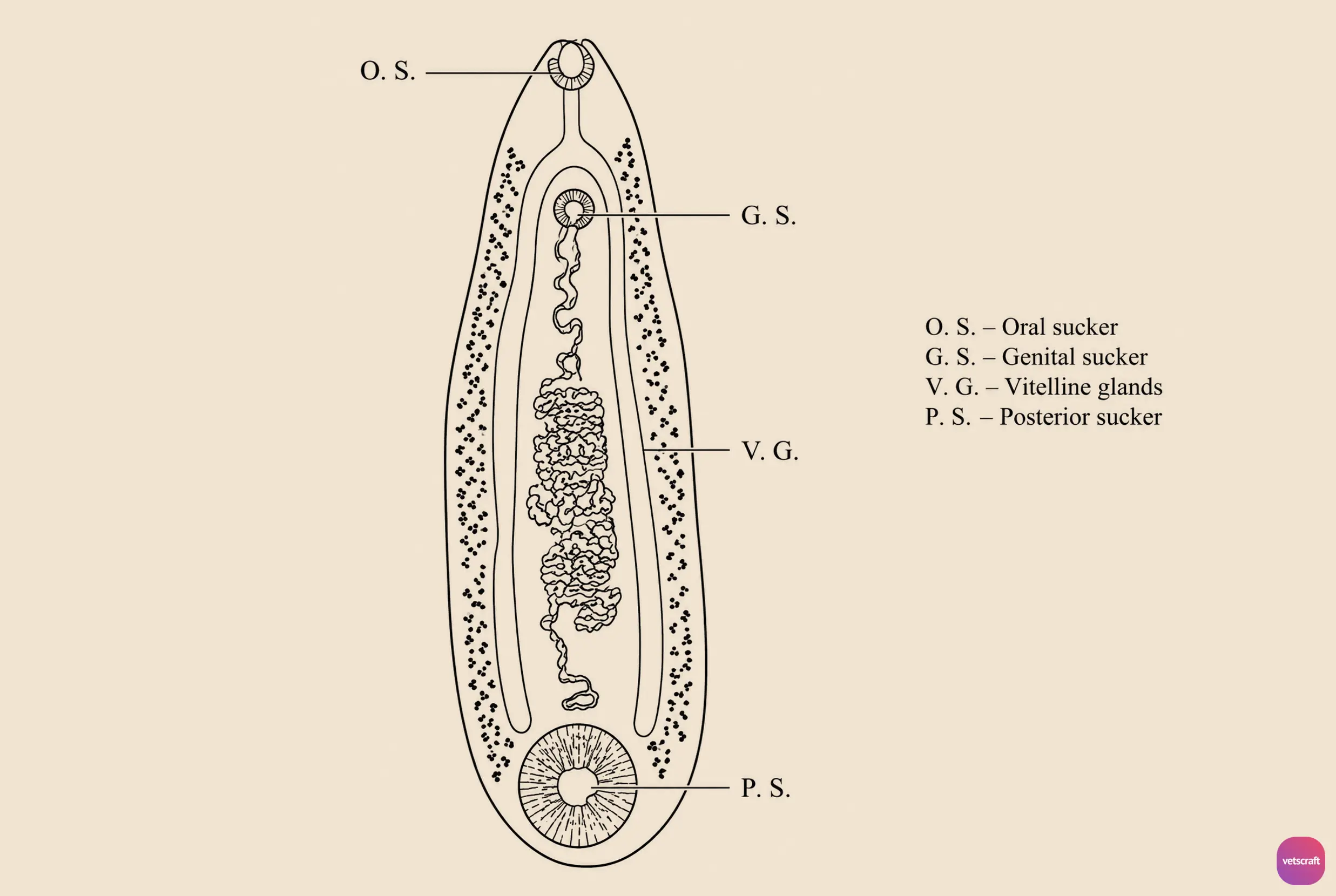
- Cotylophoron cotylophorum measures approximately 0.3–1.1 × 0.1–0.3 cm and is pear-shaped.
- The dorsal surface is convex, while the ventral surface is slightly concave.
- The ventral sucker (VS) is located subterminally at the posterior end.
- The intestinal ceca are simple.
- It generally resembles Paramphistomum, except that it possesses a distinct genital sucker surrounding the genital pore, which is situated just behind the intestinal bifurcation.
- The testes are arranged in tandem.
- Numerous vitelline glands occupy the lateral regions of the body.
- The cercarial stage is known as Cercaria indica XXVI.
Life Cycle
Cotylophoron cotylophorum has an indirect life cycle involving a freshwater snail as the intermediate host. Eggs passed in the feces of infected ruminants hatch in water and release miracidia, which penetrate suitable snail hosts. Inside the snail, the parasite develops through sporocyst, redia, and cercaria stages. Cercariae emerge from the snail and encyst on aquatic vegetation as metacercariae.
Cattle, buffaloes, sheep, goats, and other ruminants become infected by ingesting vegetation contaminated with metacercariae while grazing. Following ingestion, immature flukes excyst in the small intestine, where they may cause enteritis, before migrating to the rumen and reticulum to mature into adult flukes and complete their life cycle.
For information on the general life cycle, epidemiology, pathogenesis, histopathological lesions, clinical signs, diagnosis, treatment, and control of amphistome infections, refer to our detailed article on Amphistomes. The principles discussed in that article are broadly applicable to infections caused by Cotylophoron cotylophorum.