
Equine Tapeworms
Veterinary ParasitologyLearn about equine tapeworms, including Anoplocephala perfoliata and Paranoplocephala mamillana. Explore their morphology, life cycle, pathogenesis, clinical significance, and treatment.
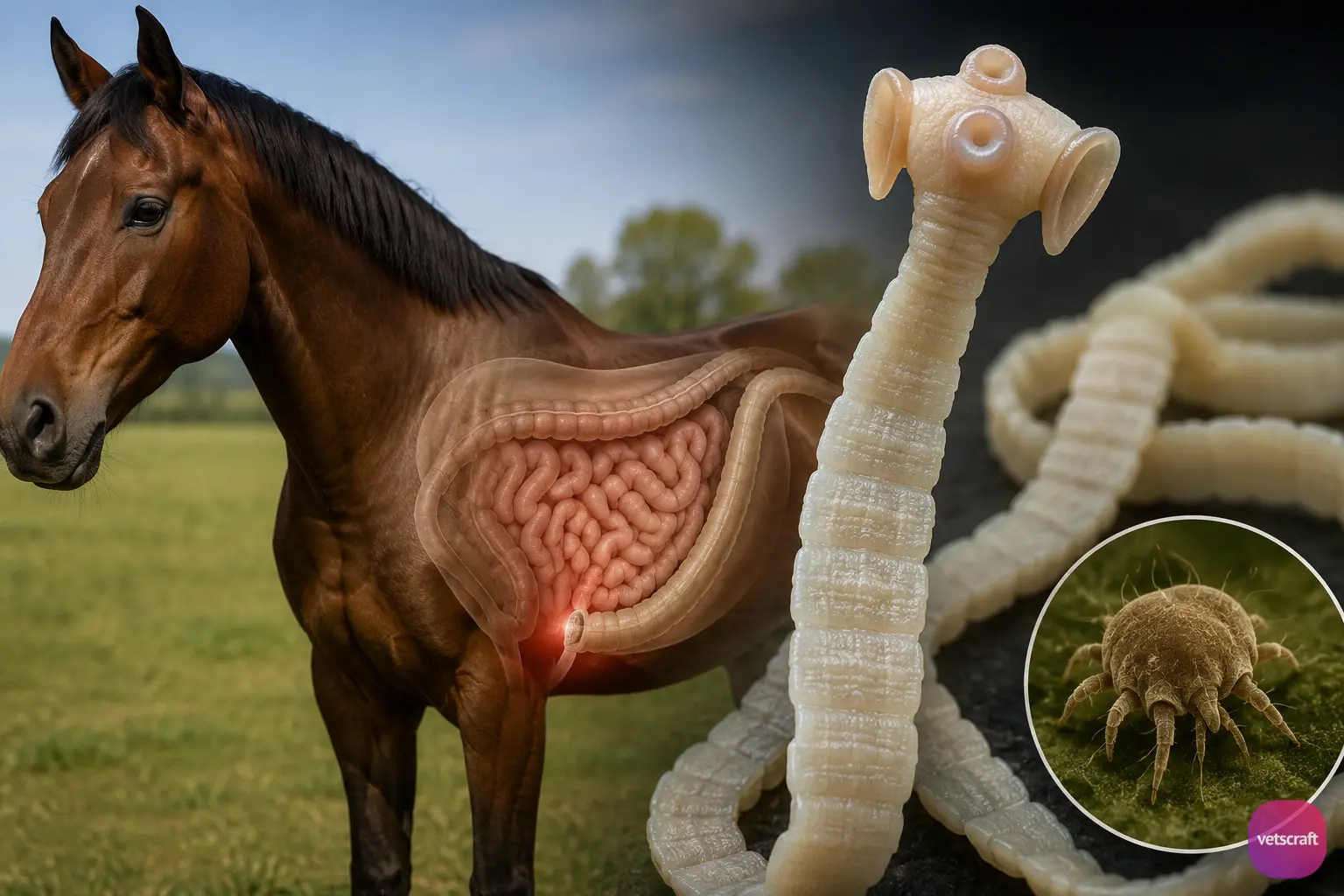
Learn about equine tapeworms, including Anoplocephala perfoliata and Paranoplocephala mamillana. Explore their morphology, life cycle, pathogenesis, clinical significance, and treatment.
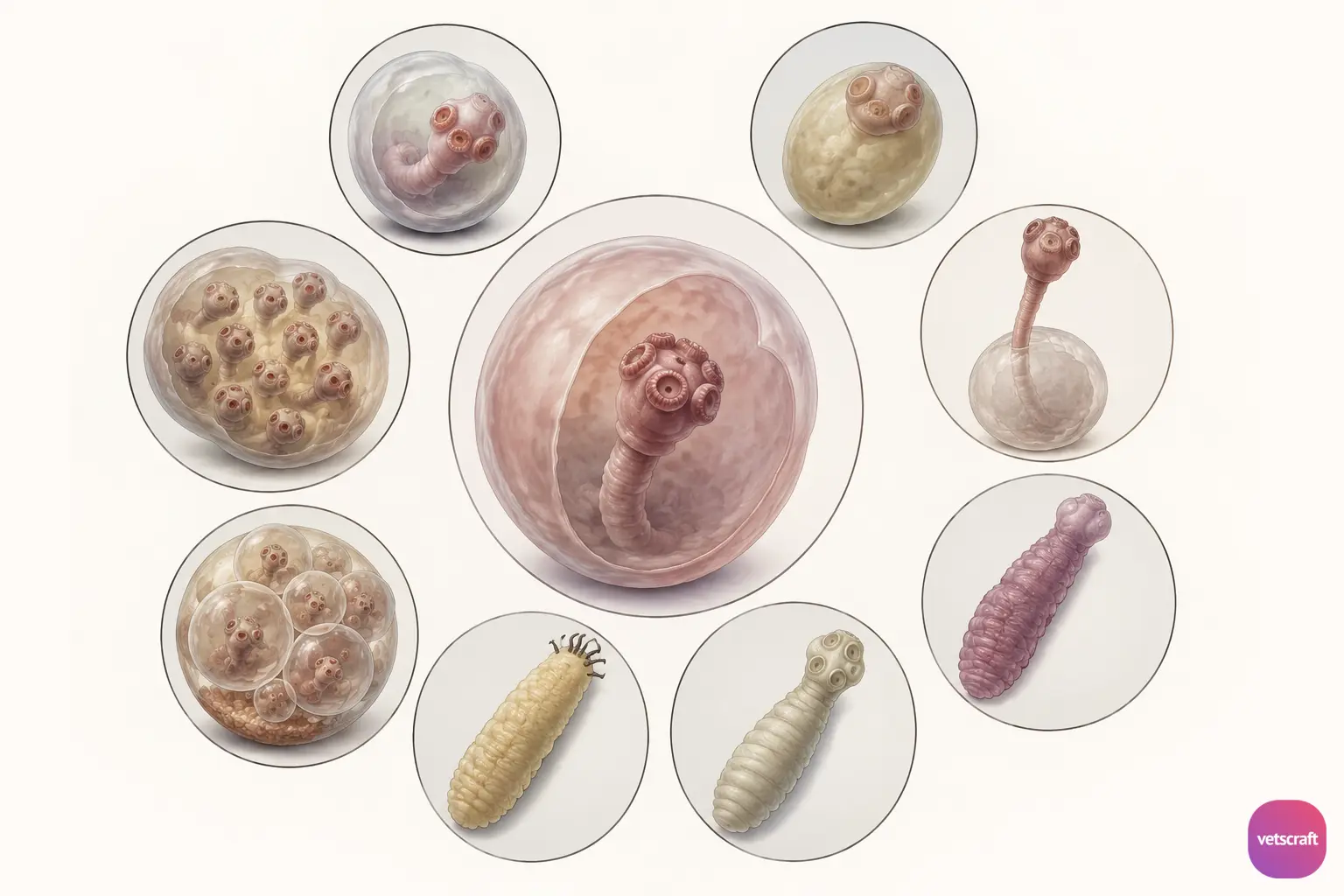
Learn about the types of metacestodes (bladder worm stages) in tapeworms, including cysticercus, cysticercoid, coenurus, hydatid cyst, procercoid, plerocercoid, and tetrathyridium, with examples and key characteristics.
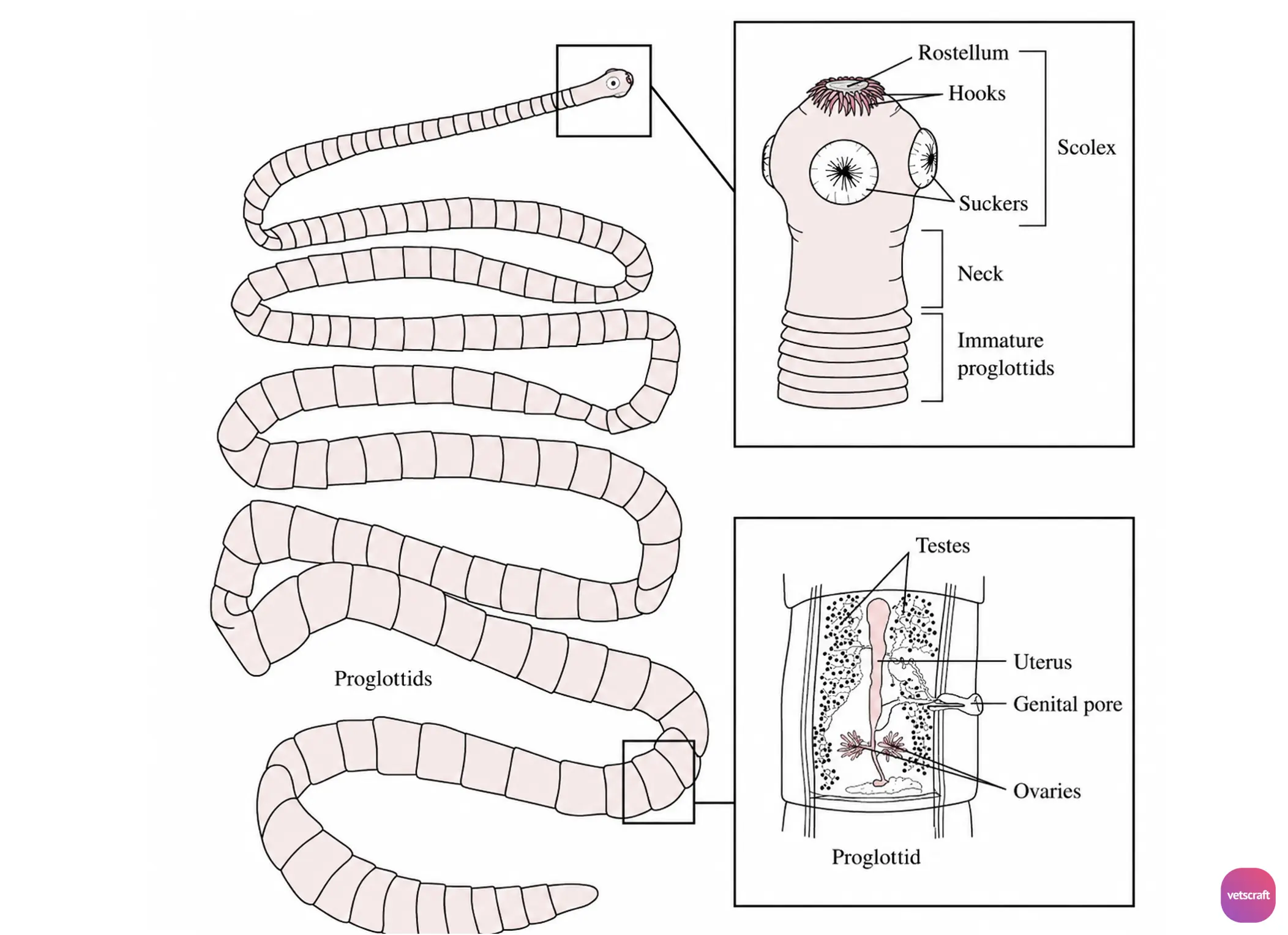
Learn about Class Cestoda (tapeworms), including their morphology, scolex, strobila, life cycle, larval stages, nervous system, and key differences between Eucestoda and Cotyloda.
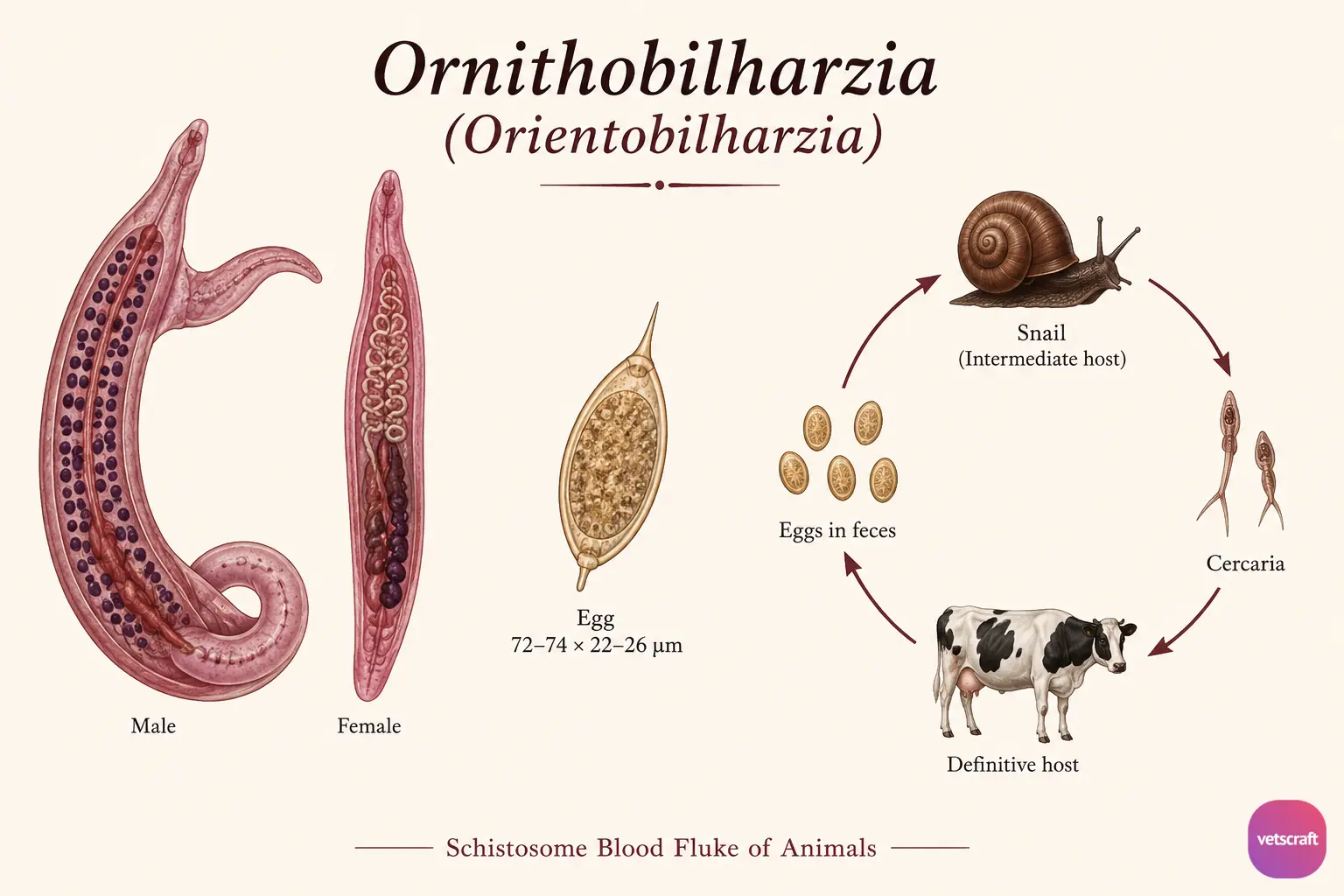
Learn about Ornithobilharzia (Orientobilharzia), including its taxonomy, morphology, life cycle, hosts, pathogenesis, and important species in animals.
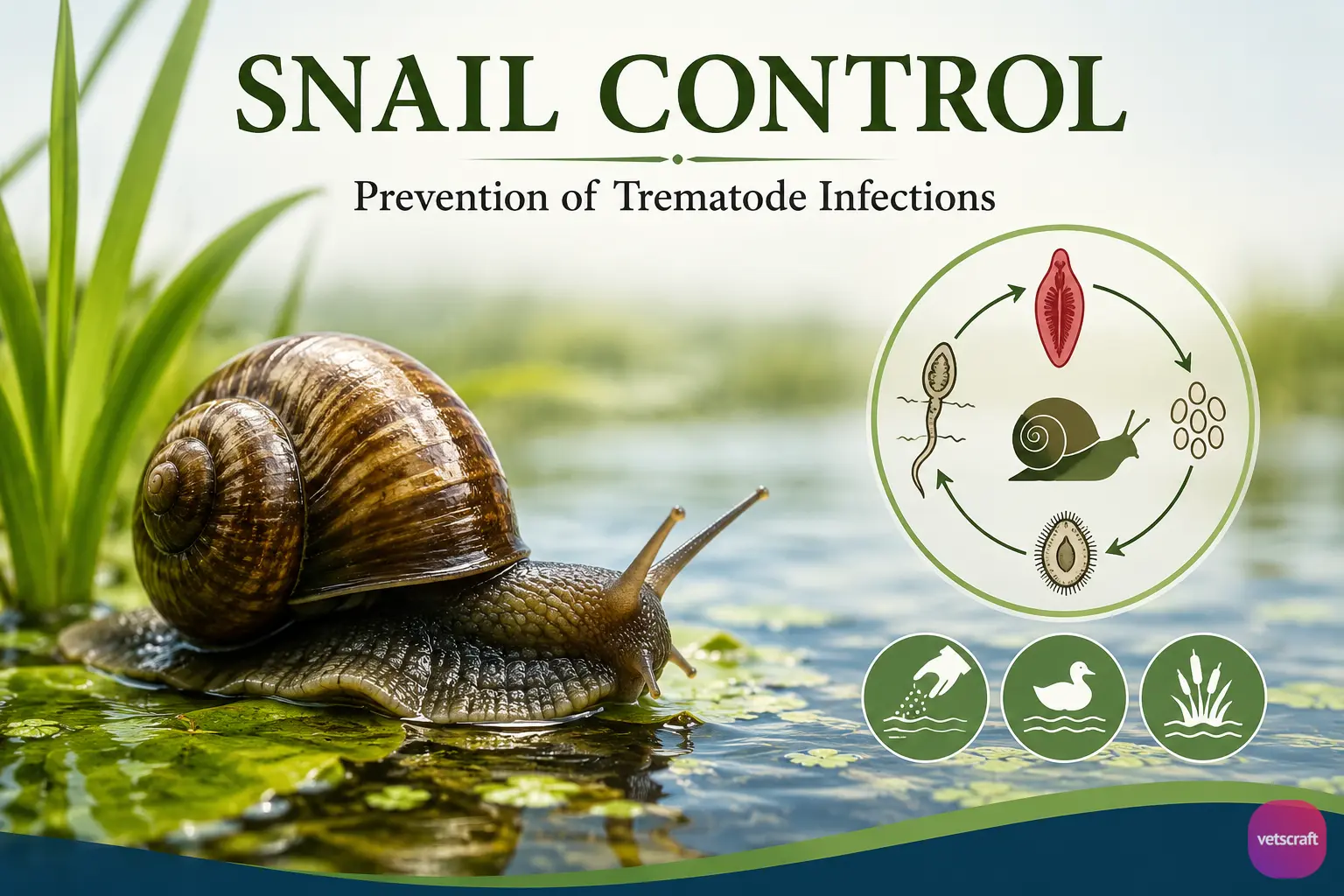
Learn the major snail control methods used in veterinary parasitology, including mechanical control, molluscicides, biological control, and management practices for preventing trematode infections.
Snail Control Methods for Prevention of Trematode Infections Read More »
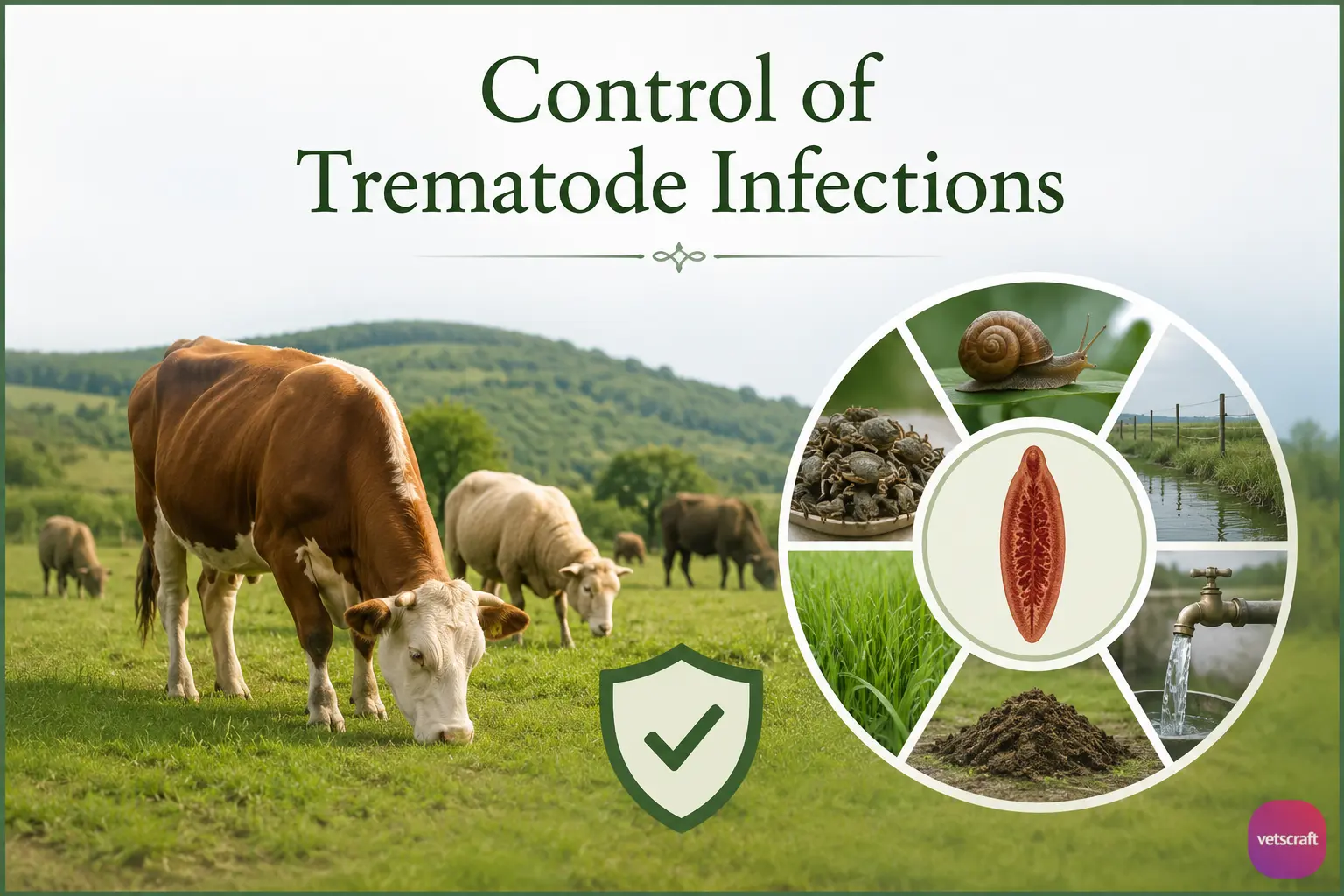
Learn the control and prevention of trematode (fluke) infections in animals and humans, including snail control, sanitation, grazing management, and deworming.
Control and Prevention of Trematode (Fluke) Infections Read More »
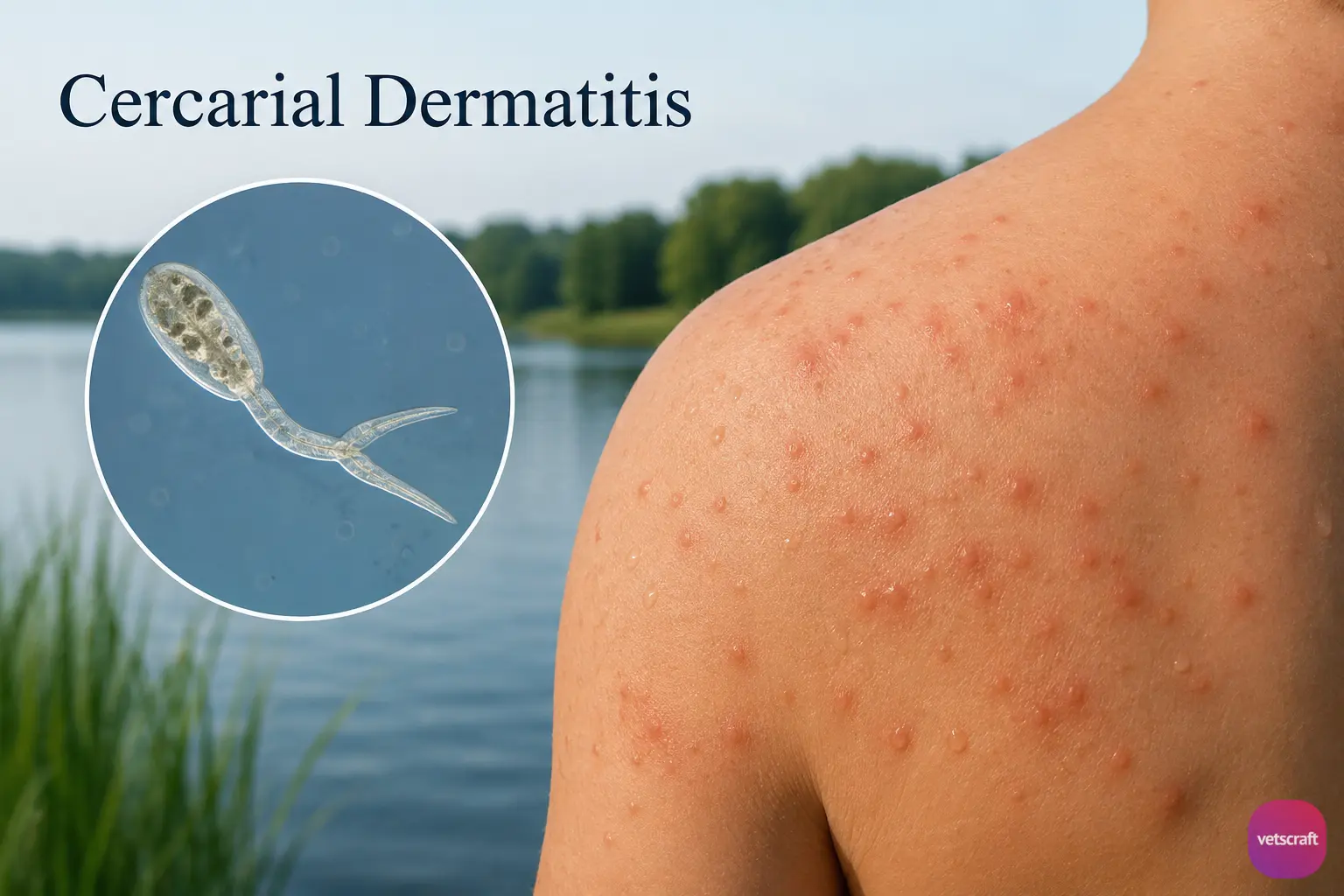
Schistosome cercarial dermatitis, commonly known as “Swimmer’s Itch,” is a transient cutaneous hypersensitivity reaction caused by the penetration of schistosome cercariae.
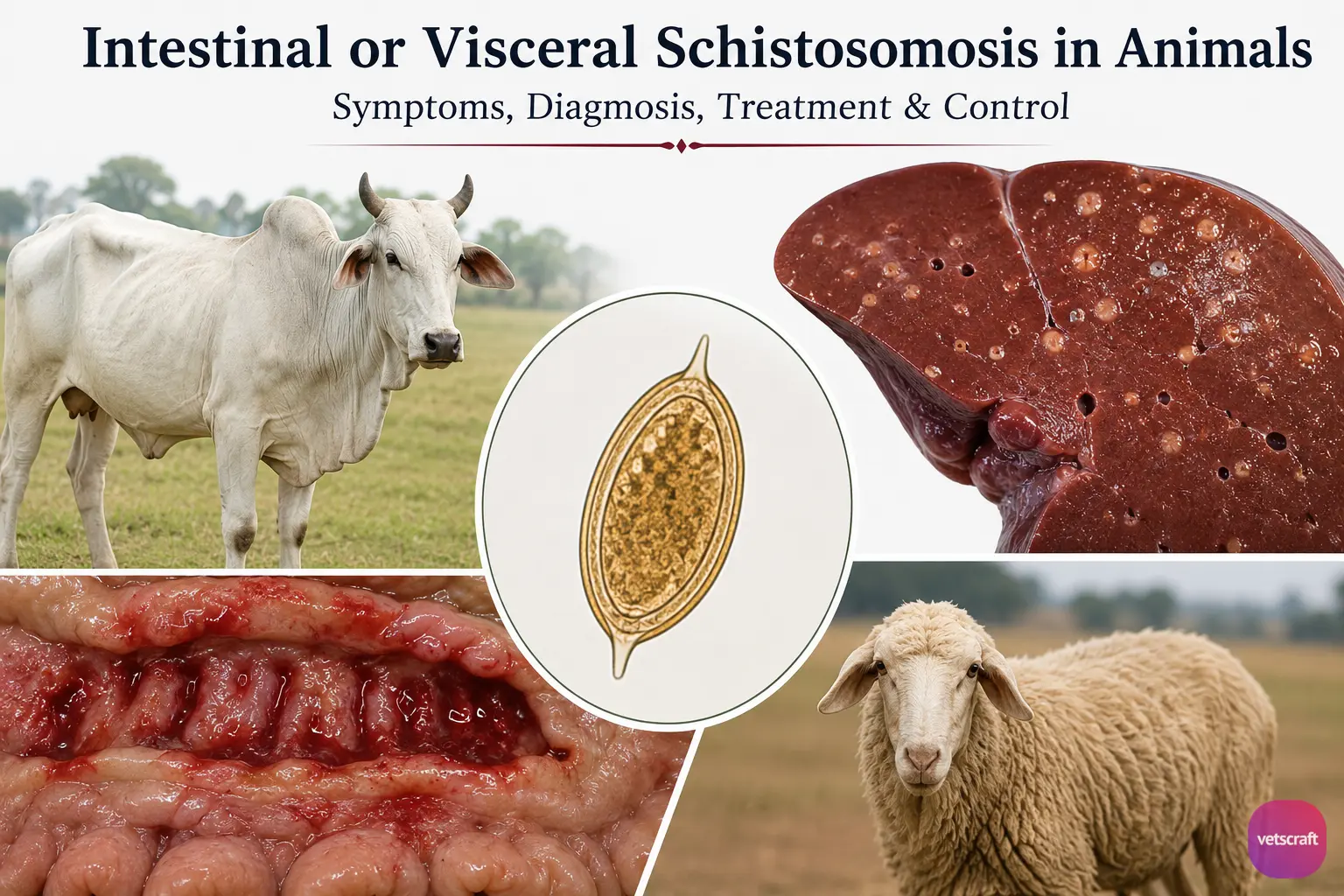
Learn about intestinal or visceral schistosomosis in animals, including its causes, pathogenesis, clinical signs, diagnosis, treatment, and control. Explore infections caused by Schistosoma spindale, S. indicum, and S. nasale in domestic animals.
Intestinal or Visceral Schistosomosis in Animals Read More »
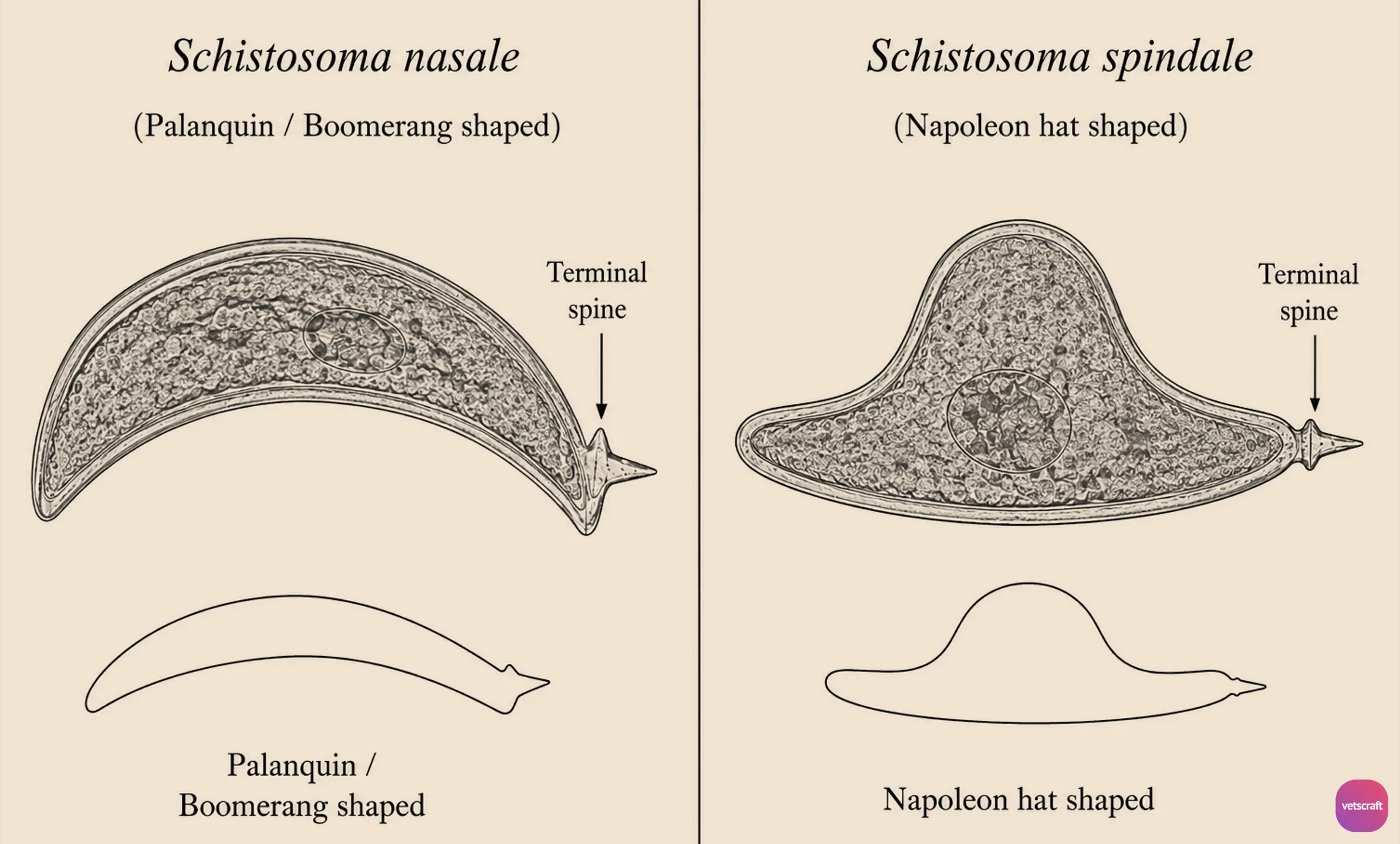
Learn about blood flukes (Schistosomatidae family) including classification, morphology, life cycle, pathogenesis, clinical signs, treatment, and control of Schistosoma species in veterinary parasitology.
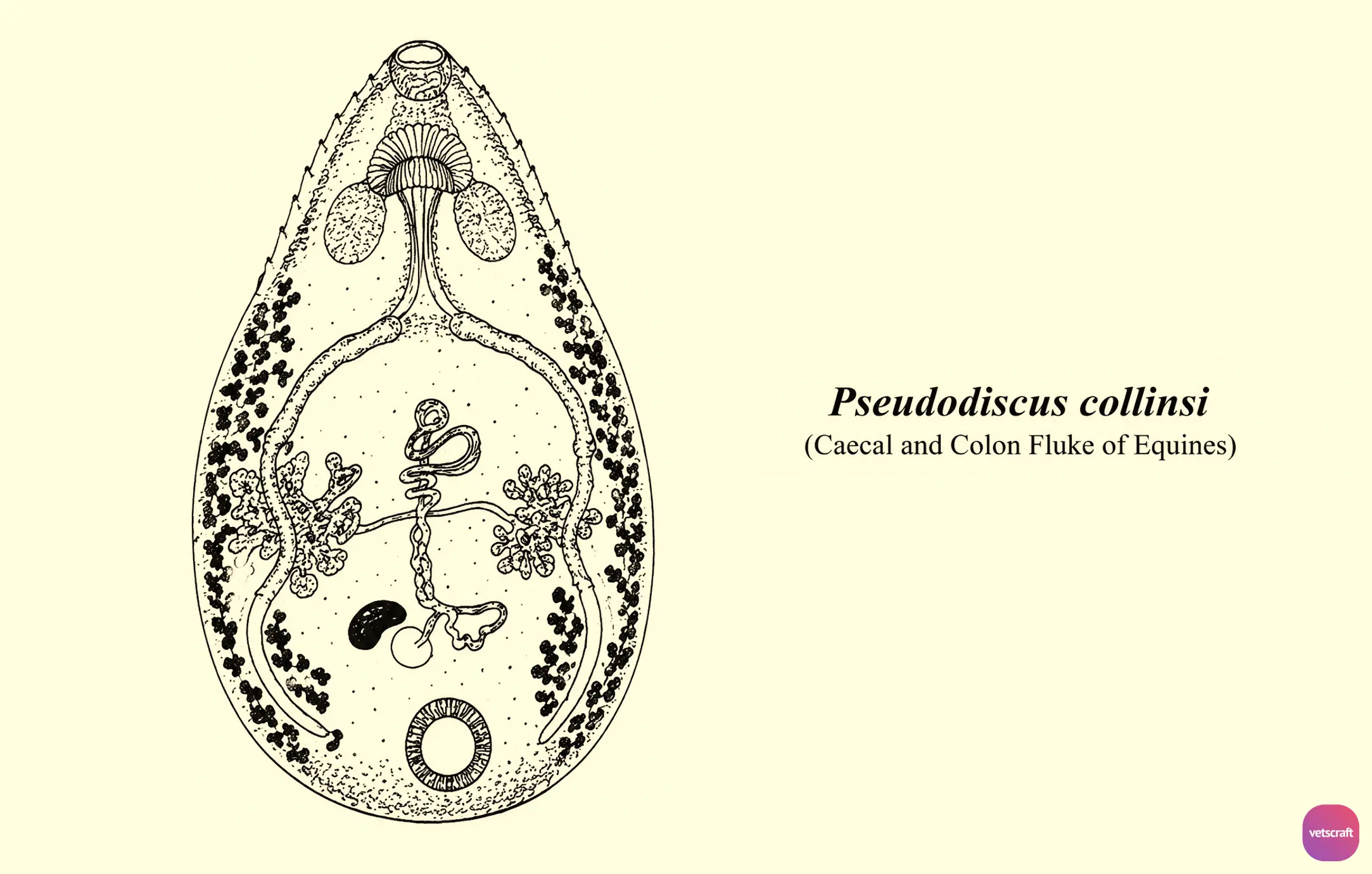
Learn about Pseudodiscus collinsi, the caecal and colon fluke of equines. Explore its host, location, intermediate host, distribution, and key morphological characteristics for identification.