Cercarial Dermatitis (Swimmer’s Itch): Etiology, Clinical Signs, Treatment, and Control
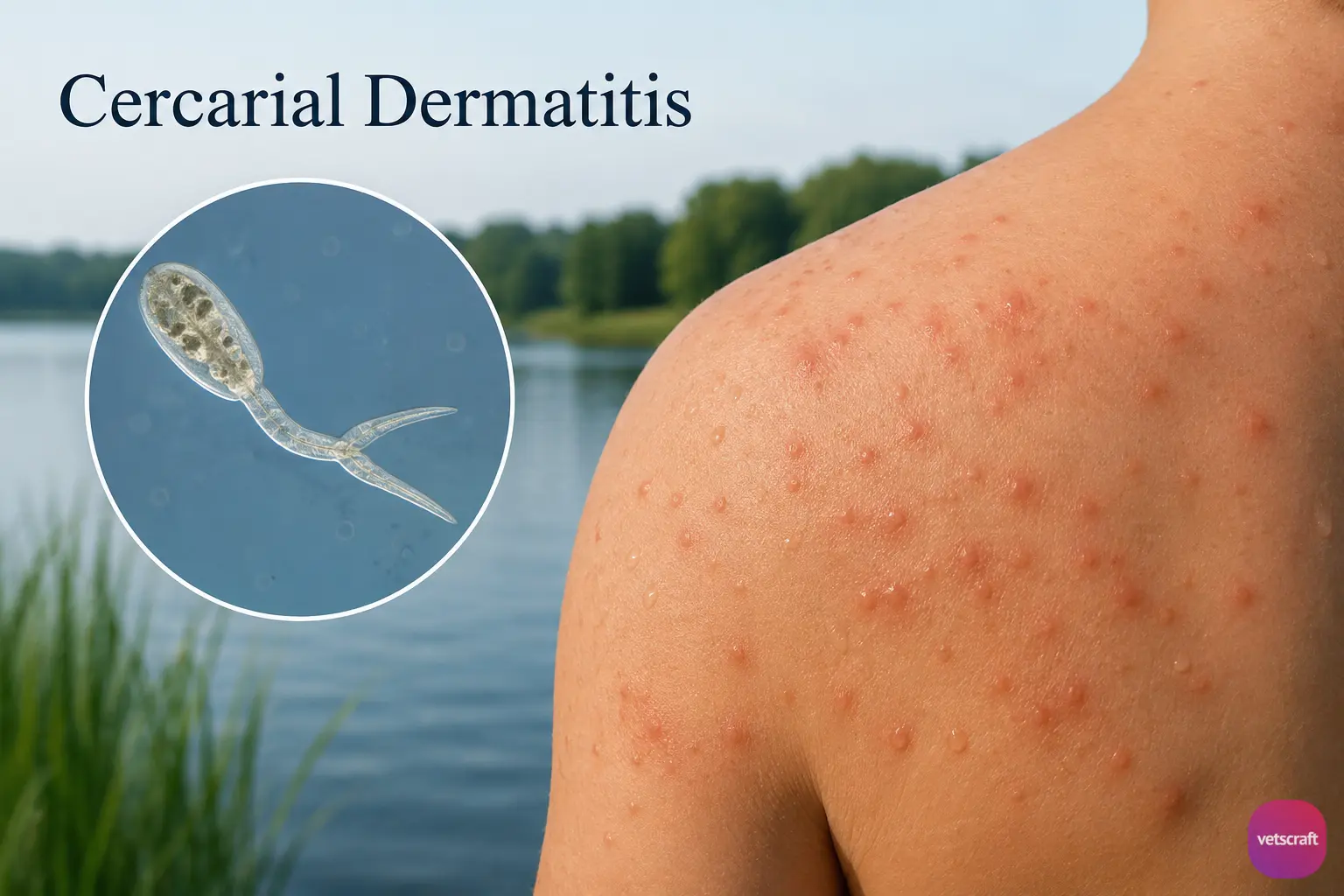
Schistosome cercarial dermatitis, commonly known as “Swimmer’s Itch,” is a transient cutaneous hypersensitivity reaction caused by the penetration of schistosome cercariae into the skin of an unnatural host, particularly humans. The condition develops following exposure to water containing schistosomatid cercariae.
The disease is known by various regional names throughout the world, including:
- United States: Duck worms, duck rash, duck itch, duck lice, clam digger’s itch, and lake itch
- Canada: Beaver lice
- British Columbia: Duck mites
- Australia: Pelican itch
- Japan: Kubure or Kobanyo
- Malaysia: Sawah
- Thailand: Hoi con
- Other Names: Hunter’s itch, Badedermatitis, Gale des nageurs, and water dermatitis
Causative Agents
Cercarial dermatitis is caused by the penetration of cercariae of non-human schistosomes into the skin of humans (unnatural hosts).
- Avian schistosomes, including Austrobilharzia variglandis, Trichobilharzia ocellata, and Gigantobilharzia spp.
- Non-avian schistosomes, including Heterobilharzia americana, Schistosoma bovis, Schistosomatium douthitti, and Bilharziella polonica.
Epizootiology
Cercarial dermatitis commonly occurs in individuals working in rice paddies, swimming, wading, or engaging in recreational activities in freshwater bodies, and in those who have repeated contact with contaminated water.
Clinical Signs
The cercariae cannot develop in humans and die shortly after penetration. Initial exposure causes mildly itchy, raised papules, erythema, and edema. However, repeated exposure results in severe pruritus and papular or pustular eruptions, leading to severe dermatitis. The condition may persist for several days to several weeks, and secondary bacterial infections may also occur.
Treatment
There is no specific treatment for cercarial dermatitis because the cercariae die shortly after penetrating the skin. Management is primarily symptomatic and aimed at relieving pruritus and inflammation.
- Oral antihistamines such as hydroxyzine may be administered to reduce itching.
- Topical antipruritic or corticosteroid preparations may help relieve local inflammation and irritation.
- Bathing in oatmeal, baking soda, or Epsom salts may provide symptomatic relief.
- Secondary bacterial infections resulting from excessive scratching should be treated appropriately with antimicrobial therapy.
Control
The condition can be prevented by:
- Using protective waterproof clothing when wading in water.
- Applying repellents such as “Dibutyl Phthalate” or “Benzyl Benzoate” to exposed skin before water contact.
- Avoiding prolonged exposure to water bodies known to harbor infected snails and schistosome cercariae.
- Drying the skin thoroughly after leaving potentially contaminated water.