Anticoagulant drugs

Veterinary Pharmacology

Anticoagulants Anticoagulants are agents that inhibit coagulation of blood either in vitro or in vivo. The in vitro anticoagulants are useful in the collection of blood for laboratory analysis or for blood transfusion. In vitro anticoagulants In vivo anticoagulants Heparin is used as Systemic anticoagulants or In vivo type anticoagulant. here are some features of heparin listed below- Clinical uses […]

Anticoagulant drugs Read More »

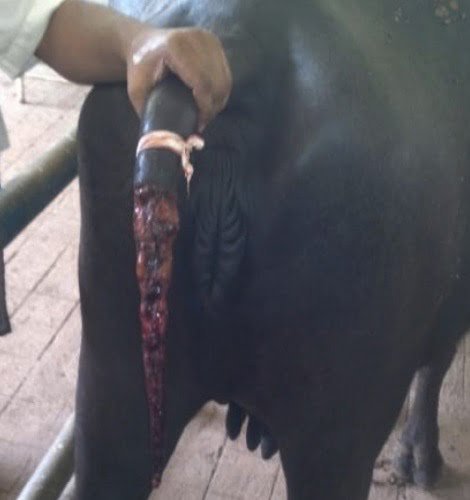
Epistaxis in a dog (bleeding from nose) - Classification of Haemorrhage, Coagulants should be used to stop bleeding or causative agent should be removed.

Coagulants

Veterinary Pharmacology

Coagulant drugs Coagulants are agents that promote coagulation of blood. Various coagulants used are Thromboplastin, Thrombin, Fibrinogen, Fibrin, Oxidized cellulose, Calcium alginate, and Absorbable gelatin sponge. Coagulant drugs used in animals listed as- Thromboplastin Thromboplastin (thrombokinase) is produced naturally by platelets and damaged tissue. Commercial thromboplastin is an extract of cattle brain in normal saline.

Coagulants Read More »

Hematinic drugs

Veterinary Pharmacology

Hematinics Hematinics are agents or drugs which are used in the treatment of anaemia and generally act by stimulation of hemoglobin synthesis of erythropoiesis. Iron Iron is necessary for hamoglobin formation. It is available in the diet. However often it is supplemented for the treatment of deficiency of iron  by giving as oral or parenteral

Hematinic drugs Read More »

Vasoconstrictor

Veterinary Pharmacology

Vasoconstrictor drugs Vasoconstriction is the narrowing of the blood vessels resulting from contraction of the muscular wall of the vessels. α1 adrenergic agonists and drugs that release noradrenaline from the sympathetic nerve terminals or inhibit its reuptake cause vasoconstriction. Some eicosanoids like thromboxane A and several peptides like endothelin, angiotensin and vasopressin are also predominantly vasoconstrictors. Clinical

Vasoconstrictor Read More »

Vasodilators

Veterinary Pharmacology

Vasodilator drugs Vasodilators are drugs that dilate blood vessels. They affect the muscles in the walls of arteries and veins, preventing the muscles from tightening and the walls from narrowing. Vasodilators drugs divided into direct and indirect acting vasodilators- 1. Directly acting vasodilators Directly acting vasodilators produce their action mainly by interfering with the availability

Vasodilators Read More »

Antihypertensive Drugs

Veterinary Pharmacology

Antihypertensive Drugs Antihypertensive drugs are agents used to reduce the elevated blood pressure. They can be classified based on the mechanism of action as under: Agents interfering with sympathetic activity Alpha adrenergic receptor blockers: Phentolamine, tolazoline, prazosin, Beta adrenergic blockers: Propranolol, Atenolol, Metoprolol Alpha and Beta adrenergic blocker: Labetalol Agents interfering with central sympathetic activity:

Antihypertensive Drugs Read More »

Clinical uses and adverse effects of antiarrhythmic drugs

Veterinary Pharmacology

Clinical uses and adverse effects of antiarrhythmic drugs will be discussed here: Clinical uses of antiarrhythmic drugs Adverse effects of antiarrhythmic drugs One of the most common and serious adverse cardiac effects is proarrhythmia (arrhythmia ironically precipitated by antiarrhythmic therapy) which can occur in 5-20% of patients treated with Class I and Class III drugs. Extra-cardiac Adverse

Clinical uses and adverse effects of antiarrhythmic drugs Read More »

Calcium channel blocker

Veterinary Pharmacology

Class IV: Calcium channel blocker Most clinical ventricular arrhythmias are neither prevented nor suppressed by calcium-channel blockers. Calcium-channel blockers are useful in treating arrhythmias involving re-entry within the AV node and in the rare forms of monomorphic ventricular tachycardia seen in patients with structurally normal myocardium. Many of the calcium-channel blockers also have the ability

Calcium channel blocker Read More »

Potassium channel blocker

Veterinary Pharmacology

Class III: Potassium channel blocker Potassium currents, predominantly the current known as the delayed rectifier, are responsible for repolarizing the membrane during the action potential. Block of potassium currents during the plateau phase of the action potential is thought to be the mechanism of action of many drugs that prolong the refractory period. Drugs that

Potassium channel blocker Read More »

Beta adrenergic blockers

Veterinary Pharmacology

Class II: Beta adrenergic blockers The drugs in this class suppress adrenergic mediated ectopic activity. The members of the group like propranolol block the beta receptors of the cardiac tissue. It decreases slope of Phase IV depolarization and automaticity in SA node. Propranolol is useful in treating sinus tachycardia, extrasystoles provoked by exercise or emotion.

Beta adrenergic blockers Read More »

Scroll to Top