
Chabertia ovina (Large-Mouthed Bowel Worm)
Veterinary ParasitologyLearn about Chabertia ovina (large-mouthed bowel worm), including its morphology, life cycle, pathogenesis, clinical signs, diagnosis, and treatment in ruminants.
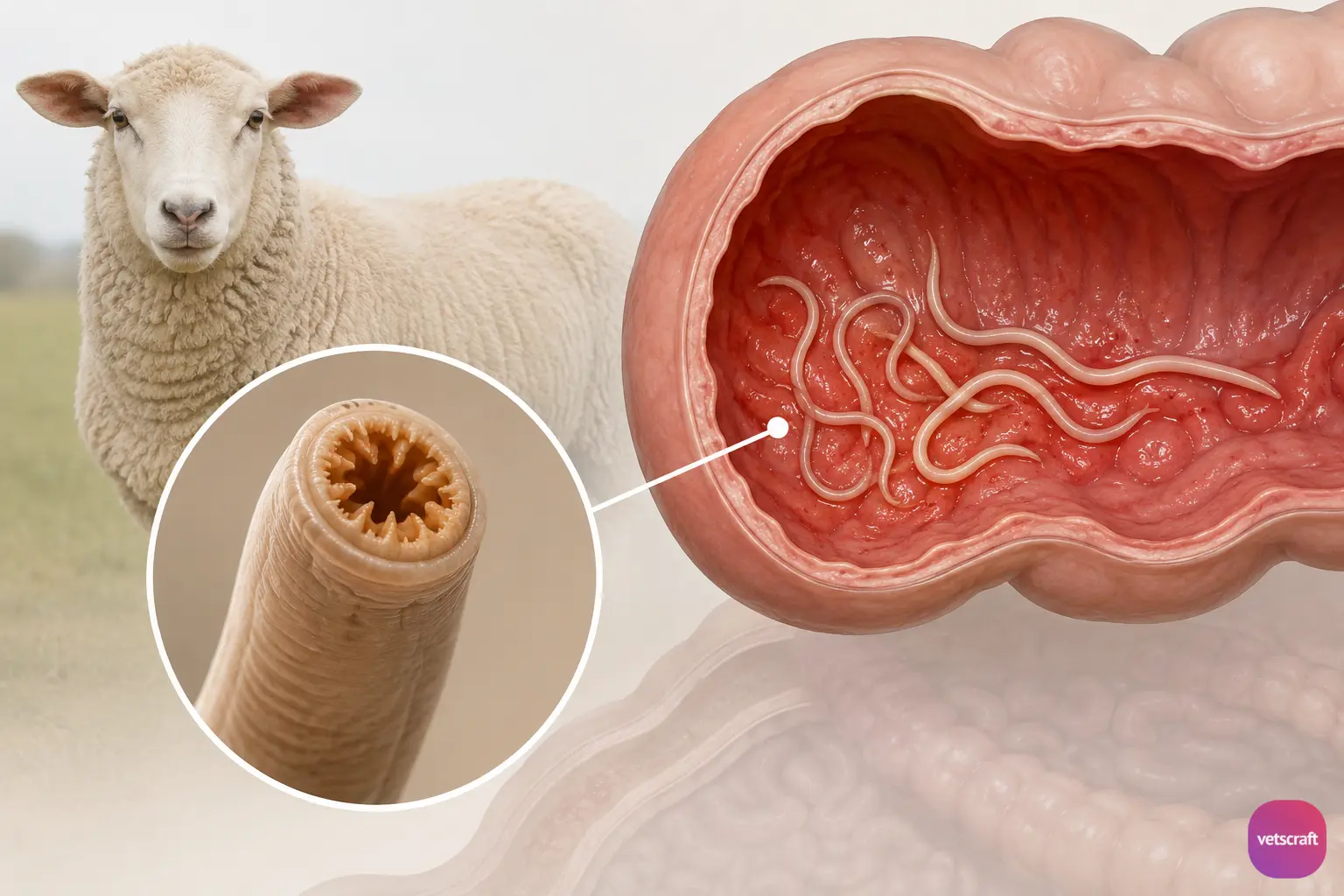
Learn about Chabertia ovina (large-mouthed bowel worm), including its morphology, life cycle, pathogenesis, clinical signs, diagnosis, and treatment in ruminants.
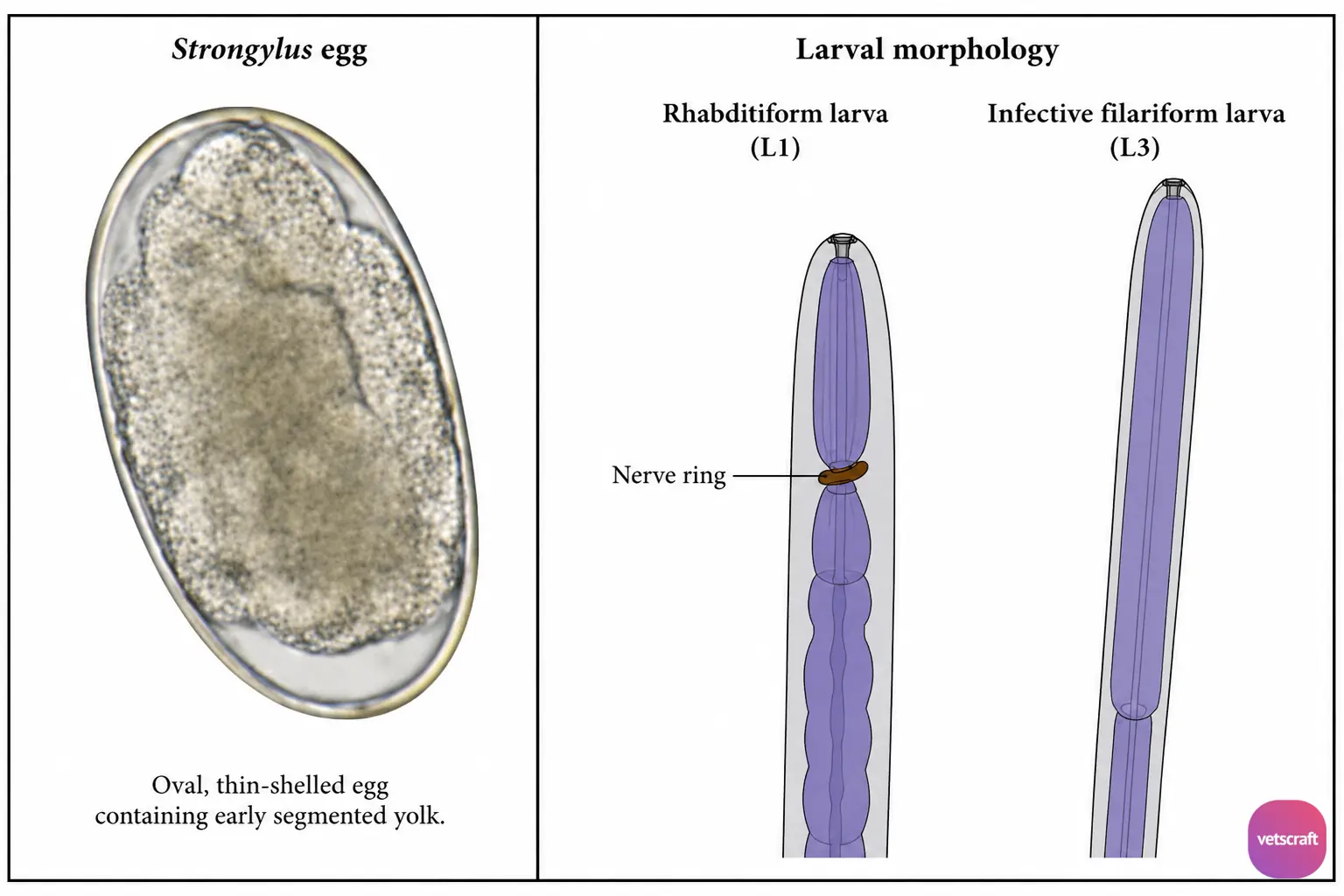
Learn about Strongylus in horses, including Strongylus vulgaris, S. equinus, and S. edentatus. Explore taxonomy, morphology, life cycle, pathogenesis, clinical signs, diagnosis, treatment, and control.
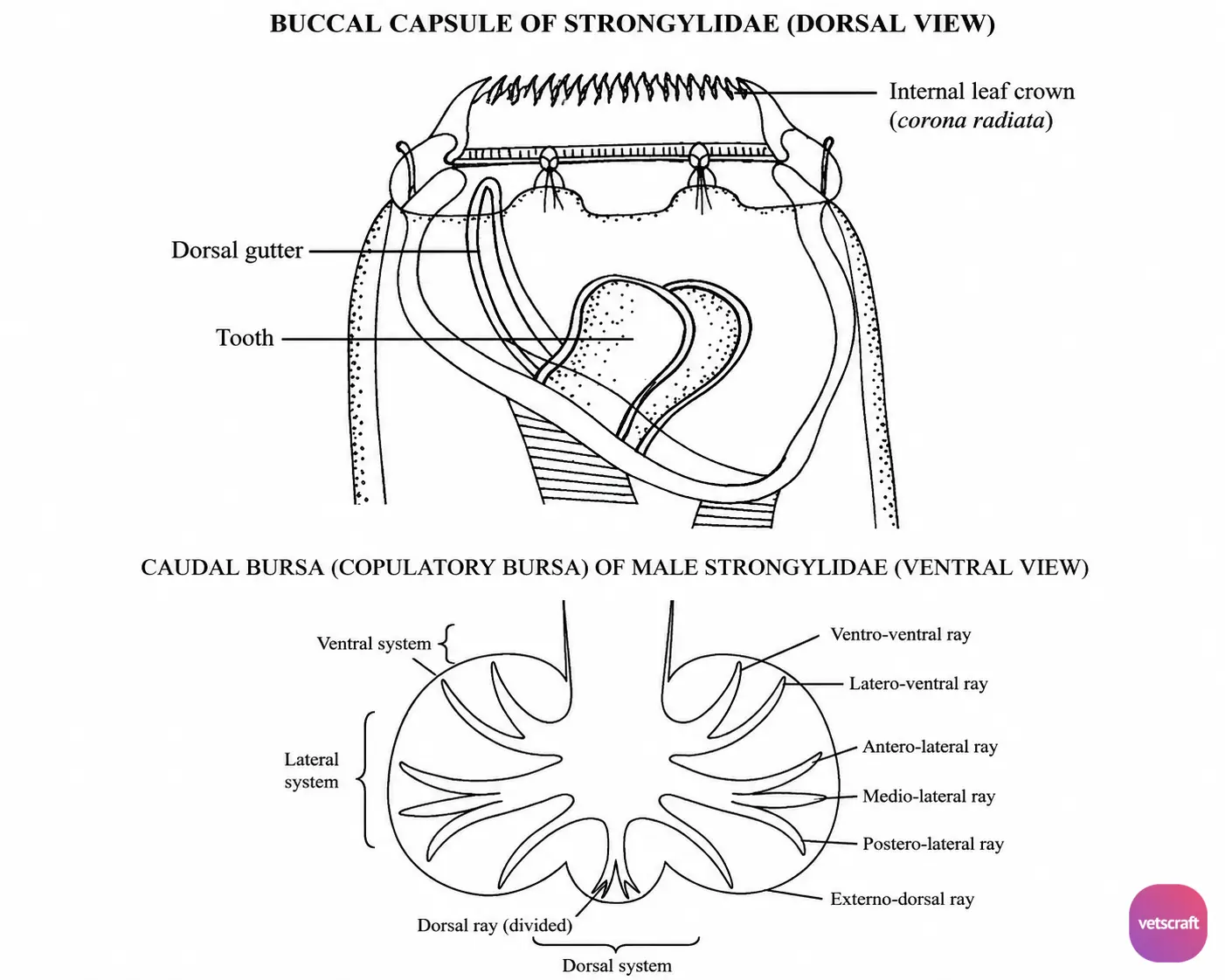
Learn about the Family Strongylidae (Palisade Worms), including its classification, key characteristics, and the structure of the caudal (copulatory) bursa.
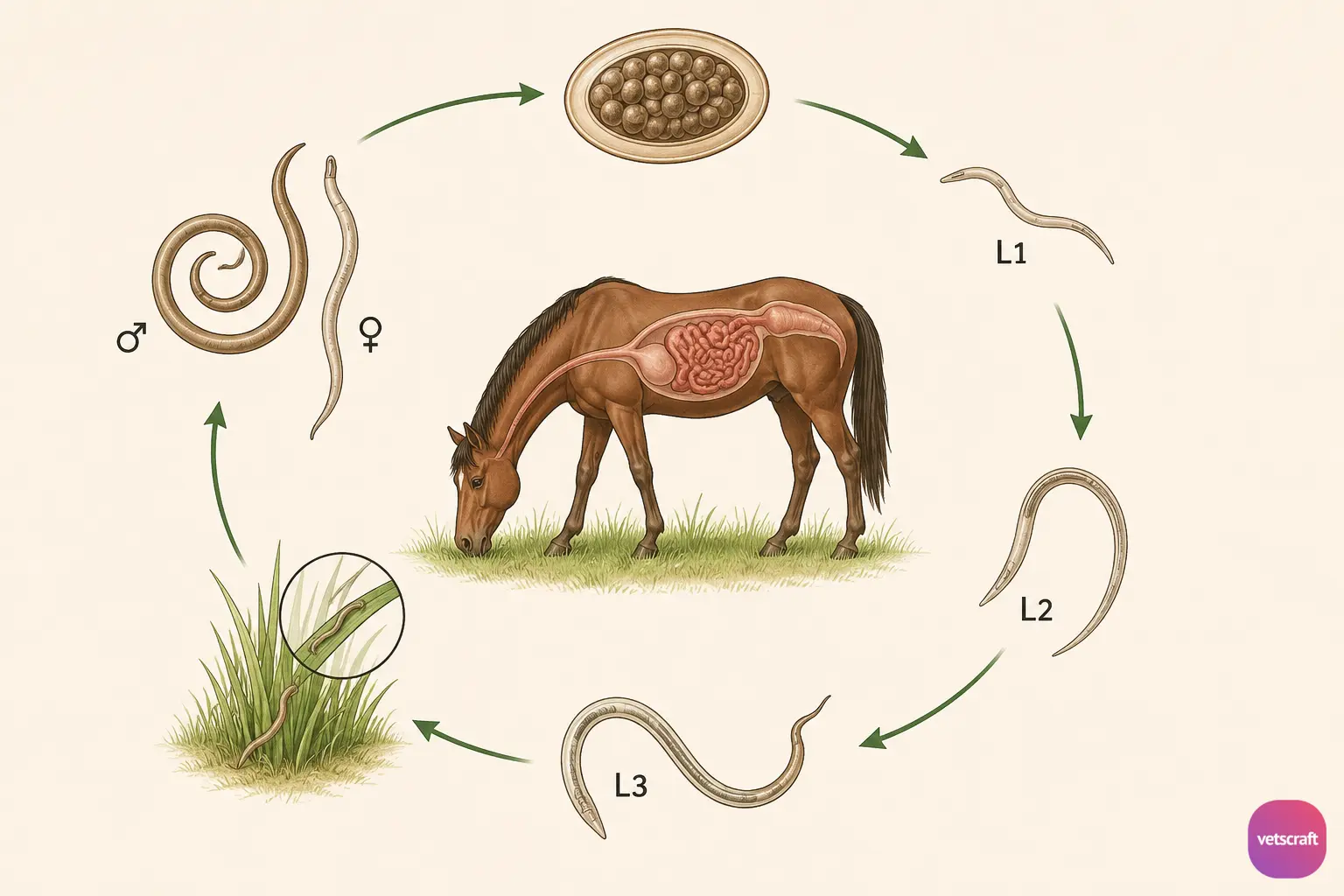
Learn about strongyle worms (Strongyloidea), including their classification, characteristics, morphology, direct life cycle, infective L3 stage, and veterinary importance.
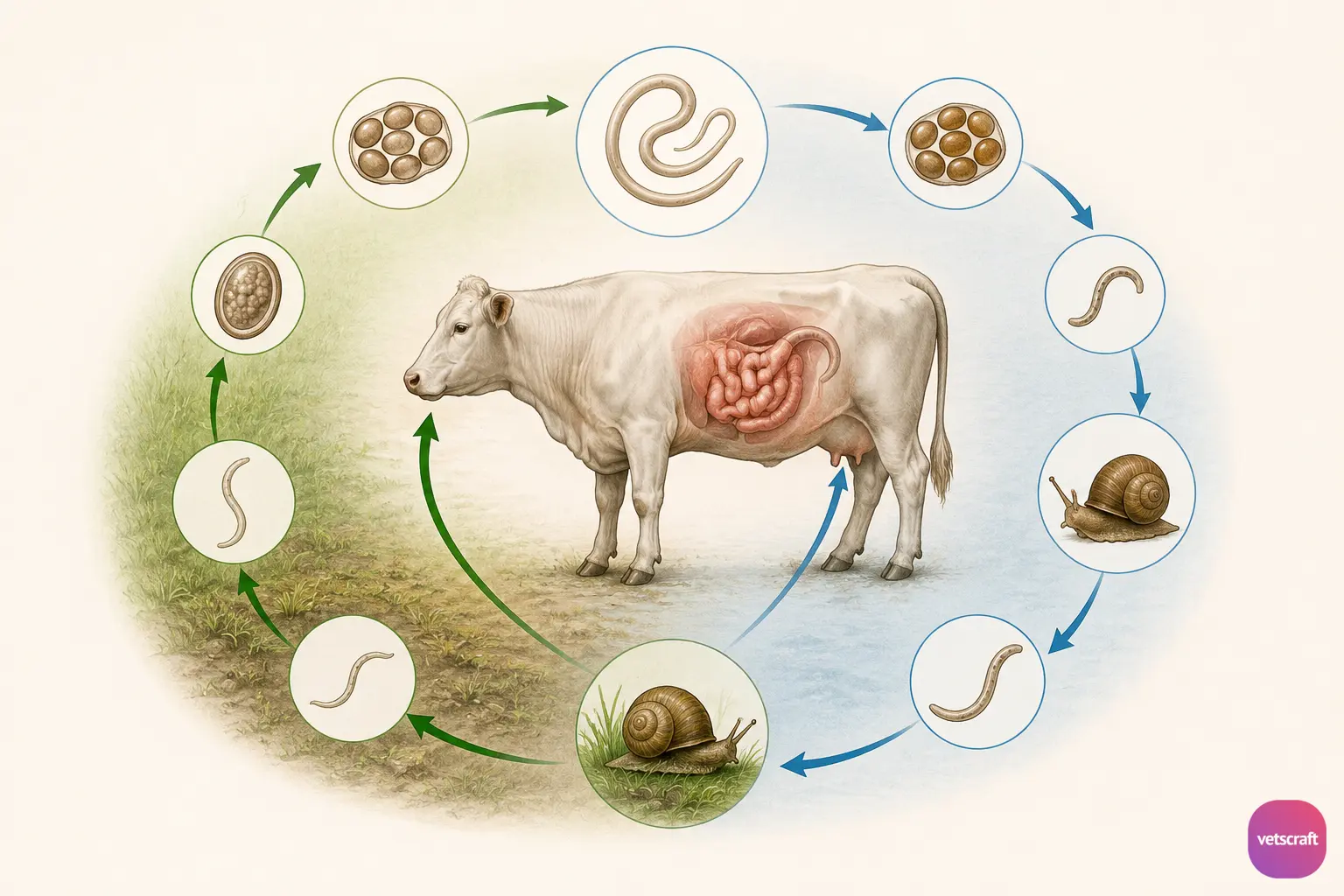
Learn the life cycle of nematodes (roundworms), including direct and indirect life cycles, infective stages, transmission routes, and important examples.
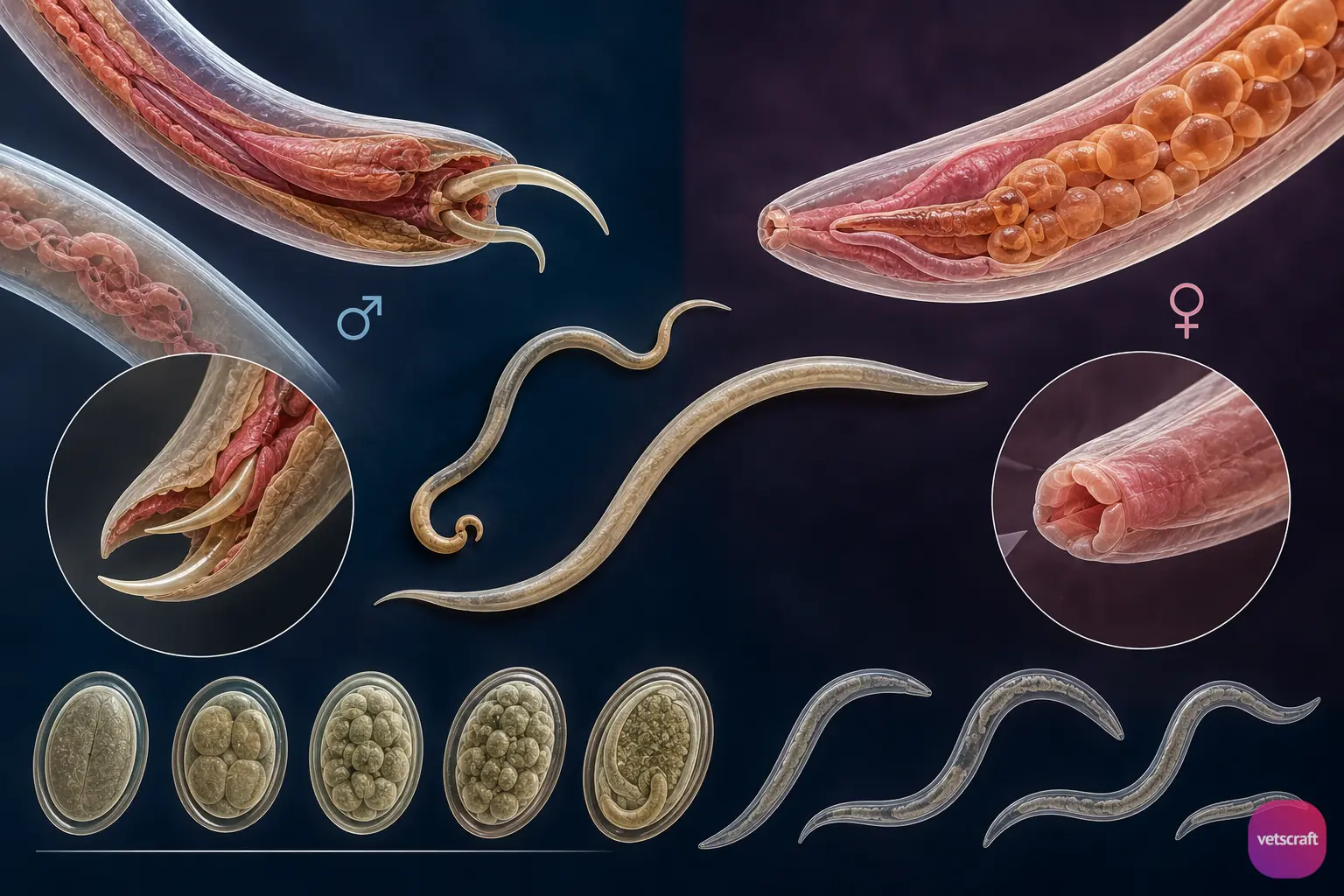
Learn about the reproductive system of nematodes (roundworms), including male and female reproductive organs, eggs, reproductive types, and larval development.
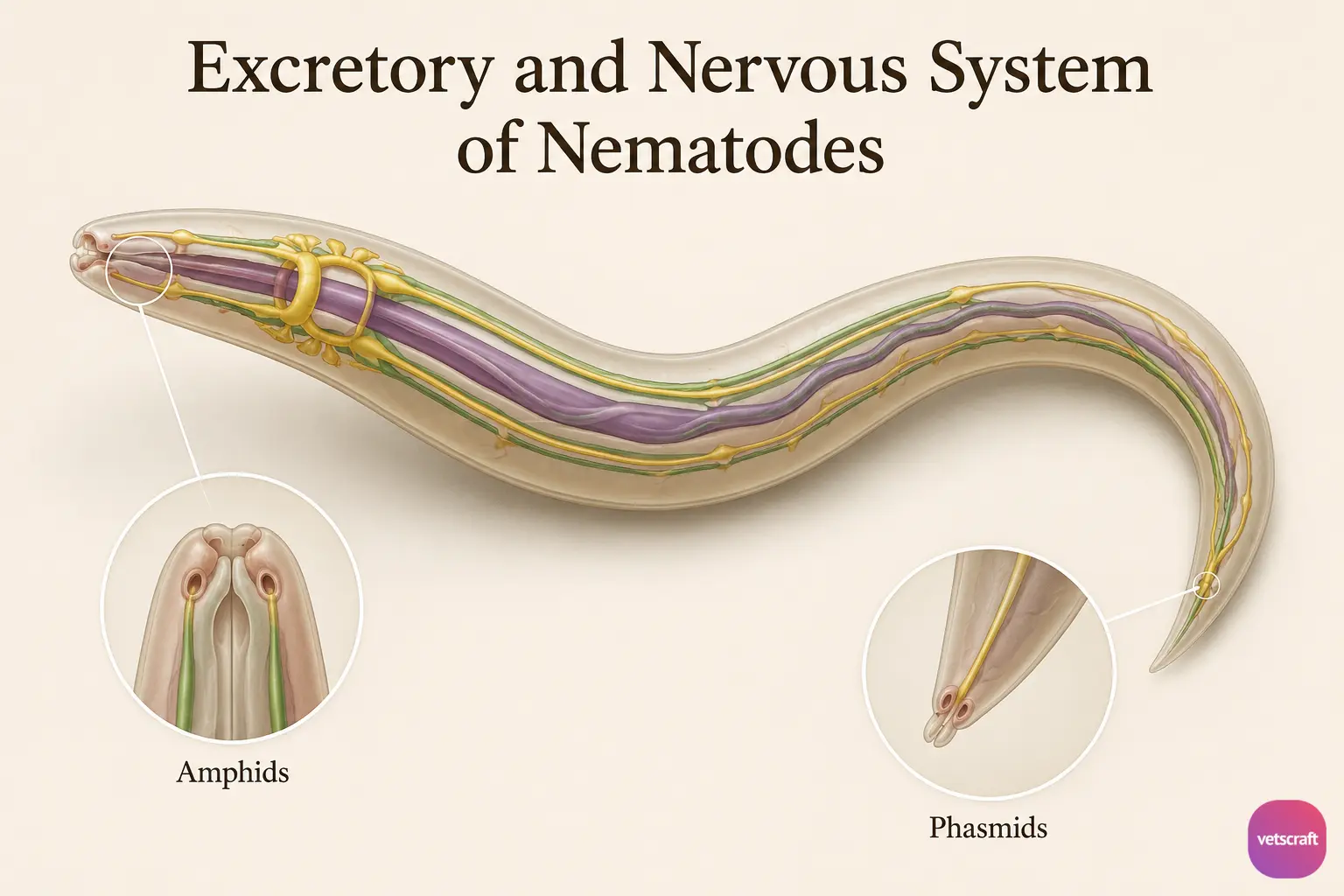
Learn about the excretory and nervous system of nematodes (roundworms), including their excretory organs, nerve ring, nerve trunks, and sense organs.
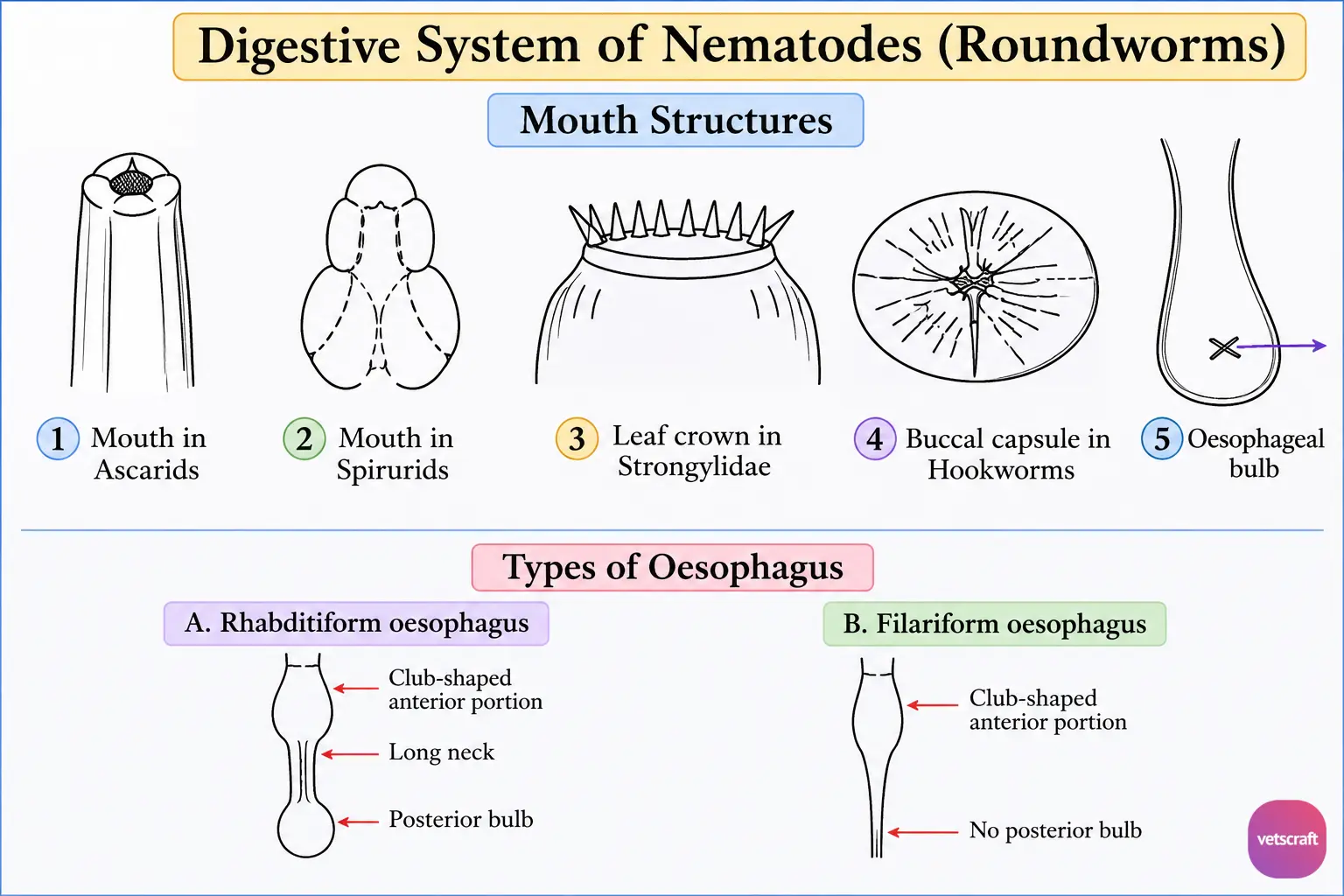
Learn the digestive system of nematodes (roundworms), including the structure of the mouth, buccal capsule, oesophagus, and the types of oesophagus in veterinary parasitology.
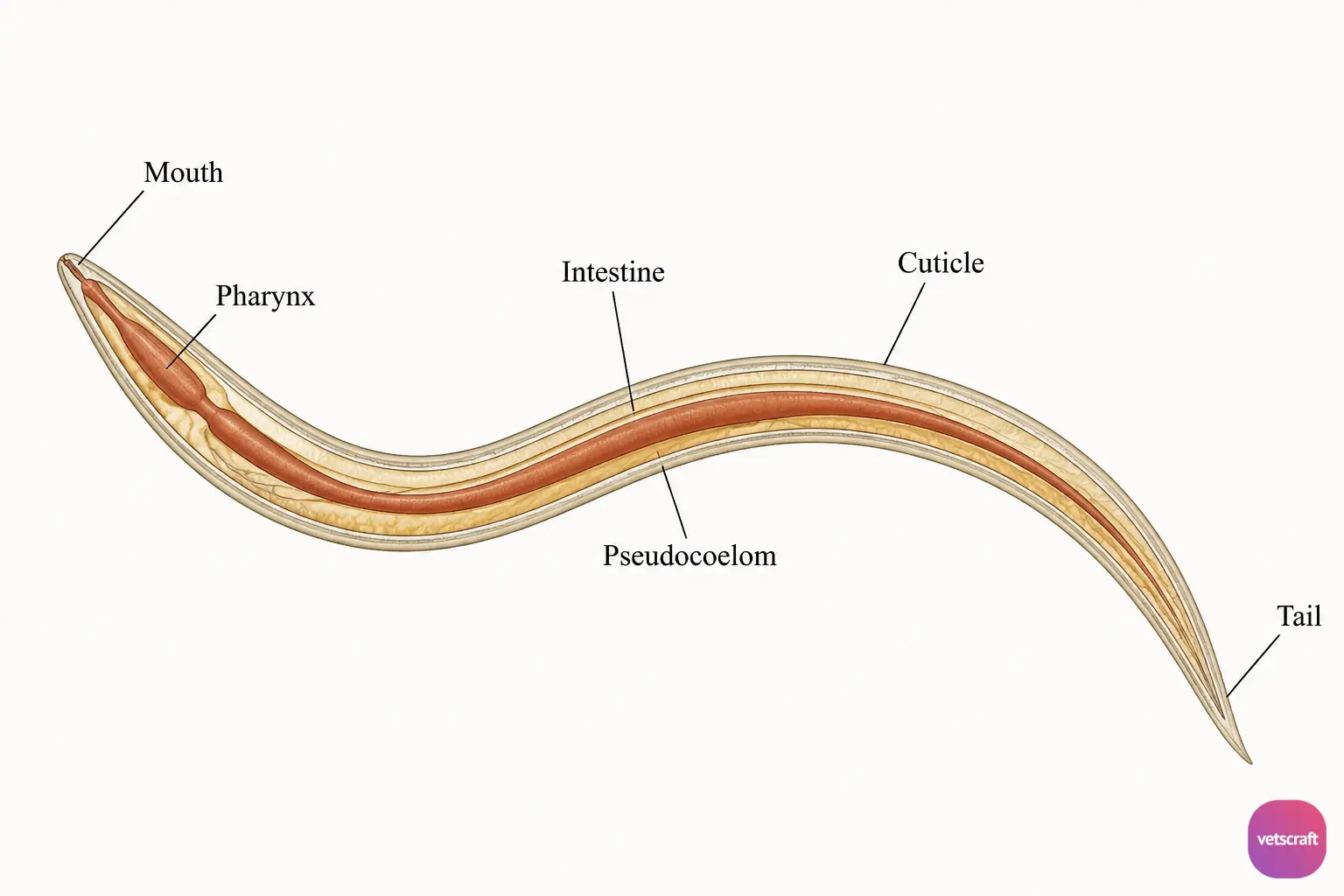
Learn the general characteristics of nematodes (roundworms), including their morphology, body structure, cuticle, pseudocoelom, alimentary canal, and key features.
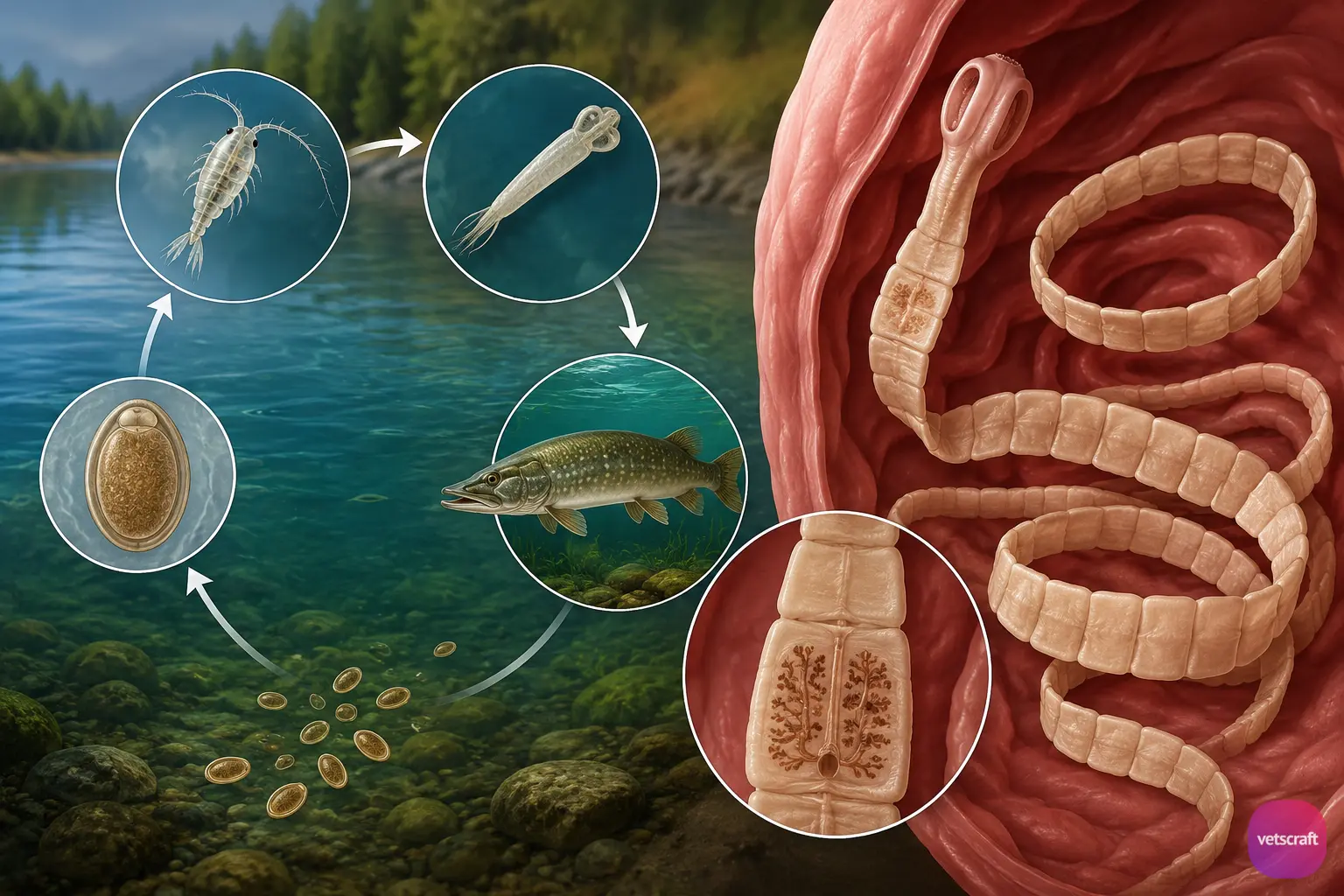
Learn about Diphyllobothrium latum (broad fish tapeworm), including its morphology, life cycle, pathogenesis, diagnosis, treatment, and control.