TABLE OF CONTENTS
Theileria in Animals: Taxonomical Classification & Species
Theileria is a genus of intracellular protozoan parasites belonging to the phylum Apicomplexa that primarily infects domestic and wild ruminants. These parasites are transmitted by ixodid (hard) ticks and are responsible for the disease theileriosis, which causes significant economic losses to the livestock industry worldwide.
Theileria species have a unique life cycle involving both vertebrate hosts and tick vectors, with schizogony occurring in leukocytes and piroplasms developing within erythrocytes. This article covers the taxonomical classification of Theileria, its important species affecting animals, and their veterinary significance.
Taxonomical Classification
- Kingdom: Protista
- Phylum: Apicomplexa
- Class: Sporozoea
- Subclass: Piroplasmia
- Order: Piroplasmida
- Family: Theileriidae
- Genus: Theileria
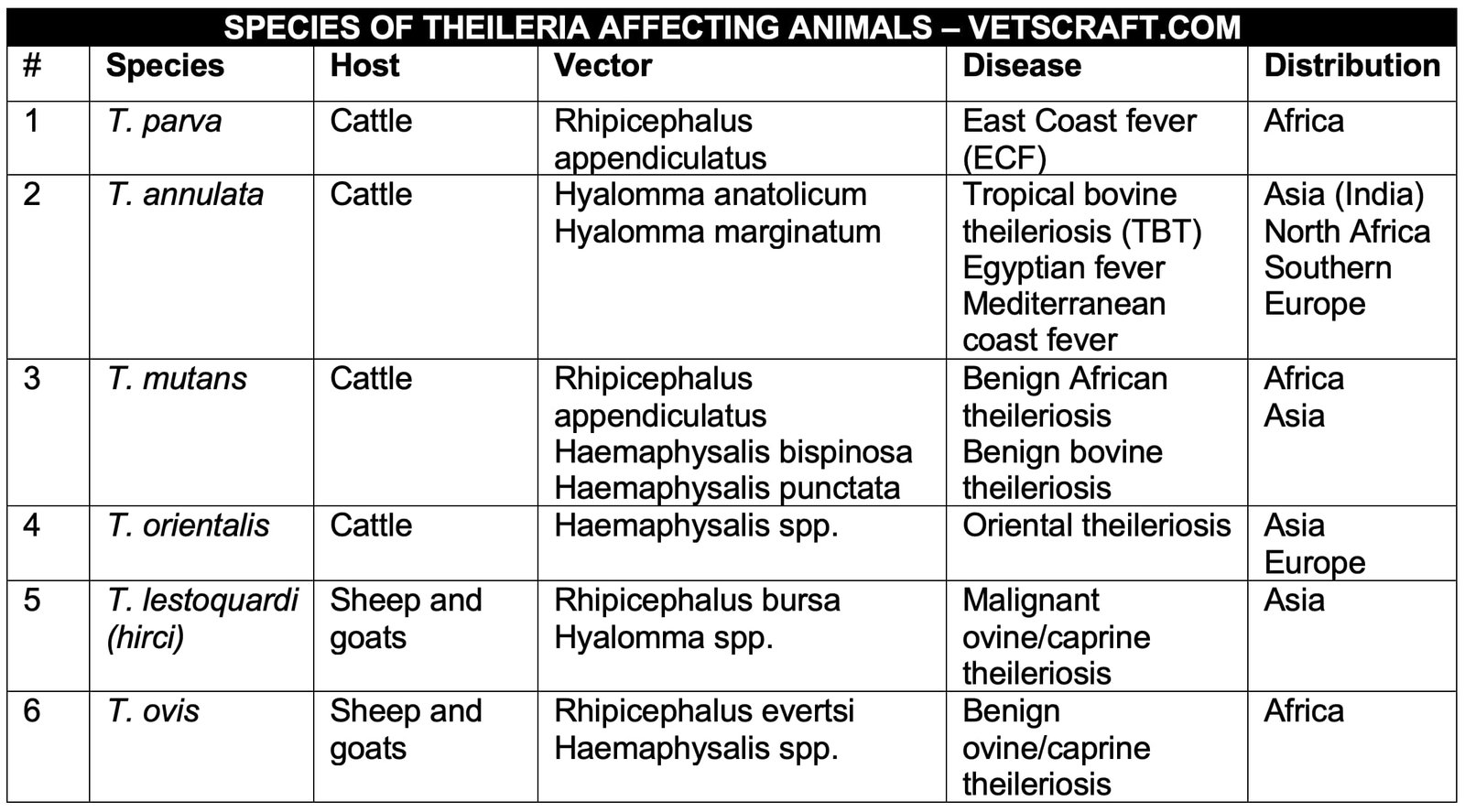
- Important Species: Theileria annulata, Theileria parva, Theileria orientalis, Theileria equi, Theileria lestoquardi
- Common Name: Theileria spp. (Piroplasms)
Species of Theileria Affecting Animals