Plasmodium gallinaceum in Birds: Life Cycle, Pathogenesis & Treatment
Plasmodium gallinaceum is a protozoan hemoparasite that causes avian malaria in domestic and wild birds. It is transmitted by mosquitoes and primarily infects red blood cells and endothelial cells, leading to anemia, splenomegaly, and high mortality in susceptible flocks.
Plasmodium gallinaceum causes avian malaria. The term malaria is derived from the Italian words mala (bad) and aria(air) because the disease was initially believed to be caused by “bad air.”
Parasite Overview
- Host: Jungle fowl, domestic fowl, goose, guinea fowl, partridge, and pigeon. Sparrows are resistant to infection.
- Vector: Female Culex, Aedes, and Armigeres spp.
- Predilection Site: Schizogony and gametogony occur in the red blood cells and endothelial cells of internal organs (liver, spleen, and brain) of chickens, while sexual reproduction occurs in mosquitoes.
Taxonomical Classification
- Kingdom: Protista
- Phylum: Apicomplexa
- Class: Sporozoea
- Order: Haemosporida
- Family: Plasmodiidae
- Genus: Plasmodium
- Species: Plasmodium gallinaceum
- Common Name: Avian malaria parasite (fowl malaria parasite)
Structure
- The gamonts are round and possess pigment granules.
- Schizonts/meronts are round to irregular in shape and contain 8–30 merozoites.
Transmission and Life Cycle
Development in the Vertebrate Host
1. Pre-erythrocytic Cycle
When an infected mosquito bites a bird, sporozoites are inoculated. These sporozoites enter the macrophages and fibroblasts of the skin near the site of inoculation, where they multiply and produce first-generation pre-erythrocytic schizonts called cryptozoites.
Merozoites from these first-generation pre-erythrocytic schizonts, in turn, produce second-generation pre-erythrocytic schizonts called metacryptozoites.
Merozoites from the metacryptozoites enter both erythrocytes and endothelial cells (exo-erythrocytic life cycle), which is absent in human malaria. Merozoites that enter endothelial cells multiply there and form exo-erythrocytic schizonts.
2. Erythrocytic Cycle
The erythrocytic cycle is initiated 7–10 days after infection following the invasion of erythrocytes by merozoites from metacryptozoites. In the erythrocytes, the merozoite rounds up to form a trophozoite. The trophozoite is a small, rounded form containing a large vacuole, which displaces the parasite’s cytoplasm to the periphery of the cell while the nucleus is situated at one pole, giving it a signet ring appearance.
The early trophozoites undergo schizogony to produce merozoites. During schizogony, the host cell’s hemoglobin is digested, and the pigment hemozoin is formed. Merozoites from erythrocytic schizonts may enter endothelial cells and produce exo-erythrocytic schizonts called phanerozoites.
After several asexual generations, merozoites undergo sexual development, resulting in the formation of microgamonts and macrogamonts. Further development of the gamonts occurs only after the blood is ingested by a suitable mosquito.
Development in the Mosquito
When a mosquito feeds on an infected host, gamonts are ingested along with the blood meal. The ingested gamonts are released into the lumen of the mosquito gut and differentiate into microgametocytes and macrogametocytes.
Within 10–15 minutes of the blood meal, the nucleus of the microgametocyte divides, and through the process of exflagellation, 6–8 long, flagella-like microgametes are released from each microgametocyte.
The liberated microgametes fertilize the macrogametes, resulting in the formation of a zygote, which is motile and is called an ookinete. This ookinete penetrates the midgut wall and reaches the outer surface of the stomach, where it develops into an oocyst.
The nucleus of the oocyst divides repeatedly, producing a large number of sporozoites.
Mature oocysts rupture and release sporozoites into the body cavity of the mosquito, from where they finally reach the salivary glands. The sporozoites are inoculated into the host when an infected mosquito bites.
Pathogenesis
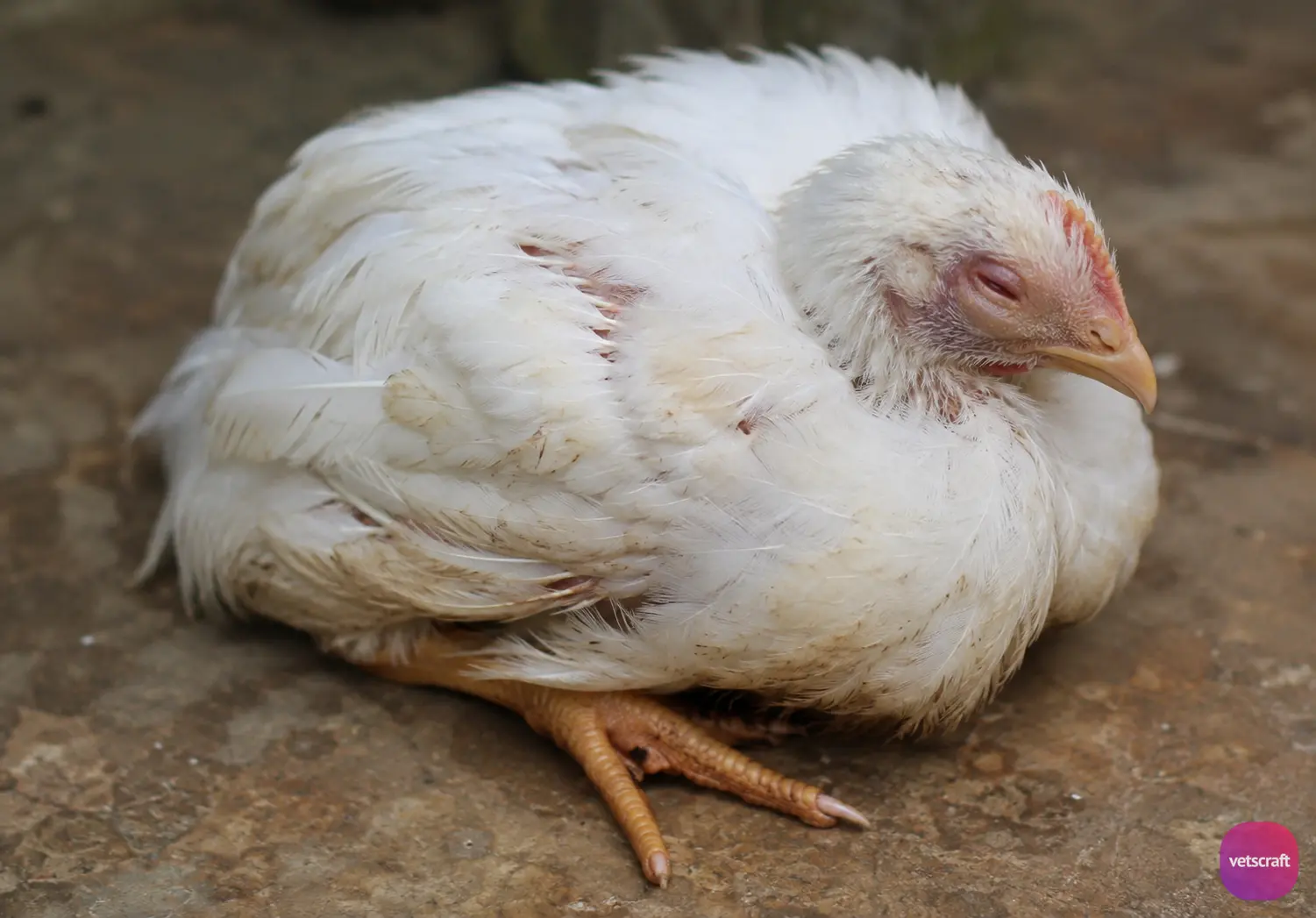
In avian malaria, fever is not a significant clinical syndrome. This febrile response usually coincides with the release of merozoites from schizonts. In domestic chickens, outbreaks of malaria cause high mortality. Fluctuations in body temperature, anemia, and splenomegaly occur.
Paralysis may occur due to blockage of brain capillaries by the exo-erythrocytic stages. Relapse is very common in malaria. Birds that recover from malaria may harbor a small number of malarial parasites for an extended period, which may begin to multiply again and produce clinical disease. This type of relapse is called recrudescence. In P. vivax (human malaria), relapse can occur even after 8 years of recovery.
Diagnosis
Demonstration of parasite stages in stained blood smears.
Treatment
- Chloroquine 5 mg/kg
- Pyrimethamine 0.3 mg/kg