TABLE OF CONTENTS
Ovine and Caprine Theileriosis: Clinical Signs, Diagnosis, Treatment & Control
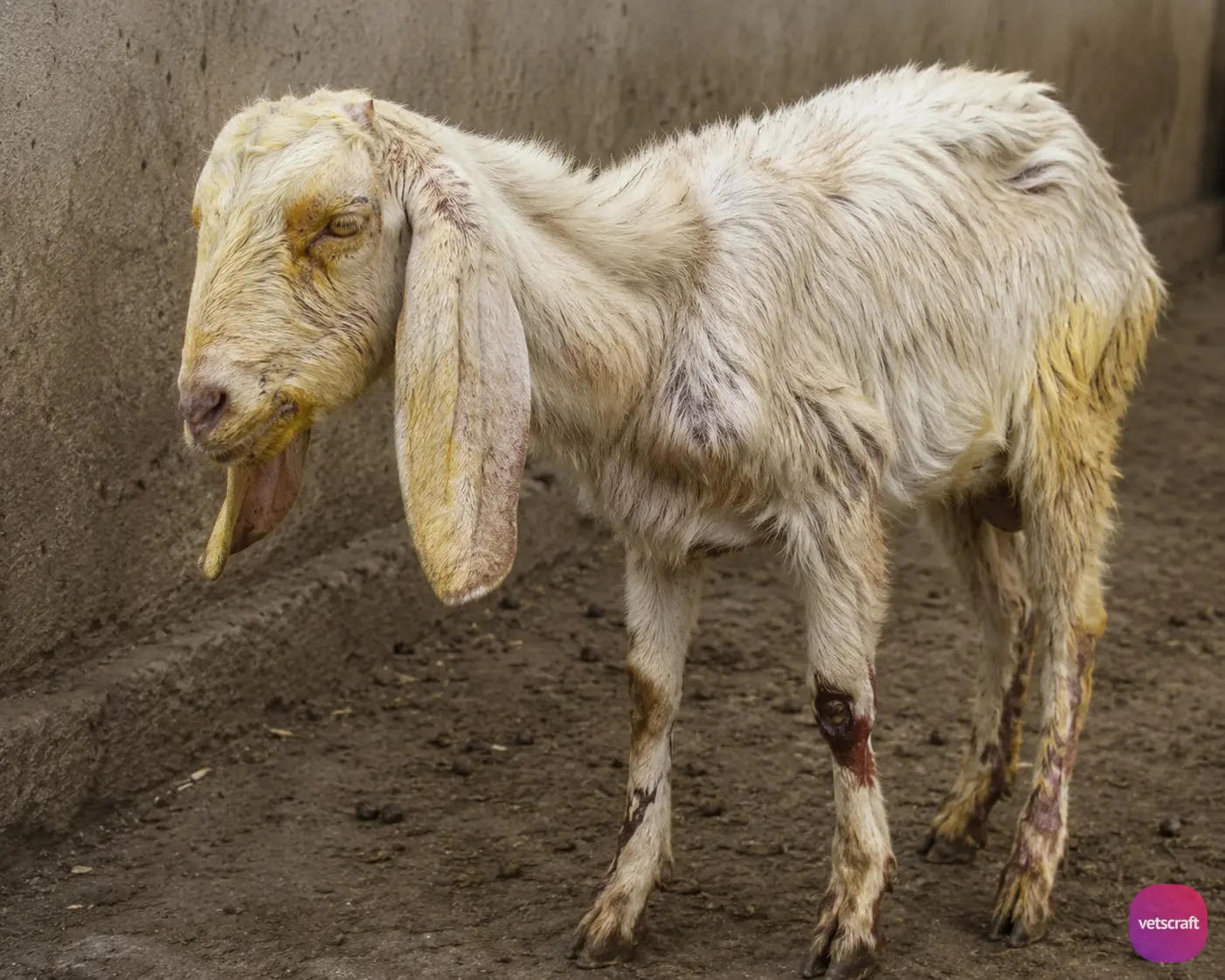
Ovine and caprine theileriosis is a tick-borne protozoan disease of sheep and goats caused primarily by Theileria hirci and Theileria ovis. The disease ranges from mild to highly fatal depending on the host’s age, immune status, and the infecting species. Clinically, affected animals may develop fever, anemia, jaundice, lymph node enlargement, and weakness, leading to significant economic losses in small ruminant production. This article provides an overview of the etiology, life cycle, pathogenesis, clinical signs, postmortem lesions, diagnosis, treatment, immunity, and control of ovine and caprine theileriosis.
In sheep and goats, T. hirci and T. ovis cause malignant theileriosis.
Structure and Predilection Site
- Piroplasms in the RBCs are pleomorphic. They may be round or oval (80%), rod-shaped (18%), or Anaplasma-like (2%).
- Piroplasms multiply by binary or quadruple fission.
- Koch blue bodies are commonly found in the lymphocytes of the spleen and lymph nodes or free within these organs.
Life Cycle
Transmission is suspected to occur through Hyalomma spp. ticks.
Pathogenesis and Clinical Signs
The disease may be highly fatal, with mortality ranging from 50% to 100%. However, the infection is mild in young lambs and kids, possibly due to maternal immunity. The disease usually occurs in acute, subacute, and chronic forms, of which the acute form is the most common, resembling Tropical Bovine Theileriosis and East Coast Fever.
Affected animals have fever, nasal discharge, ruminal atony, weakness, anemia, and jaundice. Transient hemoglobinuria may also occur.
Postmortem Lesions
- Enlargement of the lymph nodes
- Swelling of the liver and spleen
- Pulmonary edema
- Renal infarction
- Petechiae in the abomasal mucosa with ulcers
- Irregularly disseminated red patches in the intestinal mucosa, particularly in the cecum and colon
Immunity
- Animals that recover from the disease develop immunity.
- No cross-immunity exists between T. hirci and T. ovis.
Diagnosis
Diagnosis is based on the detection of piroplasms in blood smears and schizonts in lymph node smears.
Treatment
Oxytetracycline is used for the treatment of ovine and caprine theileriosis.
Control
Tick control using acaricides is recommended to prevent ovine and caprine theileriosis.