Trypanosoma vivax (Vivax Trypanosome): Morphology, Transmission, Pathogenesis, Clinical Signs & Treatment
Trypanosoma vivax is a pathogenic hemoflagellate protozoan parasite of domestic and wild ruminants that causes animal trypanosomiasis, commonly known as Nagana or Souma. It is widely distributed in sub-Saharan Africa, where it is primarily transmitted by tsetse flies (Glossina spp.), and has also spread to parts of Central and South America through mechanical transmission by biting flies. The parasite is of major veterinary importance because of the significant production losses it causes in livestock.
In susceptible animals, T. vivax invades the bloodstream and lymphatic system, leading to anemia, fever, weight loss, reduced productivity, and, in severe cases, death. This article provides a comprehensive overview of Trypanosoma vivax, including its taxonomy, morphology, transmission, pathogenesis, clinical signs, and treatment.
Parasite Overview
- Host: Cattle, sheep, goats, horses, camels, and antelopes are the reservoir hosts.
- Predilection Site: Blood plasma and the lymphatic system
- Vector: Glossina spp. (tsetse flies); can also be transmitted mechanically by biting flies such as Tabanus spp. and Stomoxys spp.
- Disease Caused: Nagana (depressed spirits), Souma
- Infective Stage: Metacyclic trypomastigote (via tsetse fly); bloodstream trypomastigote in mechanical transmission
- Transmission: Cyclical transmission through the bite of infected tsetse flies (Glossina spp.) and mechanical transmission by hematophagous biting flies such as horse flies (Tabanus spp.) and stable flies (Stomoxys spp.)
- Zoonotic Potential: No; Trypanosoma vivax is not considered zoonotic.
Taxonomical Classification
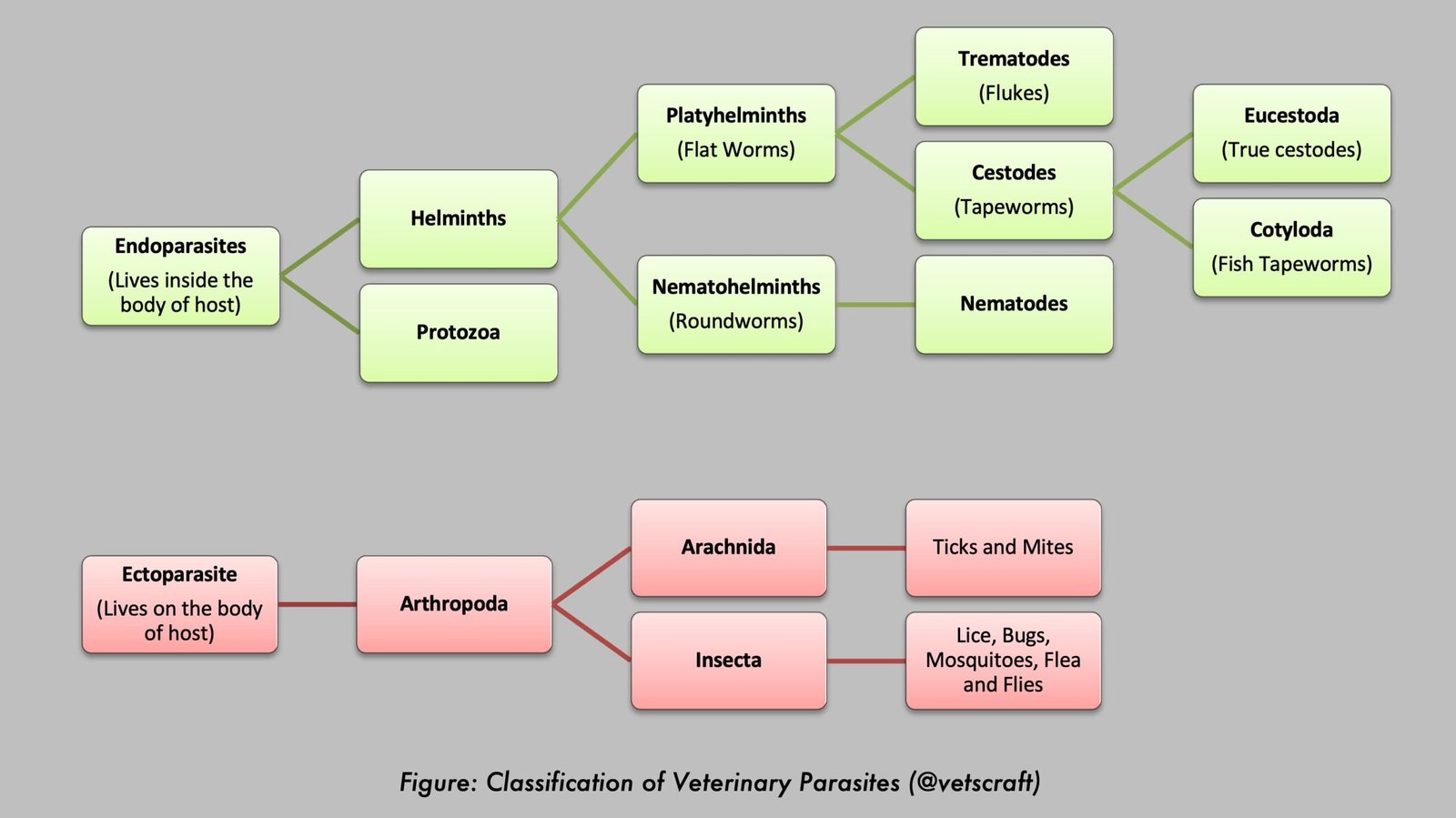
- Kingdom: Protista
- Phylum: Euglenozoa
- Class: Kinetoplastea
- Order: Trypanosomatida
- Family: Trypanosomatidae
- Genus: Trypanosoma
- Subgenus: Duttonella
- Species: Trypanosoma vivax
Morphology
T. vivax is monomorphic. The undulating membrane is inconspicuous, and the kinetoplast is large and terminal.
The posterior end is broad and rounded. A free flagellum is present.
Transmission and Development
In the insect, the development of T. vivax takes place only in the proboscis. The trypanosomes first transform into the epimastigote form and then into the infective metacyclic trypomastigotes. These are inoculated into the new host when the fly bites.
Pathogenesis and Clinical Signs
T. vivax is of greatest importance in cattle. It causes an acute hemorrhagic disease and is highly pathogenic. Extensive hemorrhages are observed on the mucosal and serosal surfaces of the digestive tract, body cavities, muscles, heart, and lymph nodes.
The chronic form may persist for several months. Affected animals develop anemia, emaciation, and severe wasting.
Treatment
The treatment of Trypanosoma vivax is the same as that of Trypanosoma brucei.
Common trypanocidal drugs include diminazene aceturate and isometamidium chloride. Supportive therapy may also be required in severely affected animals.