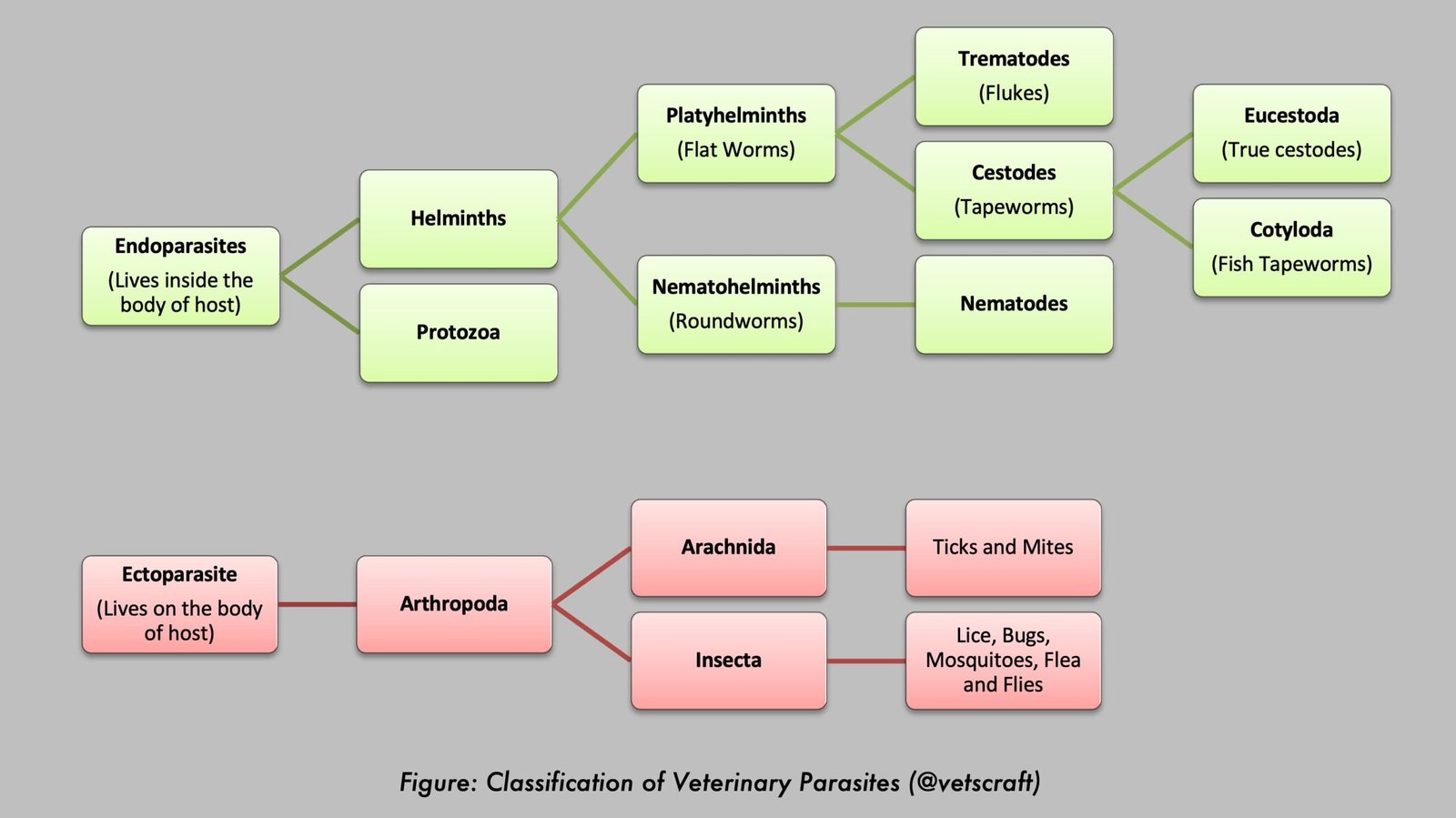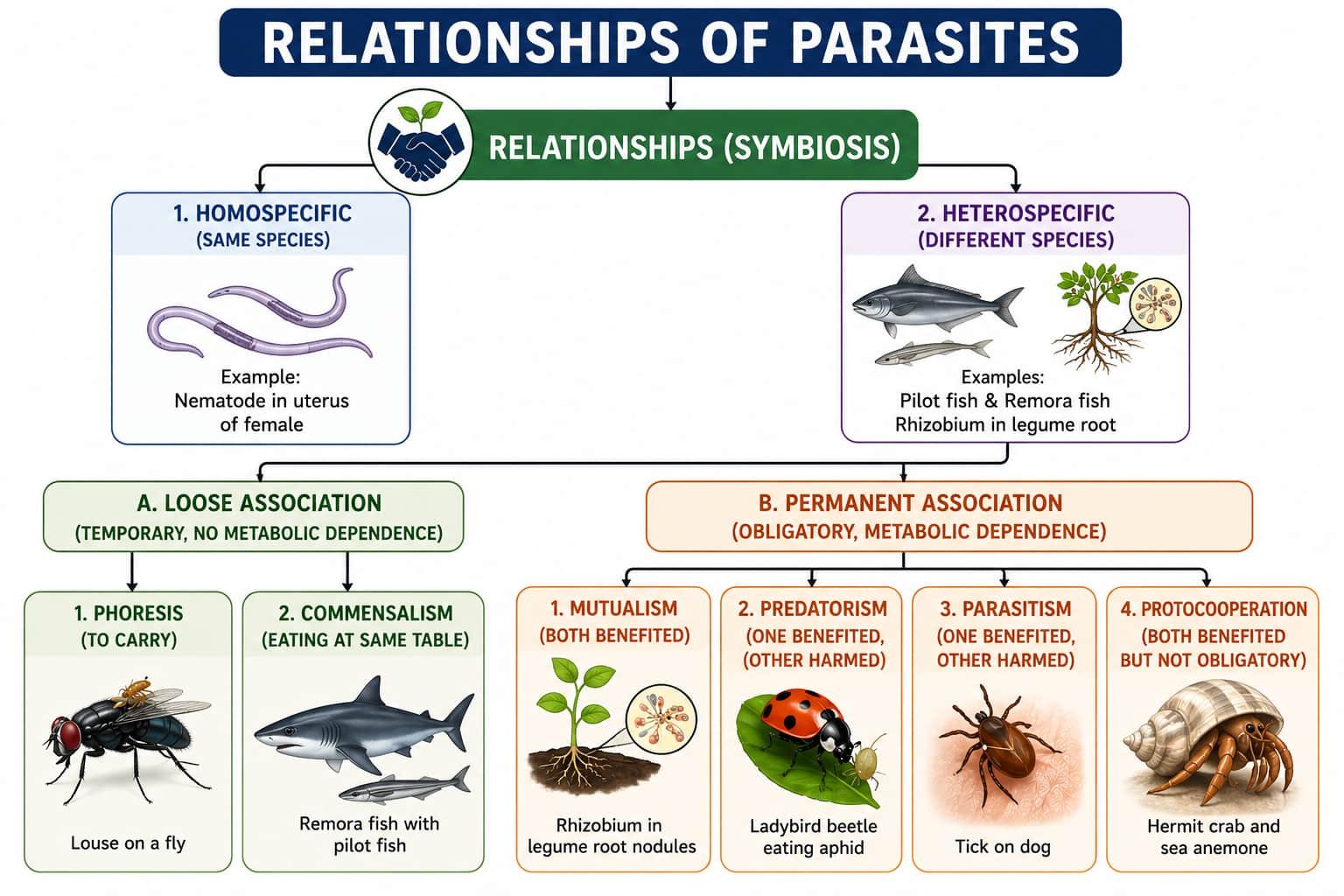
General Characteristics of Trematodes (Flukes): Morphology, Systems, and Reproduction
The general characteristics of trematodes (flukes) encompass their morphology, organ systems, reproductive biology, and life-cycle adaptations. These parasitic helminths are of considerable importance in veterinary and medical parasitology due to their complex development and ability to infect a wide range of hosts.
Trematodes are commonly known as flukes or flatworms because their bodies are dorsoventrally flattened. The term “Trematoda” is derived from the Greek word “trema,” meaning “hole” or “opening.”
Characters of Trematodes
- The body is dorsoventrally flattened, unsegmented, and leaf-like.
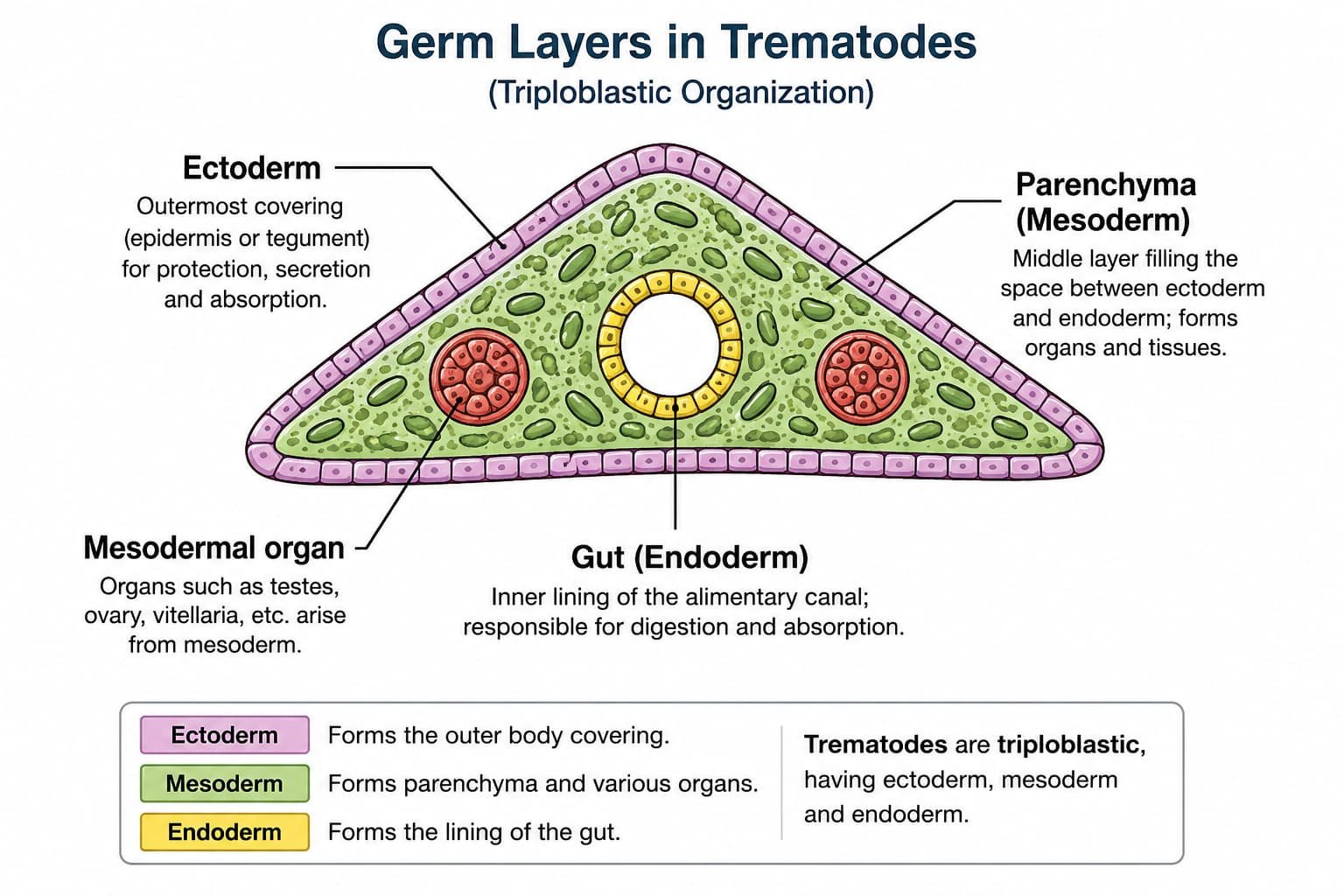
- All organs are embedded in parenchyma, and there is no body cavity.
- Suckers, hooks, or clamps are present for attachment to the host.
- The mouth and alimentary canal are present, but there is no anus.
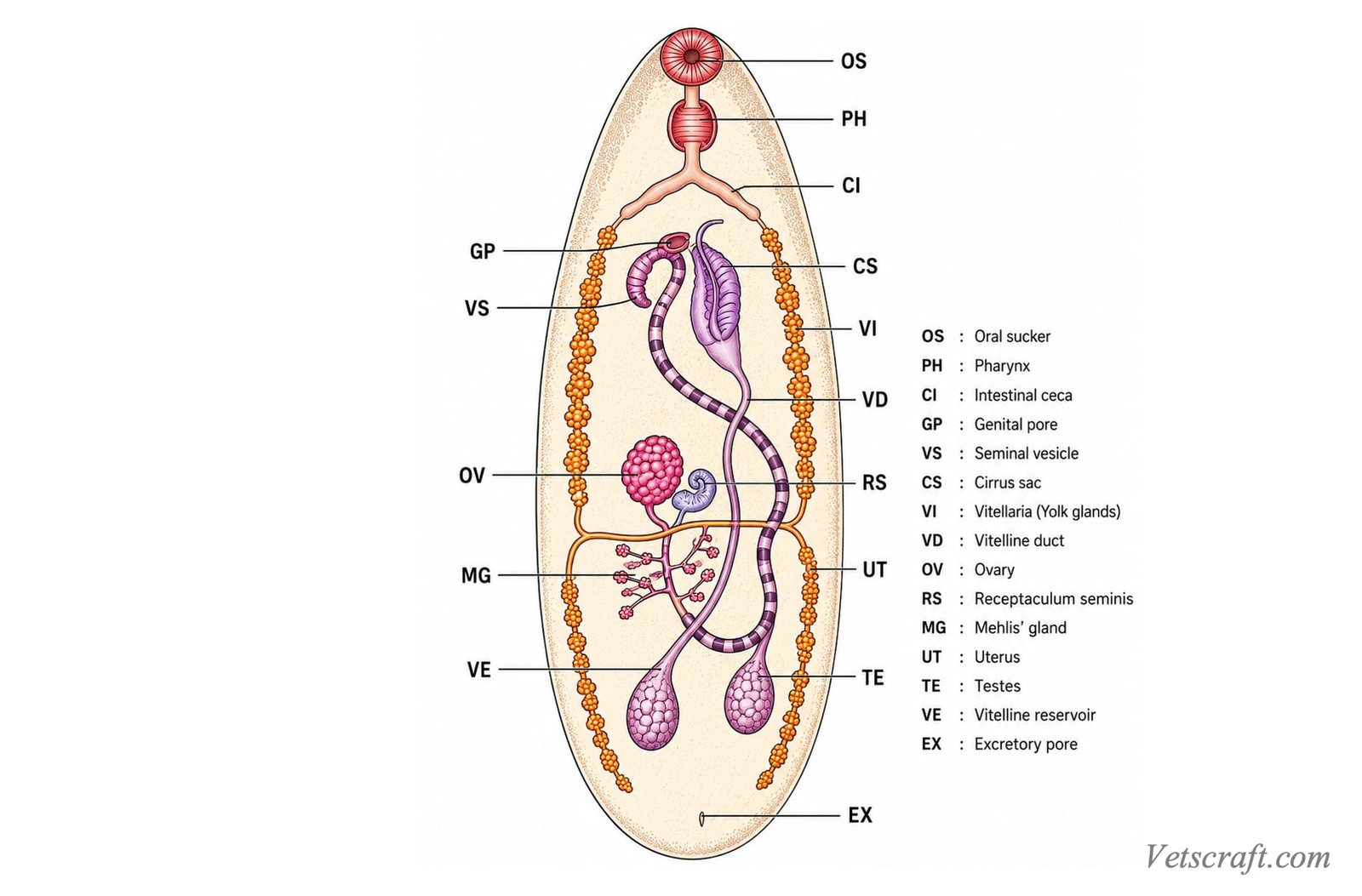
- The mouth leads to a muscular pharynx, esophagus, and subsequently to branched ceca.
- The branched excretory system contains flame cells and discharges waste products into an excretory bladder, which usually opens posteriorly.
- Most trematodes are hermaphroditic, with a sexual phase of reproduction in the vertebrate host and an asexual phase in the snail intermediate host. Members of the family Schistosomatidae are exceptions, as they are unisexual.
- The life cycle is usually indirect in Digenea, involving complex developmental stages with snail intermediate hosts and vertebrate definitive hosts, whereas it is direct in Monogenea.
Subclass of Trematoda
Aspidogastrea
- Aspidogastreans parasitize fish.
- They are also found in turtles, mollusks, and crustaceans, but not in domestic animals.
- They possess a ventral adhesive organ known as Baer’s disc or opisthaptor.
Monogenea
- Monogeneans parasitize cold-blooded aquatic vertebrates, including fish, amphibians, and reptiles.
- Most are ectoparasites.
- They possess a posterior adhesive organ called a haptor, which bears suckers, clamps, or hooks.
- They may be oviparous or viviparous.
- They are not found in domestic animals.
- The life cycle is direct.
Digenea
- Digeneans are dorsoventrally flattened, with body forms ranging from long and narrow to leaf-like and fleshy.
- The cuticle or tegument may be smooth or spiny.
- They parasitize the alimentary canal, associated organs, or blood vessels.
- All species are hermaphroditic except members of the family Schistosomatidae.
- The life cycle is indirect and requires one or two intermediate hosts. A snail invariably serves as the first intermediate host.
- The attachment organs consist of an anterior oral sucker located at the anterior end of the body and a ventral sucker known as the acetabulum, usually situated on the anterior one-third of the ventral surface. Its position varies among species and may occasionally be absent.
- Example: Amphistomes – acetabulum located at the posterior end.
- Example: Dicrocoelium dendriticum – acetabulum located on the anterior one-third of the ventral surface.
Digestive System of Trematodes
The digestive system begins at the mouth located within the oral sucker, followed by a muscular pharynx and esophagus.
The esophagus leads to two branched ceca that terminate blindly. Trematodes lack an anus.
Excretory System of Trematodes
The excretory system of trematodes consists of a bladder and a collecting system from which numerous branched tubules extend into the parenchyma and terminate in flame cells. Each flame cell functions as an excretory unit, collecting waste products from the surrounding tissues and discharging them into the bladder. The bladder opens externally through an excretory pore located at the posterior extremity of the body.
These flame cells possess a basal cytoplasmic portion containing the nucleus and bear numerous long cilia that project into the proximal widened portion of the attached tubule. Flame cells are arranged bilaterally in a characteristic pattern. These arrangements may be expressed using a simple formula known as the flame cell formula, which is important for species identification. For example, the flame cell formula of Dicrocoelium dendriticum is 2[(3+3+3) + (3+3+3)] = 36.
The number 2 indicates bilateral distribution of flame cells within the body, while the brackets represent one side of the body. The first set of parentheses refers to the anterior collecting tube and the second to the posterior collecting tube.
The three digits within each set of parentheses indicate the number of accessory tubules, and each digit represents the number of flame cells draining into a particular accessory tubule. Thus, the excretory system of this parasite contains a total of 36 flame cells arranged in groups of three on each of 12 accessory tubules, with three anterior and three posterior tubules on each side.
Nervous System of Trematodes
The nervous system consists of a circumesophageal nerve ring and paired ganglia. From these structures, three pairs of nerves extend anteriorly and three pairs extend posteriorly to supply the entire body.
Sensory organs are absent in adults but are present in certain larval stages. For example, miracidia and cercariae possess eyespots.
Reproductive System of Trematodes
Male
- Two testes are present and may be spherical, lobed, or divided into numerous smaller bodies.
- The vasa efferentia unite to form the vas deferens. Distally, the vas deferens enlarges to form the seminal vesicle and terminates as a cirrus or penis. The cirrus may be enclosed within a cirrus sac.
- The testes may be arranged in tandem, diagonally, side by side, dorsoventrally, or one above the other.
The female reproductive system consists of an ovary that discharges ova into the oviduct. The oviduct receives ducts from the seminal receptacle (receptaculum seminis) and Laurer’s canal. Paired vitelline glands (vitellaria), composed of numerous follicles, discharge into the yolk ducts. The yolk ducts join the oviduct within a specialized enlarged region called the ootype, which is surrounded by Mehlis’ gland. Together, the vitelline glands and Mehlis’ gland contribute to eggshell formation.
After leaving the ootype, the eggs enter the uterus. The uterus may be short or highly convoluted and opens through the genital pore, which may be located on the anteroventral surface or laterally. The genital pore is often surrounded by a genital sinus or atrium. In some species, the sinus or atrium develops into a genital sucker, as seen in Cotylophoron cotylophorum.
Egg
Most trematode eggs possess an operculum, a cap-like structure located at the anterior end. In contrast, schistosome eggs bear a characteristic spine.
In most species, embryonic development occurs within the uterus, allowing the eggs to hatch soon after being laid. Generally, eggs hatch in water; however, in Dicrocoelium dendriticum, hatching occurs only after the egg has been ingested by the snail intermediate host. Egg hatching is influenced by factors such as light, temperature, and water salinity. Trematode eggs are unable to withstand desiccation. Under favorable conditions, larvae emerge from the eggs.