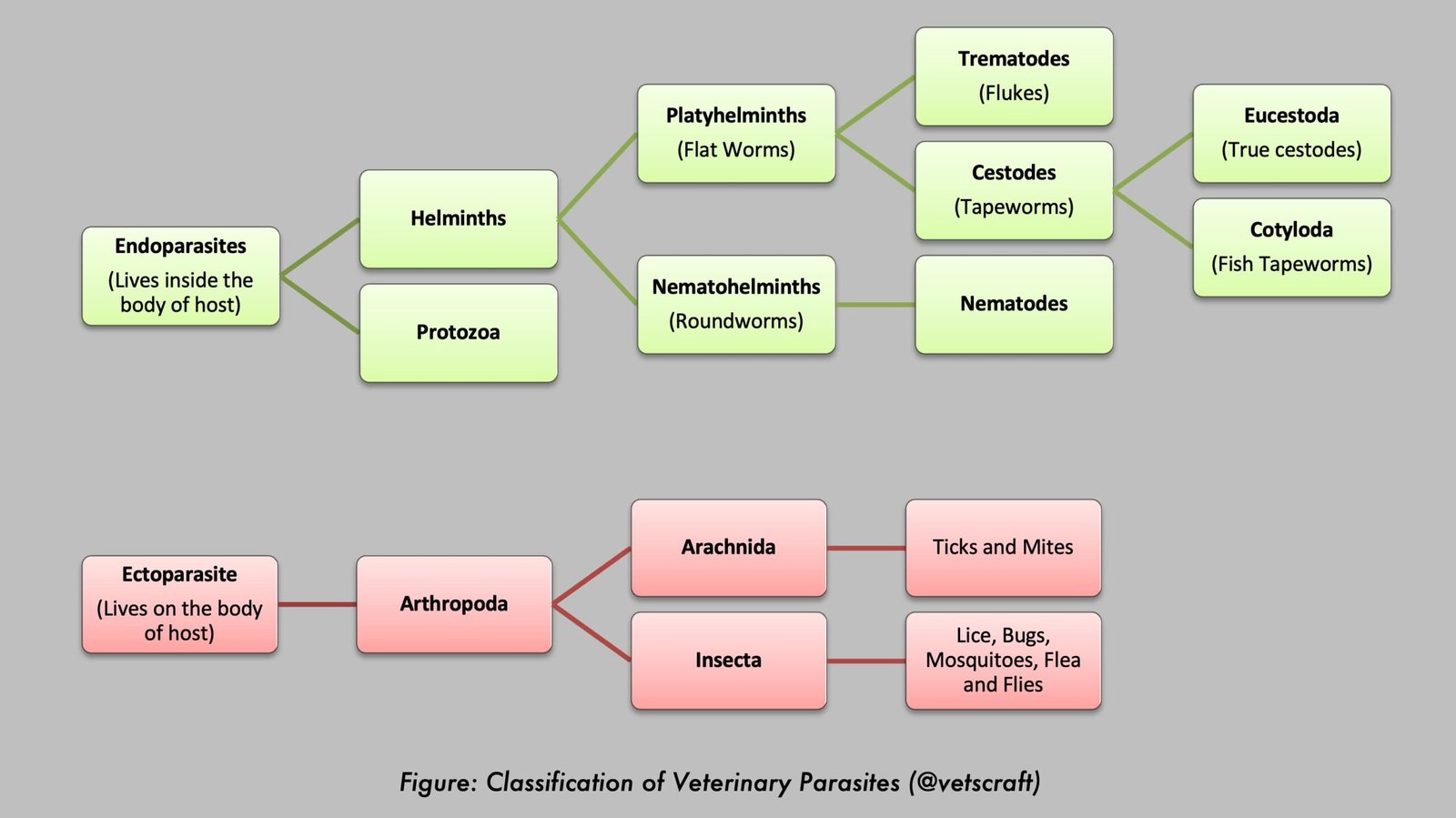
Types of Trematode Cercariae
Cercaria is the free-swimming larval stage of most digenetic trematodes. It develops within the intermediate host, usually a snail, and emerges to seek the next host or suitable environment for further development. The morphology of the cercaria varies among trematode species and is an important feature used for identification and classification.
The cercaria possesses oral and ventral suckers and an intestine similar to that of the adult stage. Excretory and nervous systems are present. Special glands known as penetration glands are also present. In some species, an anterior spine may also be present.
The cercaria is usually provided with a tail, which helps propel it through water. Cercariae escape through openings in the tegument or are expelled in masses by the intermediate host.
Classification of Trematode Cercariae
There are various types of cercariae found in different trematodes. These include:
- Gymnocephalous Cercaria
- Xiphidiocercous Cercaria
- Amphistome Cercaria (Ophthalmocercaria)
- Furcocercous Cercaria
- Microcercous Cercaria
- Echinostome Cercaria
- Leptocercous Cercaria
- Tailless Cercaria
| Type of Cercaria | Tail | Stylet | Distinguishing Feature | Example |
|---|---|---|---|---|
| Gymnocephalous Cercaria | Simple | Absent | Two suckers situated close to each other | Fasciola gigantica |
| Xiphidiocercous Cercaria | Simple | Present | Oral sucker armed with a stylet | Dicrocoelium dendriticum |
| Amphistome Cercaria (Ophthalmocercaria) | Simple | Absent | Suckers located at opposite ends of the body | Amphistomes |
| Furcocercous Cercaria | Forked | Absent | Forked tail; may be brevifurcate/longifurcate and pharyngeate/apharyngeate | Schistosoma spp. |
| Microcercous Cercaria | Short and stumpy | Present | Ventral sucker located in the posterior third of the body | Paragonimus westermani |
| Echinostome Cercaria | Simple | Absent | Oral sucker surrounded by a crown of spines | Echinostoma spp. |
| Leptocercous Cercaria | Long and narrow | Absent | Tail distinctly narrower than the body | Various trematodes |
| Tailless Cercaria | Absent | Variable | Large body without a tail | Certain trematodes |
1. Gymnocephalous Cercaria
Gymnocephalous cercaria possesses two suckers situated close to each other. Its tail is simple, and a stylet or spine is absent. An example of a gymnocephalous cercaria is Fasciola gigantica.
2. Xiphidiocercous Cercaria
Xiphidiocercous cercaria possesses two suckers situated close to each other.
The oral sucker is armed with a stylet, and the tail is simple. Xiphidiocercous cercaria is seen in Dicrocoelium dendriticum.
3. Amphistome Cercaria (Ophthalmocercaria)
Amphistome cercaria (Ophthalmocercaria) possesses two suckers situated at opposite ends of the body, i.e., they are not close to each other. The tail is simple. Amphistome cercaria is found in amphistomes.
4. Furcocercous Cercaria
Furcocercous cercaria has a forked tail, and the suckers are situated close to each other.
It may be brevifurcate or longifurcate, and pharyngeate or apharyngeate. This type of cercaria is found in Schistosoma spp.
5. Microcercous Cercaria
In microcercous cercaria, the oral sucker is armed with a stylet, and the ventral sucker is located in the posterior third of the body. The tail is short and stumpy. Microcercous cercaria is found in Paragonimus westermani.
6. Echinostome Cercaria
In echinostome cercaria, the oral sucker is surrounded by a crown of spines. This type of cercaria is found in Echinostoma spp.
7. Leptocercous Cercaria
In leptocercous cercaria, the tail is distinctly narrower than the body. It possesses two suckers and a simple tail.
8. Tailless Cercariae
Tailless cercariae lack a tail and typically possess a relatively large body. These cercariae generally encyst shortly after emerging from the intermediate host rather than relying on active swimming for host-seeking.
Conclusion
The morphology of cercariae is an important taxonomic feature used to identify and classify trematodes. Characteristics such as tail structure, sucker arrangement, the presence or absence of a stylet, and body armature help differentiate the various cercarial types. Understanding these larval forms is essential for studying trematode life cycles, transmission, and epidemiology.