Pantoprazole
Pantoprazole is a Proton Pump Inhibitor (PPI). It is used in animals to treat acid hypersecretory conditions by reducing gastric acid secretion and protecting the gastrointestinal mucosa.
Group
Pantoprazole belongs to the Proton Pump Inhibitor (PPI) class of drugs and is an antacid/anti-ulcer medication.
Mechanism of Action
Pantoprazole acts by irreversibly inhibiting the gastric H+/K+-ATPase (proton pump), thereby suppressing gastric acid secretion. PPIs have potent, long-lasting effects and are more effective than H₂-receptor antagonists such as ranitidine.
Dose Rates
Dog & Cat: 1 mg/kg IV PO q24h
Horse: 1.5 mg/kg IV PO q24h
Cattle, Sheep and Goats: 0.5 mg/kg IV q24h
Indications
- Gastric ulcers and duodenal ulcers
- Gastrinoma
- Mast cell neoplasia
Contraindications
- Intramuscular (IM) and Subcutaneous (SC) routes are contraindicated for pantoprazole.
Interactions
- Do not administer pantoprazole concurrently with medications that require an acidic gastric environment for absorption, such as ketoconazole, itraconazole, and iron supplements.
Adverse effects
- No side effects reported in animals.
Toxicity
Doses exceeding 300 mg/kg body weight may be toxic in animals. Treatment is symptomatic and supportive.
Preparations
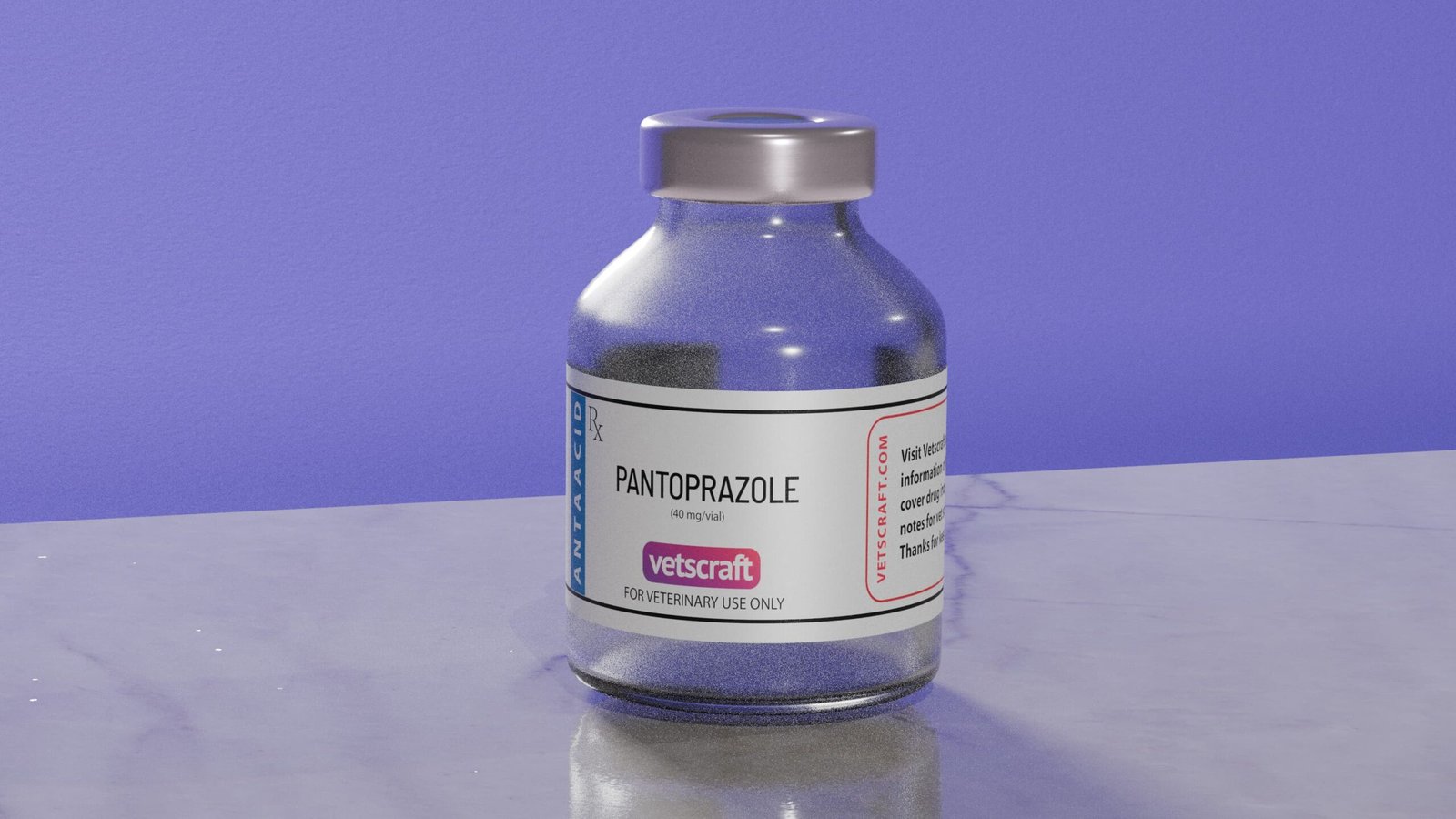
Injectables: 40 mg vial
Tablets: 10 mg, 20 mg, 40 mg
More About Pantoprazole for Animals
Pantoprazole is a widely used proton pump inhibitor in veterinary medicine for the prevention and treatment of gastric acid-related disorders. It provides longer-lasting acid suppression than H2-receptor antagonists and is commonly used in animals with gastric or duodenal ulcers, gastritis, gastroesophageal reflux, or conditions causing excessive gastric acid secretion.
For oral therapy, pantoprazole is generally most effective when administered on an empty stomach, approximately 30–60 minutes before feeding. Because proton pump inhibitors require several doses to achieve their maximum acid-suppressive effect, they are often continued for several days or weeks depending on the underlying condition and the veterinarian’s treatment plan.

Note
Other proton pump inhibitor (PPI) medications include omeprazole, esomeprazole, lansoprazole, and rabeprazole.
These medications are also commonly used alongside NSAIDs and corticosteroids to help prevent gastrointestinal (GI) ulcers, as these drugs can increase the risk of gastric ulceration.
Information provided here may be subject to inaccuracies. Please consult a reputable textbook for verification before use. We welcome your feedback and suggestions for improvement via email at hello@vetscraft.com