TABLE OF CONTENTS
Oestrus ovis (Sheep Nasal Fly): Morphology, Life Cycle, Pathogenesis & Treatment
Oestrus ovis, commonly known as the sheep nasal fly or sheep bot fly, belongs to the Oestridae family. The term Oestrus is derived from a Greek word meaning “to drive mad” or “frenzy.” It is an important parasitic fly of sheep and, less commonly, goats. The larvae develop within the nasal passages and paranasal sinuses of the host, causing nasal myiasis, irritation, respiratory disease, and production losses. In severe cases, larval migration may result in neurological signs, a condition commonly referred to as false gid.
This article provides a comprehensive overview of Oestrus ovis, including its morphology, life cycle, pathogenesis, clinical significance, treatment, and prophylactic measures, making it a valuable reference for veterinary students and practitioners.
Oestridae Family
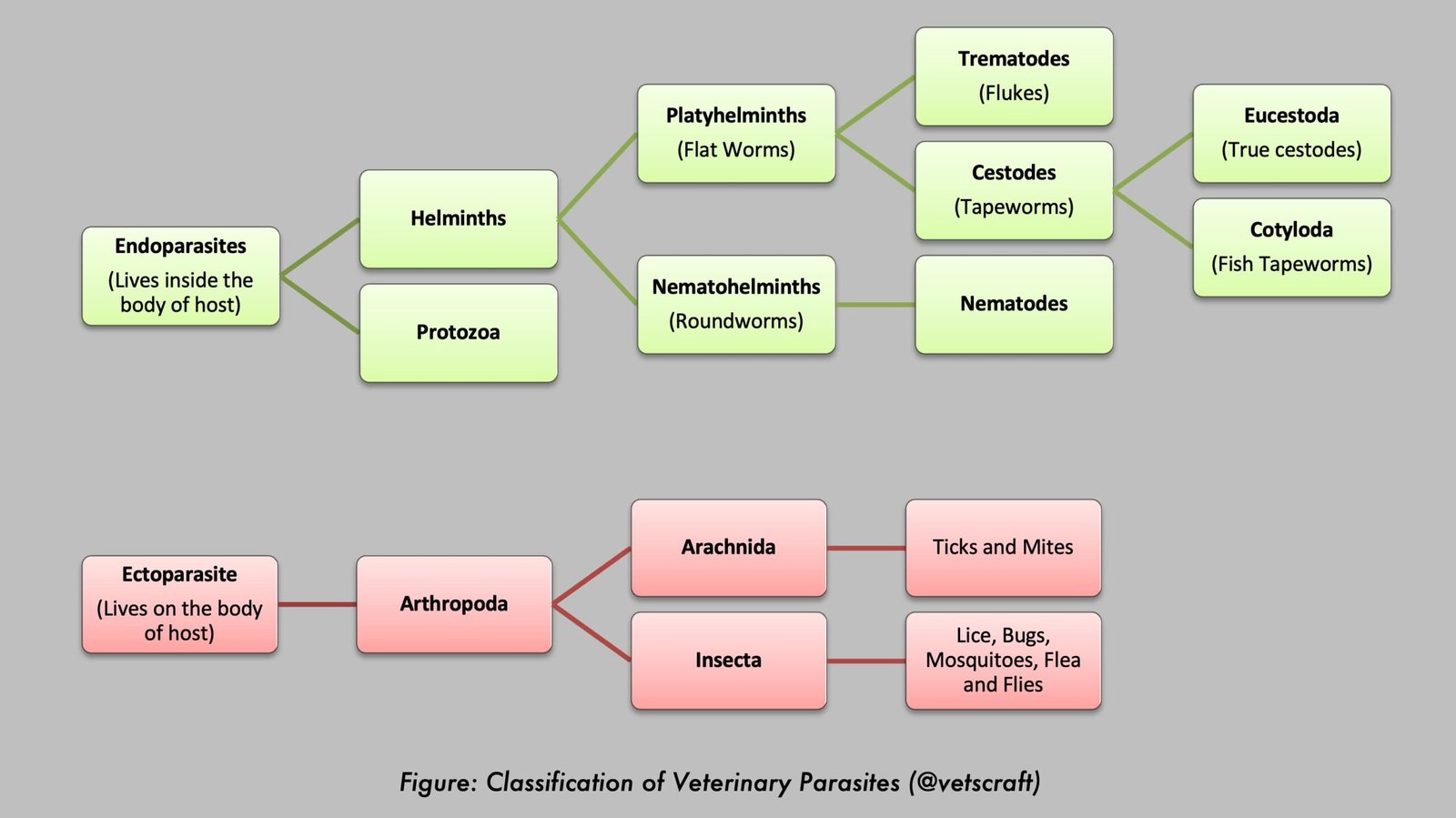
Adults are hairy flies with rudimentary mouthparts and do not feed. The larvae consist of 12 segments, of which the first two are fused together. Oral hooks are present. The larvae are parasitic and feed on the host’s body fluids or the exudates surrounding them. The larvae of this fly cause nasal myiasis.
Morphology
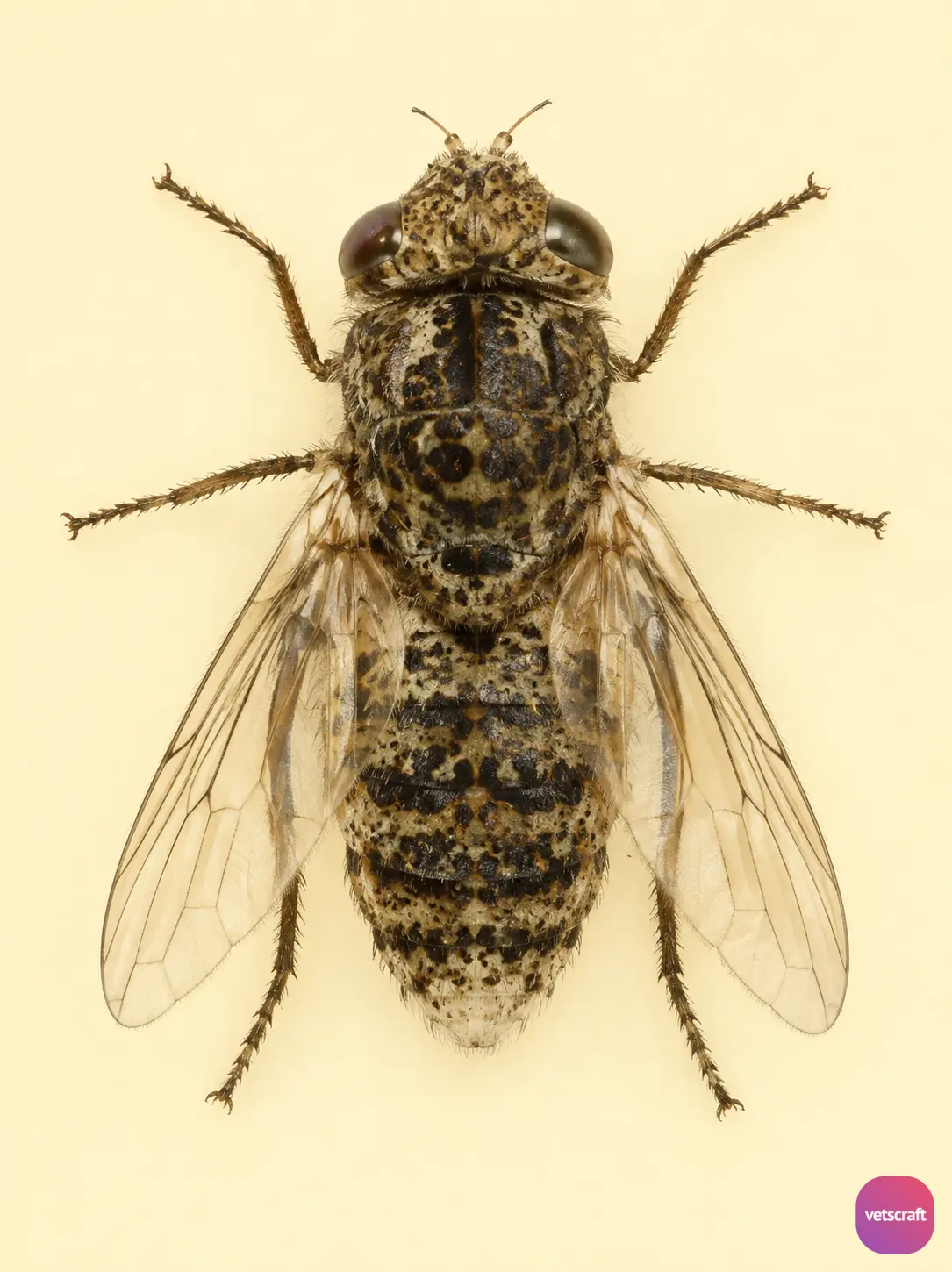
- Dark gray-colored fly.
- Antennae have small segments; the arista is bare.
- Mouthparts are vestigial.
- Wing venation is of the muscid type.
- Prominent dark, tar-like spots are present on the thorax.
- Few black spots are present on the abdomen.
- The larvae occur in the nasal cavity and adjoining sinuses of sheep and, rarely, goats.
Life Cycle (Larviparous/Ovoviviparous)
The flies deposit first-stage larvae around the nostrils of the host, where they crawl upward. Sometimes they enter cavities with small openings, such as those of the turbinate bones or branches of the frontal sinus. As a result, they are unable to escape after reaching full size and eventually die there.
The rate of development of the first larval instar varies considerably. This instar remains in the nasal passages for about two weeks before moving to the frontal sinuses. The larvae may develop rapidly, leaving the sheep approximately 25 days after infection, or may remain considerably longer. Finally, the fully grown larvae crawl out and pupate in the soil for three to six weeks or longer during the cold season.
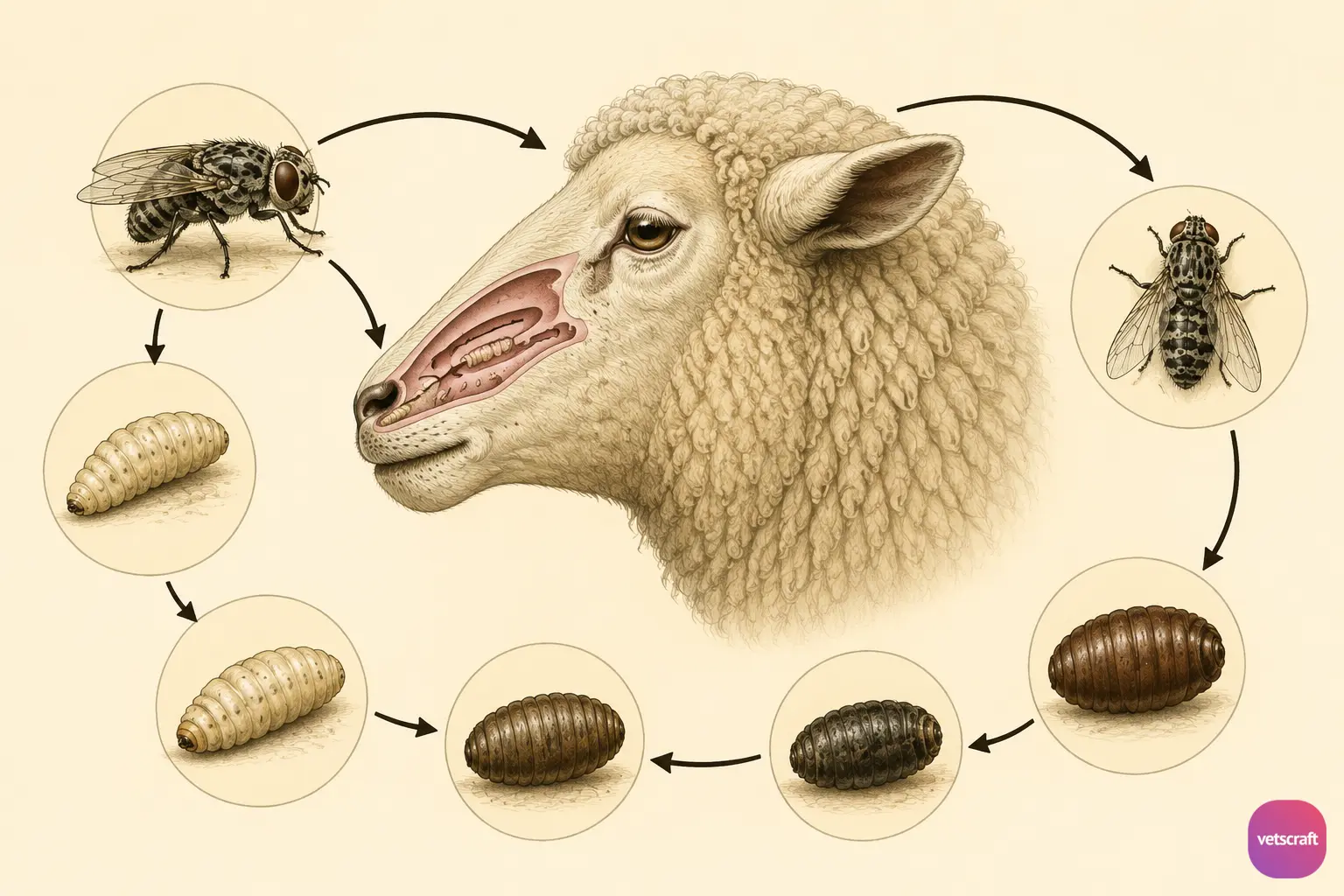
The young larvae are white or slightly yellow. As they mature, dark transverse bands develop on the dorsal aspect of the segments.
The fully grown larva is about 3 cm long, tapering anteriorly and ending with a flat posterior surface. It has large black oral hooks connected to an internal cephalopharyngeal skeleton. The ventral surface bears rows of small spines, and the black stigmal plates are conspicuous on the posterior surface.
The posterior spiracle is D-shaped and has a central opening with numerous accessory spiracular openings. The duration of the life cycle is 7–12 weeks.
Pathogenesis
The flies cause considerable irritation when they attack sheep to deposit larvae. The animals stop feeding, become restless, shake their heads, press their noses against the ground, or rub them against other sheep.
When the flies are abundant, they may significantly interfere with the animals’ feeding.
The larvae irritate the mucosa with their oral hooks and spines, causing the secretion of a viscid mucous exudate on which they feed. Erosion of the skull bones may occur, and in severe cases, injury to the brain may result, leading to a high-stepping gait and incoordination.
Sometimes the larvae die within the sinuses, and the dead larvae can trigger allergic and inflammatory responses followed by secondary bacterial infection and, occasionally, death.
Larvae may penetrate the olfactory mucosa and enter the brain, causing ataxia, circling, and head pressing. These signs may suggest infection with Coenurus cerebralis (metacestode stage of Taenia multiceps). For this reason, the condition has been referred to as “false gid”.
They also cause parasitic rhinitis, characterized by sticky, purulent, mucoid nasal discharge (“snotty nose“), which may occasionally become hemorrhagic and interfere with breathing. Infected sheep sneeze frequently.
Occasionally, the flies deposit larvae in the eyes, nostrils, or on the lips of humans, where they can cause serious problems. Shepherds are considered particularly susceptible to infestation.
Treatment
- Instillation of HCH in oil (1–4%) into the nostrils.
- Administration of 55–88 mg/kg of a mixture containing 2 g of Neguvon and 0.2 g of Asuntol effectively cleared the infection in sheep.
- Crufomate as a dip (35%) or a pour-on formulation (13.5%).
- Rafoxanide as a drench (7.5 mg/kg) markedly reduces infection.
- Nitroxynil: 15–20 mg/kg.
Prophylaxis
Feed is provided in narrow troughs, the edges of which are smeared with tar. As the animals feed, they automatically coat themselves with tar, which acts as a repellent.