Otobius megnini (Spinose Ear Tick): Morphology, Life Cycle, Pathogenesis & Control
Otobius megnini, commonly known as the spinose ear tick, is a soft tick belonging to the family Argasidae. The larval and nymphal stages are parasitic in the ears of cattle, sheep, goats, horses, and other animals, including humans, while adults are free-living. Infestations can cause irritation, inflammation, blood loss, and secondary ear infections.
Morphology
The larva is small, pear-shaped, and reddish-brown. The mouthparts project anteriorly. It has 3 pairs of legs and minute spines on the dorsum.
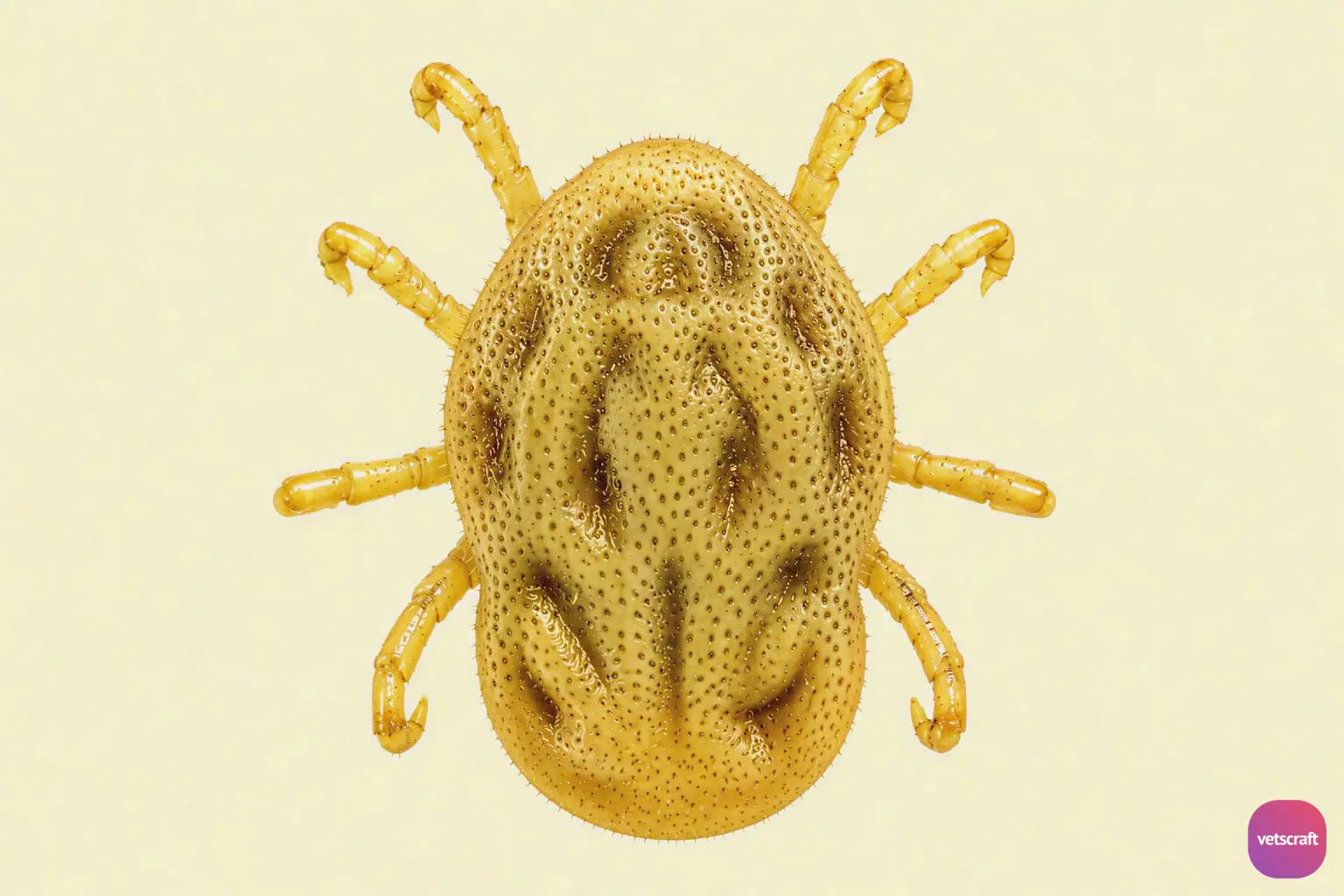
The nymph is similar to Ornithodoros, but the cuticle has spines that are more numerous in the anterior region than in the posterior region. There is a constriction in the middle of the body, giving it a guitar-, fiddle-, or violin-shaped appearance.
Lifecycle
- Eggs, numbering approximately 500–600, are laid in batches on the ground of animal housing and in cracks and crevices.
- The eggs are small and oval and hatch within 1 day to 1 month.
- The larvae have 3 pairs of legs and 2 pairs of eyes and are reddish-brown in color. After attaching to the host, they gradually move toward the shoulder and head and enter the ear canal, where they engorge over a period of approximately 5–10 days to 4 months. The larvae molt into nymphs within the ear.
- There are 2 nymphal stages, and the nymphs may remain in the ear for 1–7 months unless they are accidentally dislodged. The nymph is violin-shaped. Nymphs drop off the host and molt into adults within a week.
- Adults do not feed.
Pathogenesis
- Larvae and nymphs present in large numbers in the ear canal suck blood and cause irritation and inflammation.
- Secondary infection may lead to otocariasis, which may extend inward.
- Infected animals become dull and anorectic and may lose body condition, shake their heads, and scratch their ears. Ulceration of the ear may lead to ear canker. Aural hematoma may also occur.
- In heavy infestations, anemia may result from blood loss.
- A waxy or oily exudate may be present in the ear. Rupture of the tympanic membrane and death have been reported in horses.
Control
- Infested ticks should be removed mechanically from the ear canal using forceps. This is particularly important because the larvae and nymphs remain attached deep within the external ear canal.
- Acaricidal treatment should be directed against both the parasitic stages on the animal and the free-living stages in the environment. Effective acaricides reported for O. megnini include pyrethroids, diazinon, carbaryl, and macrocyclic lactones such as ivermectin, doramectin, and eprinomectin.
- For large animals, acaricides may be administered as sprays, dips, or pour-on. Permethrin has been successfully used for treatment of O. megnini infestation in sheep, with treatment of both the animals and their environment preventing recurrence.
- Environmental treatment is important because adult ticks are nonfeeding and remain off the host. Barns, sheds, cracks, crevices, resting areas, and other protected sites where adults may survive should be treated with acaricides.
- Because immature stages can remain in the ear for prolonged periods and adults can survive for long periods in the environment, repeated treatment may be required to control established infestations.
- Secondary otitis should be treated when present, and severe ear canal inflammation or aural hematoma should be managed appropriately.