Ornithodoros Tick: Ornithodoros savignyi and Ornithodoros moubata
Ornithodoros ticks are soft ticks belonging to the family Argasidae and are of veterinary and medical importance. They infest a variety of hosts, including domestic animals and humans. Important species include Ornithodoros savignyi (sand tick) and Ornithodoros moubata (eyeless tampan), which are characterized by their distinctive morphology, feeding behavior, and ability to transmit various pathogens.
Ornithodoros savignyi (Sand Tick)
- Common Name: Sand tampan, sand tick, eyed tampan
- Host: Domestic fowl, cattle, sheep, goats, and humans
Morphology
Both ends are rounded, and the body is somewhat rectangular in shape, with a constriction in the middle. It appears sac-like and has no lateral suture line.
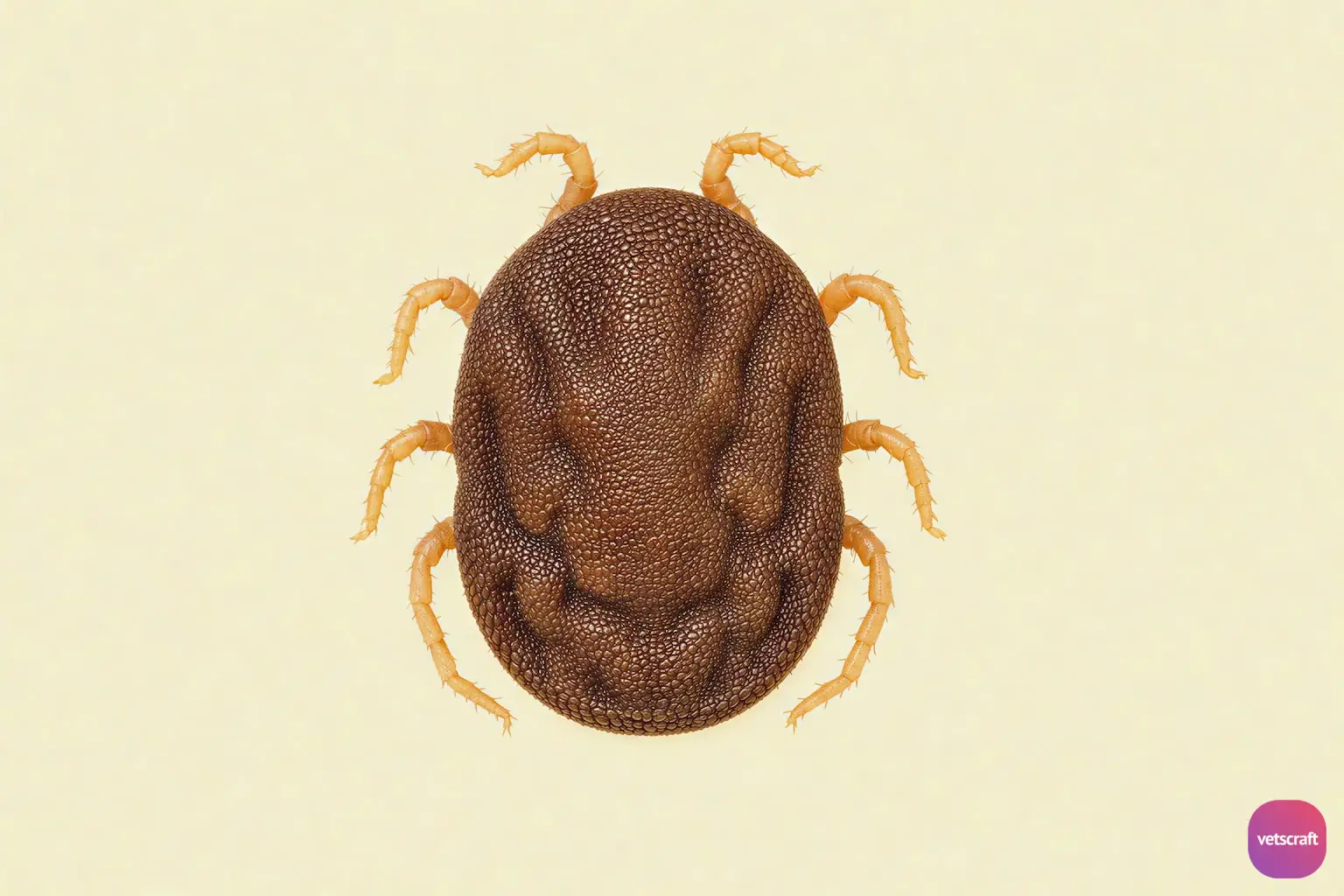
The dorsal aspect has mammillations, the anterior border of the tarsus has a number of tubercles, and eyes are present.
Life Cycle
- Nymphs and adults are parasitic.
- Eggs are laid in batches in sand.
- The female broods over the eggs, which hatch in 8 days.
- The larvae are spherical, with 3 pairs of legs. The mouthparts are visible dorsally, and the larvae do not feed.
- The larvae molt in 7 days to become nymphs.
- There are 5–6 nymphal stages. Nymphs and adults are blood feeders and can survive for long periods without feeding.
- The life cycle is completed in 6–9 months.
Ornithodoros moubata (Eyeless Tampan)
- Common Name: Eyeless tampan
- Host: Domestic fowl and humans
Ornithodoros moubata (eyeless tampan) acts as a vector for Borrelia duttoni (African relapsing fever in humans), Q fever, Borrelia anserina, Aegyptianella pullorum, and African swine fever.